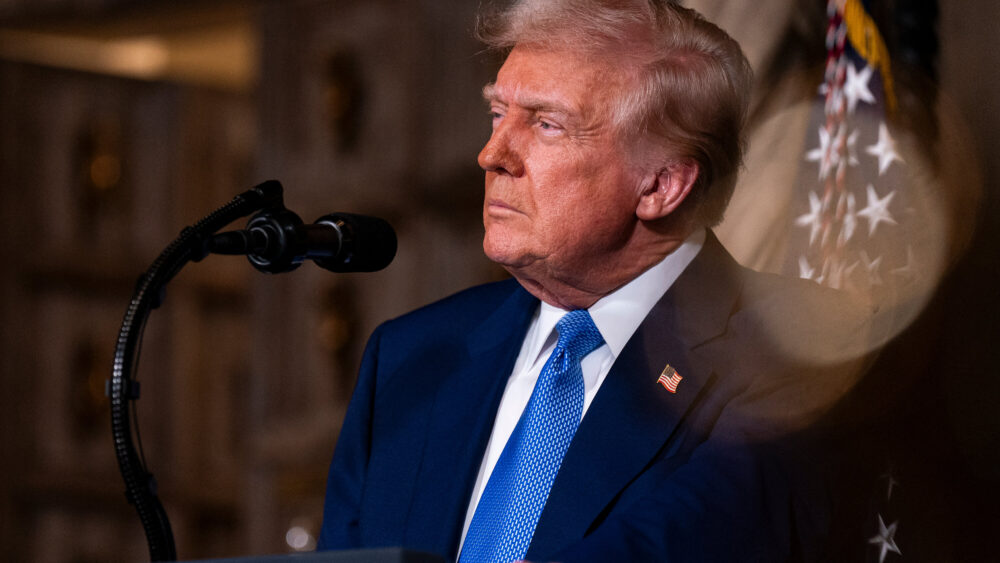







As global leaders and defense officials convene in Germany for the annual Munich Security Conference, new data from a Politico poll suggests that the longstanding international relationships between the United States and its European partners are under significant strain. The results indicate that the efforts of President Donald Trump to redefine these alliances are largely alienating traditionally loyal partners and raising serious concerns about the stability of the global order. This erosion of the American reputation on the world stage has led to fresh inquiries regarding the country\’s actual strength and its willingness to defend its allies in times of crisis.
The polling data reveals a stark shift in public perception across several key nations, with a majority of respondents now describing the United States as an unreliable ally. This sentiment is particularly pronounced in Germany and Canada, where 50 percent and 57 percent of adults respectively categorized Washington as untrustworthy. In France, the results were equally concerning for transatlantic diplomats, as the share of the population calling the United States unreliable was more than double those who expressed confidence in the alliance. Even in the United Kingdom, which historically maintains a special relationship with the U.S., credibility has hit a low point. Only 35 percent of Britons viewed the U.S. as reliable, while 39 percent took the opposite view.
Beyond the general sense of reliability, the survey highlights a growing skepticism toward American military power as a functional asset for European security. Pluralities of adults in France and Germany now state they do not believe potential adversaries would be deterred from attacking them simply because of their treaty relationship with the United States. Perhaps most alarming for defense planners is the trend in the United Kingdom, where there has been a 10 percent drop in just one year among those who see the U.S. as an effective deterrent. This suggests that the psychological shield provided by the NATO alliance is thinning in the eyes of the European public.
The online survey was conducted by Public First, an independent polling company based in London. Their findings illustrate how trust has dropped sharply over the last twelve months following a series of high-profile diplomatic disputes and policy shifts in Washington. Across the U.K., France, and Germany, negative perceptions now consistently outweigh positive ones on critical metrics, including whether the United States protects democracy or shares the fundamental values of its European counterparts. The data suggests that the rift is not merely political but is becoming embedded in the public consciousness of these allied nations.
The decline in relations can be traced back to several pivotal moments, including Vice President JD Vance’s address to the Munich Security Conference last year. That speech, which reportedly shocked European hosts with its isolationist undertones, set a tone of friction that has been exacerbated by ongoing trade rows and aggressive rhetoric. Furthermore, unconventional foreign policy moves, such as the widely criticized push by the Trump administration to purchase Greenland from the Kingdom of Denmark, have added to the sense of unpredictability and instability within the alliance.
These recurring crises have prompted several world leaders to warn that the fundamental nature of the relationship with the United States has changed. Canadian Prime Minister Mark Carney articulated this sentiment during a recent address in Davos, Switzerland, suggesting that the current state of affairs represents a rupture rather than a mere transition. This perspective is echoed in Paris, where French President Emmanuel Macron recently criticized what he described as threats and intimidation originating from Washington. Macron warned other European Union leaders that they should not expect transatlantic relations to return to a state of normalcy in the near future.
Public tension was visible during the opening ceremony of the Winter Olympic Games in Milan, where Vice President Vance was met with audible boos and jeers from the crowd. Kaja Kallas, the top diplomat for the European Union, attributed the public display to European pride and a reaction to the disparaging comments directed toward the continent by the current U.S. administration. Such public displays of animosity toward high-ranking American officials are rare among NATO allies and serve as a visible indicator of the depth of the current diplomatic divide.
According to Seb Wride, the head of polling for Public First, the nature of European concern has evolved over the last year. Previously, the public tended to view the United States as an unpredictable but ultimately essential partner that provided a necessary deterrent against foreign enemies. However, the latest data suggests that the European public is losing faith in the existence of that deterrence altogether. This shift places a new burden on leaders attending the Munich Security Conference to determine how security and regional stability can be maintained or recreated if the United States is no longer viewed as a cornerstone of the defense architecture.
As the American delegation arrives in Munich, led by Secretary of State Marco Rubio, they face a partner base that feels increasingly alienated from American values. In France, only 17 percent of respondents agreed that the U.S. shares their values, compared to 49 percent who disagreed. In Germany, the results were similarly lopsided, with half of the respondents stating that the U.S. does not share their values and a mere 18 percent believing that Washington serves as a protector of democracy. These figures represent a significant departure from the post-war consensus that viewed the U.S. as the primary guardian of democratic ideals.
The shadow of President Trump continues to loom over the proceedings in Munich. President Macron has been vocal in his assessment, stating that the current administration is behaving in a way that is openly anti-European. This sentiment has fueled discussions within the European Union regarding strategic autonomy and the need for the continent to develop its own robust defense capabilities independent of American involvement. The poll suggests that while the current administration is the primary source of friction, there remains a glimmer of hope among European publics. Pluralities in Germany, France, and the U.K. expressed the belief that while the relationship has been weakened, it remains capable of recovery once the current administration leaves office.
Despite this long-term optimism, the immediate reality for diplomats is one of managed decline and damage control. The Munich Security Conference has traditionally been a venue for reaffirming the strength of the Western alliance, but this year the focus has shifted toward navigating a landscape where the primary security guarantor is viewed with suspicion. As Secretary Rubio and the U.S. delegation engage with their counterparts, the challenge will be to address these deep-seated concerns regarding reliability and shared values. The outcome of these discussions will likely determine the trajectory of the NATO alliance and the future of the global security order for years to come.
Major NATO Allies Question US Reliability and Deterrence Capabilities in New Poll