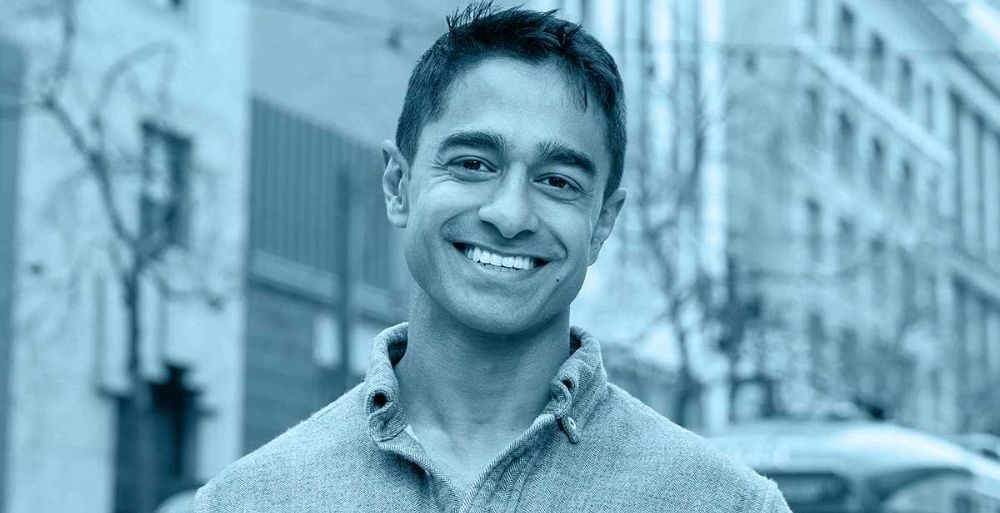








Saikat Chakrabarti, the former tech engineer and progressive strategist who served as a primary architect of the Green New Deal, has officially launched a campaign for Congress in California\’s 11th Congressional District. The move marks a high-stakes challenge for the deep-blue San Francisco seat currently held by former House Speaker Nancy Pelosi. By entering the race, Chakrabarti is positioning himself at the center of a brewing intraparty conflict regarding the ideological and strategic direction of the Democratic Party during a period of significant national political transition.
The 39-year-old software engineer and political organizer rose to national prominence as the campaign manager and subsequent chief of staff for Representative Alexandria Ocasio-Cortez. His background includes serving as the director of organizing technology for Senator Bernie Sanders during the 2016 presidential cycle and working as a founding engineer at the financial technology firm Stripe. As a co-founder of Justice Democrats, Chakrabarti has spent years recruiting and supporting insurgent candidates designed to challenge established party leaders, a mission he is now undertaking personally in one of the most visible districts in the United States.
In recent public statements, Chakrabarti framed his decision to run as a response to what he describes as a crisis of leadership within the Democratic establishment. He argued that the current party leadership in Washington is fundamentally unfit to navigate the complexities of the modern political landscape. While acknowledging the difficulty of the race from a personal perspective, particularly regarding the time required away from his young family, he maintained that challenging powerful Democratic figures is a necessary step for the future of the movement.
Chakrabarti is centering his platform on the belief that the Democratic Party must transition from a traditional legislative body into a robust organizing force. He contends that lawmakers should act as coordinators for civil society, building collective blocks within law firms, media companies, and universities to oppose executive overreach. This perspective suggests a departure from standard congressional duties, focusing instead on using the office as a pulpit for broad social and institutional mobilization against what he characterizes as threats to democratic stability.
The candidate has been particularly vocal regarding the current administration\’s approach to federal law enforcement and immigration. Chakrabarti expressed concern that federal agencies are being utilized to consolidate executive power and weaken civil institutions. He has called for Democrats to use their existing leverage more aggressively, specifically advocating for the restoration of Medicaid funding and the reinstatement of various public subsidies. Furthermore, he has pushed for significant reforms to Immigration and Customs Enforcement, arguing that the party needs to act as a more definitive opposition force than it has in recent years.
Economic stagnation serves as another cornerstone of Chakrabarti\’s campaign narrative. He suggests that decades of wage stagnation coupled with rising costs for essential services created the vacuum that allowed for the rise of populist movements on both sides of the aisle. According to Chakrabarti, the enthusiasm surrounding the 2008 election was rooted in a desire for sweeping economic change that he believes remains unfulfilled. He argues that current Democratic leaders lack a comprehensive vision to address affordability and the creation of high-wage jobs for the working class.
As an Indian-American whose father immigrated to the United States several decades ago, Chakrabarti has made the reform of the legal immigration system a personal and policy priority. He has criticized recent escalations in visa fees and what he describes as a systemic failure to welcome global talent. His proposal includes the removal of immigration caps and a significant overhaul of the H-1B visa program. Specifically, he advocates for decoupling these visas from specific employers to provide workers with greater mobility and pushing for higher wage floors to ensure that immigrant labor does not lead to the depression of domestic wages.
The rapid advancement of artificial intelligence and its implications for the American workforce also feature prominently in his platform. Chakrabarti warned that the scale of disruption posed by AI could potentially eliminate a significant percentage of current jobs. He has proposed a model of coordinated planning between labor, industry, and the government, similar to the industrial strategies employed in certain European sectors. He suggests that workers should have a formal role in determining how automation is integrated into the workplace to prevent the wholesale replacement of human labor by corporate entities.
To counter the potential loss of tech and service jobs, Chakrabarti is calling for large-scale, state-led investment in emerging green technologies. He points to international competition in the electric vehicle, solar, and hydrogen sectors as evidence that the United States must adopt a more interventionist economic policy. He argues that private markets alone are insufficient to meet the demands of a changing global order and that a federal framework for industrial investment is required to create a new generation of high-quality employment opportunities.
The race for the 11th District is expected to serve as a bellwethier for the Democratic Party\’s internal dynamics. San Francisco has long been a bastion of liberal politics, but the contest between a veteran leader like Pelosi and a progressive strategist like Chakrabarti highlights a generational divide. Chakrabarti has indicated that he is already coordinating with other candidates across the country who share his goal of challenging the corporate status quo. He maintains that the historically low polling for national institutions necessitates a fundamental change in how the party operates and represents its constituents.
Observers suggest that Chakrabarti\’s bid will test whether the progressive wing of the party can successfully translate its organizing success into a victory against one of the most well-funded and influential figures in modern American politics. The campaign intends to highlight the differences in how the two wings of the party view the role of the federal government in the economy and the appropriate level of aggression required in the current political climate. As the 2026 election cycle approaches, the results in San Francisco may dictate the strategies used by Democratic candidates in deep-blue districts nationwide.
Chakrabarti’s entrance into the race adds a third Democratic contender to the field, ensuring a competitive primary process. While the candidates may share common ground on many floor votes, Chakrabarti insists that the primary distinction lies in the vision for the party\’s future. He remains steadfast in his critique that the party must move beyond its current legislative focus to become a bulwark against the erosion of institutional norms. The coming months will determine if his message of systemic overhaul resonates with a San Francisco electorate that has consistently returned established leadership to Washington for over thirty years.
Saikat Chakrabarti Launches Campaign for Pelosi Seat Seeking Democratic Party Overhaul