




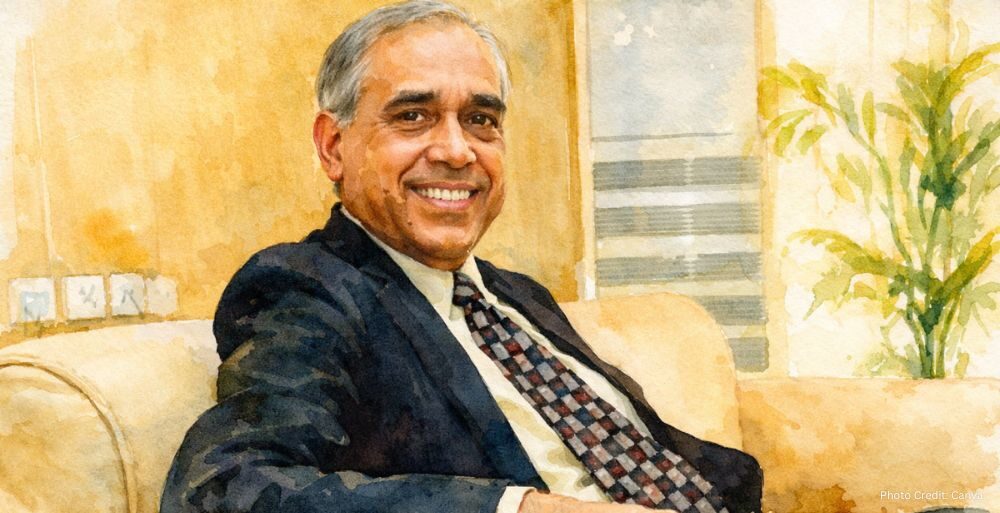
US, EU trade pacts mark a decisive shift from a hesitant past, writes former principal secretary to the PM and ex-WTO negotiator Nripendra Misra. GOI got here by remarkable strategic sequencing, he says.
For decades, India’s engagement with global trade was shaped by a contradiction. Growth was desired, yet fear of being overwhelmed by cheap imports bred caution. Liberalisation advanced, but incrementally and often defensively. The Bharat-US trade deal and the BharatEU agreement mark a decisive break from that past. Together, they signal India’s full integration into global value chains.
They are not just diplomatic milestones but reflect a deeper institutional evolution, where process-driven hesitation has been replaced with speed, precision, and strategic intent. No assessment of this confidence can ignore the role of PM Modi. His philosophy – na aankhen dikhaunga, na nazar jhukaunga – was never mere rhetoric.
It articulated a vision of global peace and shared prosperity, anchored firmly in national interest. Modi recognised that credibility in global markets rests on mutual respect. By treating other nations as equal partners, he reframed India’s trade posture. In this worldview, trade is not a zero-sum contest, but a platform where all can gain.
Having participated in India’s trade negotiations at WTO and in bilateral forums, I remember a very different India. We often stood alone – driven by anxiety about global competitiveness. For example, after a long and exhausting night in the green room negotiating the draft Doha Declaration, widely respected commerce minister Murasoli Maran was compelled to block the resolution launching a new trade round. The silence in the hall was palpable as India vetoed the proposal in isolation.
Bureaucratic advice had warned that a new round would exact disproportionate concessions from developing countries. The stalemate broke only hours later, with PM Vajpayee’s intervention. By then, several trade ministers had already left – assuming consensus. That moment captured the cautious, inward-looking instincts of an earlier India.
Under Modi, the commerce ministry has shed this protectionist skin and adopted the agility of a startup. Instead of thinly spread liberalisation, Commerce Minister Piyush Goyal has pursued a targeted, trust-based trade strategy. Negotiations are anchored in granular modelling and extensive domestic consultations with stakeholders. The result is sharper prioritisation and stronger internal alignment. India’s red lines are clearly articulated, but so is its willingness to engage constructively. Within govt, bureaucratic turf wars have given way to a single voice. Rigorous impact analyses in Udyog Bhawan guide decisions, and the system has risen to new challenges.
The Indo-US trade framework of 2026 exemplifies this transformation. By reducing tariffs to 18% from a punitive 50%, the agreement delivers a critical boost to Indian manufacturing. India now stands alongside exporting nations such as Vietnam and Bangladesh, where success depends not on protection, but on quality and competitiveness. More significantly, the deal underscores India’s repositioning – from a rule-taker at the margins of global commerce to a strategic partner in global supply chains and energy security.
Trade agreements are no longer treated as narrow commercial contracts. They have been reframed as instruments of long-term national development. Commitments such as the $100bn investment pledge by the European Free Trade Association over 15 years, combined with improved mobility pathways for skilled professionals, directly link external trade to domestic job creation, capital inflows, and tech transfer.
Crucially, integration has not come at the cost of livelihoods. Across negotiations with EU, UK, and US, agriculture and dairy have remained firm red lines – safeguarding nearly 800mn Indians dependent on the rural economy. This reflects a consciously humancentric trade model, one that globalises opportunity without social dislocation.
Macroeconomic data reinforces this shift. The 2026 Economic Survey notes that India’s services exports growth has nearly doubled – from 7.6% before the pandemic to about 14% over the last two years. Now, under the India-EU FTA alone, tariffs on 99.5% of Indian goods will be eliminated, creating a free trade zone spanning nearly 2bn consumers.
While trade agreements are technical in design, their success is inherently political. This is where Modi’s interpersonal diplomacy and strategic sequencing proved decisive. At a time when many countries rushed toward a US FTA, Modi ensured that India first diversified its trade risk. Under Piyush Goyal’s stewardship, India concluded agreements with UK, Australia, New Zealand, EFTA, Oman, UAE, and EU – before finalising the US deal.
In parallel, Modi maintained strong and independent relations with Trump, insulated from the mechanics of negotiation. The success lay in demonstrating the desirability of an FTA with Bharat through other agreements and then leveraging political trust into a landmark Bharat-US deal. India’s earlier decision to walk away from RCEP (a grouping of 15 Asia-Pacific economies that constrained policy space) preserved economic sovereignty and sent a clear signal: openness must be reciprocal. That stance has since translated into leverage.
The remaining challenge lies at home. As tariffs fall and standards rise, Indian industry must respond with scale, quality, and compliance. Policy has opened the doors; enterprise must now match ambition with execution. In the final analysis, the trade agreements of the 2020s are more than balance-sheet victories. These are strategic launchpads – positioning India not at the margins of global commerce, but firmly at its centre.