








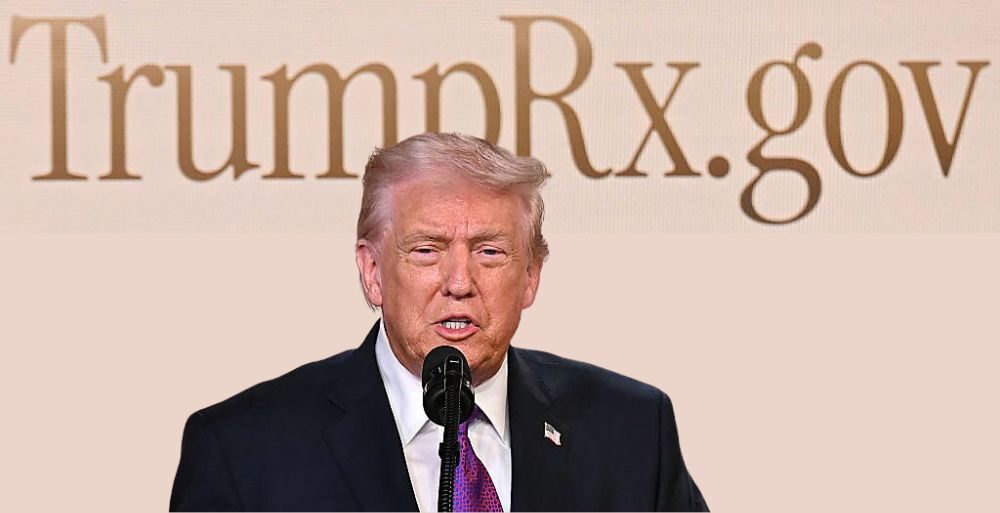
President Donald Trump officially introduced a new healthcare platform titled TrumpRx this Thursday, positioning the initiative as a landmark shift in the domestic pharmaceutical market. During the announcement, the president characterized the platform as a transformative healthcare effort designed to provide the most significant reduction in prescription drug prices in American history. The administration indicated that the program is intended to aggressively tackle the rising costs of medication by utilizing specific pricing agreements and direct consumer incentives.
The newly launched platform functions primarily through a series of coupons applicable to 43 specific branded medications. These discounts range from 33 percent to 93 percent off the standard list price for a variety of conditions. The initial list of covered medications includes treatments for obesity, respiratory illnesses, infertility, bladder issues, and menopause. While the administration has touted these discounts as historic, health policy experts and consumer advocates have begun evaluating the practical impact of the program on the average American consumer.
Despite the significant percentages advertised, several policy analysts have expressed skepticism regarding the true scale of the savings. Observations from healthcare researchers suggest that the advertised prices achieved via TrumpRx coupons may still exceed the out-of-pocket costs typically paid by individuals with comprehensive private insurance. Juliette Cubanski, the deputy director of the Program on Medicare Policy at KFF, noted that insured patients often find that their existing coverage provides better value than the discounted list prices featured on the new government website.
However, the program may fill specific gaps for medications that are historically excluded from standard insurance formularies. Treatments for weight loss and in vitro fertilization are often poorly covered by private plans, meaning a wider segment of the population might find the TrumpRx discounts beneficial for those specific categories. For individuals lacking robust coverage for lifestyle or specialty drugs, the platform offers a centralized way to access manufacturer-backed pricing that was previously difficult to navigate.
A significant technical detail of TrumpRx is that the current offerings consist exclusively of branded versions of drugs. These prices are the result of Most Favored Nation pricing agreements established between the administration and pharmaceutical manufacturers. Under these agreements, drugmakers commit to providing certain medications at rates comparable to the lowest prices offered in other developed nations. While this represents a shift in federal procurement strategy, it also means the platform currently focuses on more expensive brand-name products rather than lower-cost generics.
The focus on branded drugs has drawn criticism from consumer advocacy groups who point out that generic alternatives are already widely available at a fraction of the cost. For example, the branded medication Protonix, used for stomach acid reduction, is listed on the platform with a 55 percent discount, bringing the cost to approximately 200 dollars for a 30-day supply. Market data indicates that the generic equivalent, pantoprazole, can be purchased for roughly 10 dollars using existing market-based discount tools. Similar price gaps exist for heart medications like Tikosyn, where the generic version remains significantly cheaper than the discounted brand-name price offered through the new initiative.
The prevalence of generic medications in the United States is a key factor in the potential reach of TrumpRx. Data from the Food and Drug Administration suggests that over 90 percent of all prescriptions in the country are filled as generics. Because the new platform targets the branded segment of the market, its utility may be concentrated among patients who require specific medications that do not yet have generic counterparts or those who prefer brand-name products for clinical reasons.
Advocates for healthcare reform have categorized the initiative as a reorganization of existing pharmaceutical assistance programs rather than a fundamental restructuring of the market. Anthony Wright, executive director of FamiliesUSA, suggested that the program acts more as a catalog for programs that have existed for some time to assist uninsured patients. From this perspective, the benefits may be limited in scope regarding the number of drugs offered and the population eligible to receive them.
Conversely, some former health officials have offered a more optimistic view of the platform. Ashish Jha, who previously coordinated federal pandemic responses, described the initiative as a positive development for the uninsured population. For the millions of Americans without any form of health coverage, a centralized government-verified portal for drug coupons provides a layer of accessibility and cost-certainty that was previously absent from the cash-pay market.
The eligibility requirements for TrumpRx include specific legal restrictions that exclude certain groups. The platform explicitly states that individuals enrolled in government-funded health plans, such as Medicaid, are ineligible to use the coupons. This exclusion is largely rooted in the federal anti-kickback statute, which prevents the exchange of items of value in connection with items or services reimbursable by federal healthcare programs. Consequently, the program is primarily tailored toward the uninsured and those with private insurance plans.
The current scale of the program is another point of discussion among academic observers. Yunan Ji, an assistant professor at Georgetown’s McDonough School of Business, noted that the scope appears limited as it currently stands. With roughly 8 percent of the American population remaining uninsured, and the platform only covering 43 medications, the immediate impact is expected to be felt by a relatively small subset of the total patient population. Administration officials have countered this by stating that the inventory of available medications will expand in the coming months.
There are also long-term economic considerations regarding the use of Most Favored Nation pricing. Economic theory suggests that when large markets like the United States demand the lowest available global price, it can create upward pressure on initial launch prices. Manufacturers may set higher starting prices for new drugs to protect their global margins, knowing that those prices will serve as the benchmark for various international agreements. Additionally, this policy could lead to delays in drug launches in other countries that have strict price controls, as companies weigh the impact of those prices on their American revenue.
During the launch event, the president acknowledged that the strategy could have international ramifications. He noted that while costs are expected to decrease for American consumers, the pricing structures in other nations may see an increase as manufacturers adjust to the new domestic requirements. This shift is intended to rebalance the global pharmaceutical market, where Americans have historically paid significantly higher prices than their counterparts in Europe and Asia for the same medications.
As the program rolls out, the administration will likely face continued questions regarding its interaction with private insurance and the potential for the platform to include generic options in the future. For now, the success of TrumpRx will be measured by its ability to provide tangible relief to the cash-pay segment of the healthcare market and whether it can effectively scale its offerings to include a more diverse range of therapeutic classes.