







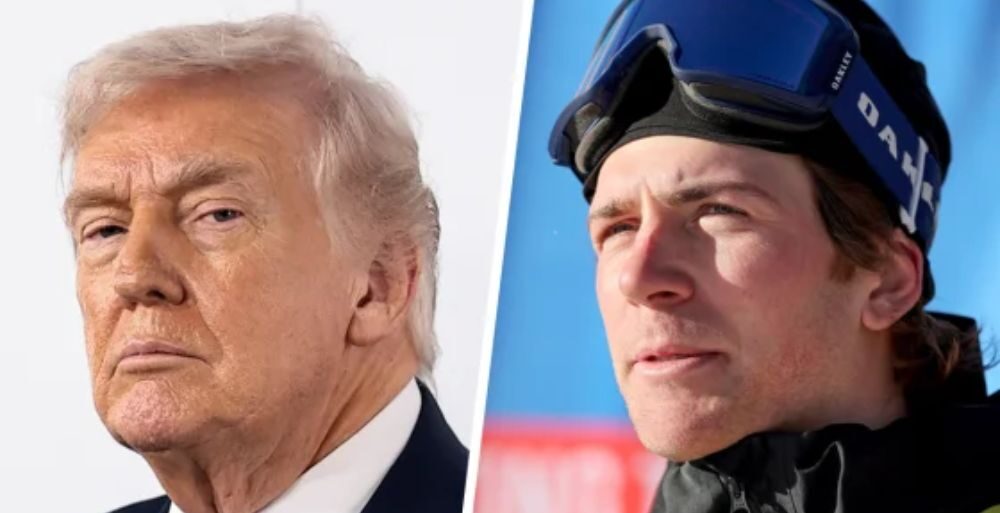
United States President Donald Trump issued a sharp rebuke on Sunday regarding American Olympic athletes who have used their platform at the Milan Cortina Winter Games to criticize his administration policies. The president suggested that it is difficult for the nation to support competitors who publicly dissent against domestic government actions, specifically labeling one athlete a loser for his remarks. The exchange marks a significant escalation in the ongoing tension between the executive branch and professional athletes, highlighting a deepening cultural divide over the role of political expression in international sports.
The controversy began during a press conference in Milan where several members of Team USA were asked by reporters to share their perspectives on representing the United States during a period of heightened immigration enforcement. The athletes offered varied responses that touched on their personal values, the complexities of national identity, and their concerns regarding the current political climate in Washington. These statements quickly migrated from the press room to social media, where they ignited a firestorm of debate involving high-profile political figures and celebrities.
Freestyle skier Hunter Hess was among the first to express mixed emotions about his role as a representative of the United States. Hess told reporters that while he is competing in Milan on behalf of the community and supporters who helped him reach the Olympic stage, he does not necessarily align himself with every policy enacted by the current administration. He noted that he feels he represents the country when its actions align with his moral values, but clarified that wearing the national colors does not constitute a blanket endorsement of every domestic development.
The response from the White House was swift and direct. President Trump utilized his Truth Social platform to criticize Hess, stating that the skier’s comments made it difficult for the public to cheer for him. The president characterized Hess as a loser and argued that if an athlete does not feel they represent their country, they should not have sought a spot on the Olympic team. The president’s remarks reflect a long-standing view within his administration that national representatives in global arenas should maintain a unified front of support for the state.
The friction in Milan was not limited to the president’s social media posts. The atmosphere at the Games has been further complicated by the presence of other political and media figures. YouTuber-turned-boxer Jake Paul, a prominent supporter of the administration, was among the loudest critics of the athletes. Paul took to X to suggest that any athlete who does not wish to represent the country should relocate elsewhere. Shortly after posting his critique, Paul was seen attending an Olympic hockey game alongside Vice President JD Vance, further signaling the administration’s alignment with those criticizing the athletes.
Other members of the U.S. delegation also voiced concerns during the Friday news conference. Freestyle skier Chris Lillis specifically referenced the actions of Immigration and Customs Enforcement, expressing a sense of heartbreak regarding current events in the United States. Lillis emphasized a need for the country to focus on universal rights and the treatment of all individuals with respect and love. He argued that the athletes themselves represent a version of America that strives for these ideals, suggesting that their performance on the snow and ice is a form of representation distinct from government policy.
The intersection of sports and social issues also extended to the figure skating rink. U.S. skater Amber Glenn commented on the challenges faced by the LGBTQ+ community under the current administration. Her remarks added another layer to the discourse, drawing in a wider range of critics and supporters. Glenn later reported receiving an alarming volume of hostile messages and threats on social media, prompting her to announce a significant reduction in her online activity to protect her mental health and focus on her upcoming competitions.
The backlash has not been confined to the executive branch or social media influencers. A variety of conservative figures have joined the chorus of disapproval, including former professional athletes and members of Congress. Former NFL quarterback Brett Favre, actor Rob Schneider, and U.S. Representative Byron Donalds have all voiced their opposition to the athletes’ public stances. This collective criticism has fueled a broader public debate about the expectations placed on Olympians and whether they serve as representatives of the government or the American people at large.
The United States Olympic and Paralympic Committee addressed the rising tensions in a formal statement on Sunday. The committee acknowledged a significant increase in abusive and harmful messages directed toward members of Team USA. Officials stated that they are actively working to monitor social media platforms, remove harassing content, and report any credible threats of violence to law enforcement agencies. The organization reaffirmed its commitment to the safety and well-being of its athletes, emphasizing that they support the rights of competitors to express themselves.
Historically, the Olympic Games have frequently served as a backdrop for political expression, though such instances often lead to internal friction within the participating delegations. The current situation in Milan is unique due to the speed and reach of digital communication, which allows for real-time reactions from the highest levels of government. The visibility of the disagreement has cast a shadow over the athletic performances of the U.S. team, as the conversation continues to shift from podium finishes to political alignment.
The administration’s stance remains that Olympic participation is a privilege that carries an inherent responsibility to uphold the image of the nation. Supporters of the president’s view argue that the Olympic Games should remain a neutral ground where national pride takes precedence over individual political grievances. They contend that public dissent during an international event can undermine team morale and the country’s global standing.
Conversely, supporters of the athletes argue that the first amendment rights of American citizens do not vanish when they put on a team uniform. They maintain that athletes are in a unique position to highlight issues they believe are critical to the future of the country. This group views the athletes’ honesty as a form of patriotism, suggesting that true representation involves a commitment to improving the nation by speaking out against perceived injustices.
As the Milan Cortina Games continue, the focus remains divided between the athletic events and the ongoing political discourse. With more competitions scheduled in the coming days, it remains to be seen if other athletes will join the conversation or if the intense backlash will lead to a period of silence within the delegation. For now, the rift between the White House and several prominent Olympians serves as a stark reminder of the volatile intersection of sports, politics, and national identity in the modern era.