



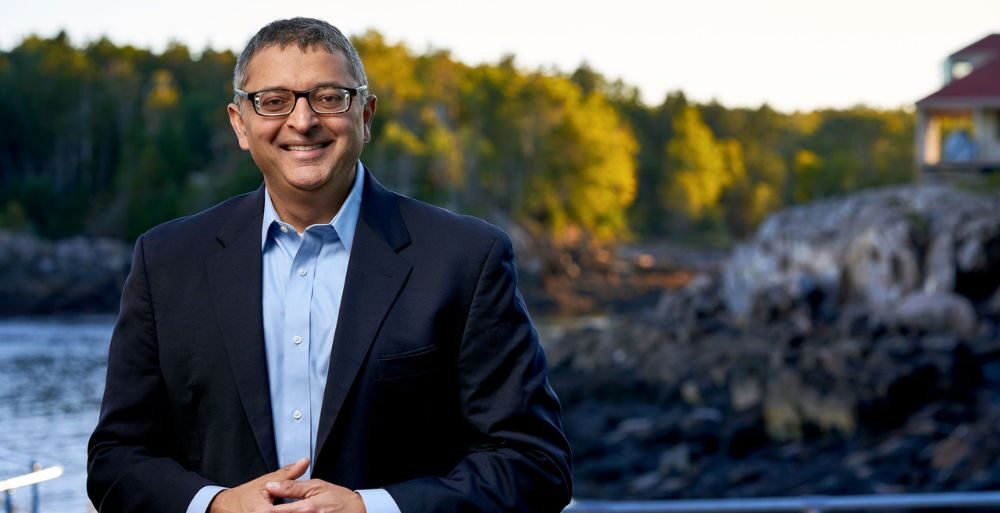
Nirav Shah understands that not everyone agrees with how he led the state of Maine through the coronavirus pandemic. He is happy to admit that he made some mistakes during his tenure as the director of the Maine Center for Disease Control and Prevention. That admission, he argues, is exactly why he is prepared to serve as governor. Shah, a leading Democratic gubernatorial candidate who ran the state’s public health agency from 2019 to 2023, believes that facing the scrutiny of the pandemic has forged him into a more capable leader. He notes that if he knew then what he knows now, he would have approached several aspects of the crisis differently. He credits his transparency about these challenges as a primary reason why his current candidacy has gained significant traction among voters.
Shah is part of a small but growing group of doctors and public health officials who helped steer their states through the global health crisis and are now seeking or holding elective office. Their candidacies represent a significant test of how the American public views the pandemic response and the individuals who implemented controversial measures in the name of safety. These campaigns offer a glimpse into whether voters will reward these officials for their stability during a period of intense uncertainty or if they will be penalized for the lingering memories of a dark and polarizing era. The transition from medical expert to political candidate brings the technical decisions of 2020 into the harsh light of modern electoral politics.
Decisions made during the coronavirus pandemic remain notably polarizing across the United States. Recent polling suggests that one of the few areas of widespread agreement is the belief that the pandemic did more to drive the country apart than to bring it together. According to a 2025 survey by the Pew Research Center, Democrats and Republicans remain deeply divided on issues such as mandatory vaccinations, institutional accountability, and whether government officials gave sufficient consideration to individual choice. Despite this friction, doctors turned candidates argue that they will ultimately be judged as comforters during a crisis rather than on a set of specific policy mandates. They view their roles as having provided a sense of calm and direction when the public felt most vulnerable.
The pandemic turned public health officials into overnight statewide celebrities and, in certain political climates, villains. Epidemiologists became the face of state government, holding hours-long daily briefings that detailed government actions and provided a semblance of stability. This phenomenon created a deep reservoir of support for these doctors, but it also fostered significant antipathy among those who opposed lockdowns and mandates. This duality is a central theme in the upcoming election cycle as these figures move from the laboratory and the briefing room to the campaign trail. The transition requires a shift from clinical communication to political persuasion, a path that has proven successful for some while presenting steep hurdles for others.
The vast majority of candidates associated with the pandemic response are Democrats, reflecting the party’s embrace of scientific expertise in the face of various political attacks. This trend stands in contrast to the rise of figures like Health and Human Services Secretary Robert F. Kennedy Jr., who has built a platform on vaccine skepticism. While the majority of doctors currently serving in Congress are Republicans, such as Senators Rand Paul of Kentucky and Bill Cassidy of Louisiana, the Republican Party has collectively moved against many of the actions taken to combat the virus. Specifically, the GOP has voiced strong opposition to masking rules and prolonged school closures, which remain the most significant political vulnerabilities for Democrats involved in the response.
Shah has been candid about these vulnerabilities. In discussions regarding his record, he admitted that he would have approached school closures differently with the benefit of hindsight. While he defended Maine’s record, noting that closures were shorter than in many other states, he acknowledged that retrospective analysis makes past decisions appear simpler than they were in the moment. He also expressed regret over not being clearer when explaining that public health guidelines were subject to change as the scientific understanding of the virus evolved. This shifting guidance regarding masking and quarantine protocols became a major point of contention for many voters and political critics who felt the goalposts were constantly moving.
The political viability of health officials is already being demonstrated in states like Hawaii. Governor Josh Green, a doctor who served as the state’s pandemic response point person while he was lieutenant governor, credits his role in the crisis for his 2022 victory. Green believes he formed a lasting bond with the population during that time. He suggests that the real litmus test for such candidates is whether the public perceives them as a caring physician and someone who can connect with the community. Green is currently considered the overwhelming favorite to win reelection later this year, suggesting that in some regions, the physician-leader model is highly effective.
In Ohio, the dynamic is being tested by Amy Acton, the presumptive Democratic nominee for governor. As the former director of the Ohio Department of Health, Acton became a hero to many for steering the state through the early months of the pandemic. However, her decisions also sparked intense, personal protests, including demonstrations by armed individuals at her home. Acton has maintained that she is proud of her nonpartisan approach to the crisis, having worked under Republican Governor Mike DeWine. Her tenure included the first statewide school shutdown and the postponement of the 2020 presidential primary just hours before polls opened. She eventually resigned her post, citing her refusal to sign certain health orders that she believed would have been detrimental to public safety.
Republicans in Ohio are eager to use Acton’s pandemic record against her. Conservative grassroots leaders have identified her role in the response as her primary negative attribute among the Republican base, with some labeling her a top political enemy. While Shah faces a crowded primary in a left-leaning state, Acton’s path is complicated by Ohio’s recent history of backing Republican candidates like Donald Trump. She possesses a well of support for her high-profile leadership, but she also faces a vocal and motivated opposition that her potential Republican opponent, Vivek Ramaswamy, could look to activate. Political analysts note that while many have positive feelings about her leadership, the face of the pandemic response inherently invites questions about specific mandates and their long-term effects.
Not all political operatives believe that the pandemic response is a liability. Some advocacy groups focused on helping scientists seek office argue that they are not seeing a significant backlash to the pandemic-era records of candidates like Shah or Acton. Instead, they view the exposure gained during the crisis as a positive, noting that these officials introduced themselves to their constituents as leaders who rely on evidence and compassion. The cultural impact of these officials was significant; both Shah and Acton were featured as bobbleheads, and local businesses in Maine even created specialty products to honor Shah’s work. This level of name recognition is often difficult for first-time candidates to achieve.
Shah admitted that the negative sentiment surrounding the pandemic was a serious consideration when he decided to run for office. He worried that the controversial nature of the response might drown out his other policy messages regarding health care and education. He acknowledges that this remains a risk in any campaign involving a former health official. He believes that any candidate who attempts to ignore the polarizing nature of the pandemic is not being honest about the current political landscape. As these doctors move toward the general election, their success or failure will likely serve as a definitive verdict on the political legacy of the pandemic response in the United States.