








The Indian Institute of Technology Madras has launched a multi-hub expansion across the United States to accelerate global research and startup commercialization.
The Indian Institute of Technology Madras, or IIT Madras, has officially broadened its international reach by establishing a comprehensive operational framework within the United States. This strategic move is orchestrated through the newly formed IIT Madras Global Research Foundation, a multinational entity designed to serve as a bridge between Indian academic excellence and American innovation ecosystems. The initiative marks a significant milestone in the institution’s history, signaling a transition from a regional educational powerhouse to a globally networked hub for deep-tech innovation and high-level academic exchange.
At the center of this expansion is a formal academic partnership with Rutgers, The State University of New Jersey. This collaboration is structured to facilitate a wide array of scholarly and commercial activities, including the development of joint master’s degree programs. These programs are expected to provide students from both institutions with a unique, cross-continental perspective on engineering and technology management. Beyond the classroom, the agreement focuses heavily on collaborative research initiatives and the joint commercialization of intellectual property, ensuring that theoretical breakthroughs in the laboratory find a viable path to the global marketplace.
To further bolster its presence on the U.S. East Coast, IIT Madras has entered into a strategic agreement with Stages Consulting, based in New Jersey. This partnership is specifically tailored to support the growth of deep-tech startups. By providing access to specialized mentoring, venture funding, and fully equipped physical infrastructure near Princeton, the collaboration aims to lower the barrier to entry for Indian startups seeking a foothold in the American market. Furthermore, Stages Consulting will assist in creating vital customer linkages, allowing emerging technologies to scale rapidly within the competitive U.S. commercial landscape.
The expansion strategy also encompasses a significant presence on the U.S. West Coast, targeting the robust technology sectors of California. In this region, the IIT Madras Global Research Foundation will offer comprehensive soft-landing support for startups and research programs. This includes operational assistance, access to corporate networks, and dedicated infrastructure designed to foster industry collaborations. By establishing a physical and professional presence in California, IIT Madras intends to tap into the Silicon Valley ecosystem, facilitating market access for emerging technology sectors such as artificial intelligence, biotechnology, and sustainable energy solutions.
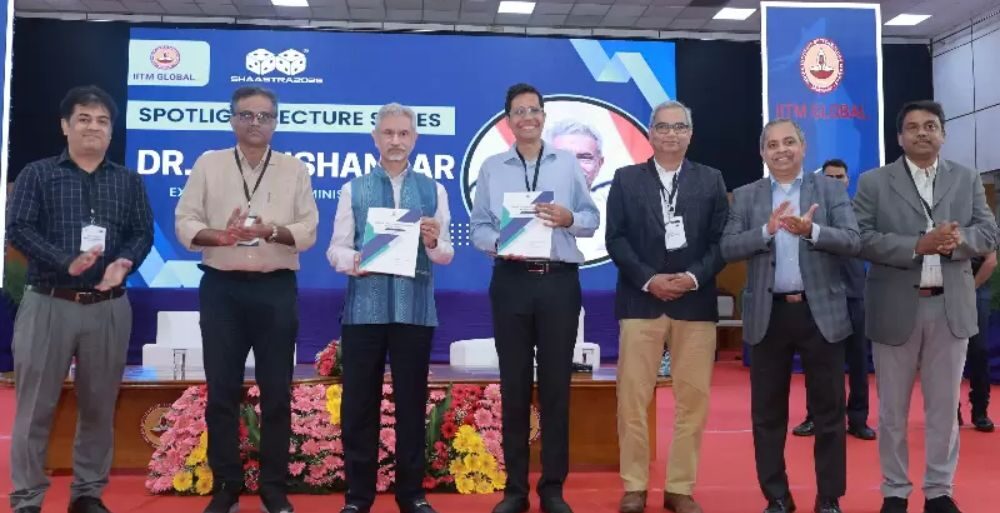
The operational backbone of these initiatives, the IIT Madras Global Research Foundation, was inaugurated on January 2 at the IIT Madras campus in Chennai. The launch was presided over by India’s External Affairs Minister, S. Jaishankar, who emphasized the importance of such international ventures in the context of India’s broader foreign policy objectives. Minister Jaishankar noted that the overseas expansion of premier Indian institutions strengthens the nation’s global engagement and serves as a testament to its growing soft power and human resource capabilities. He highlighted that international campuses and research hubs are essential for India to leverage its intellectual capital on a global scale.
The foundation is designed to function as a multinational platform that integrates education, entrepreneurship, and research. By positioning itself as a globally networked hub, IIT Madras aims to create a feedback loop where international market demands inform domestic research priorities, and Indian innovations are refined through global competition. This model of co-development is intended to create scalable education and innovation frameworks that can be applied across different geographic and economic contexts, providing a blueprint for other Indian institutions seeking international growth.
The focus on deep-tech startups is a particularly notable aspect of this expansion. Deep-tech, which refers to companies founded on significant scientific or engineering breakthroughs, often requires longer development cycles and more substantial capital investment than traditional software startups. By providing dedicated infrastructure near major research universities like Princeton and Rutgers, as well as in the innovation clusters of California, IIT Madras is ensuring its spin-off companies have the specialized support required to navigate the complexities of international intellectual property law and venture capital procurement.
Furthermore, the partnership with Rutgers underscores a growing trend of institutional cooperation between Indian and American universities. As the demand for specialized technical talent continues to rise globally, joint degree programs and shared research facilities become increasingly valuable. These collaborations allow for a more efficient sharing of resources, including laboratory equipment, datasets, and faculty expertise. For students, the opportunity to earn credentials recognized in both India and the U.S. provides a significant competitive advantage in the international job market.
Historically, IIT Madras has been at the forefront of the Indian startup movement through its Research Park in Chennai, which has incubated hundreds of successful companies. The expansion into the United States represents an evolution of this successful model. It acknowledges that for many high-tech innovations, the path to scale requires immediate access to the U.S. market, which remains the world’s largest consumer of advanced technologies and a primary source of venture capital. The Global Research Foundation will act as the primary vehicle for this transition, managing the logistics of international operations and ensuring that the interests of the institute and its partners are aligned.
The broader implications of this move extend to the diplomatic relationship between India and the United States. As both nations seek to deepen their cooperation in critical and emerging technologies—such as semiconductors, space exploration, and telecommunications—the presence of an Indian academic and research anchor in the U.S. facilitates deeper people-to-people and institution-to-institution ties. This bottom-up approach to international relations complements state-level agreements and creates a durable foundation for long-term technological synergy.
As the IIT Madras Global Research Foundation begins its operations, the initial focus will be on operationalizing the agreements with Rutgers and Stages Consulting. This involves establishing the administrative protocols for student exchanges and identifying the first cohort of startups to receive soft-landing support in California. The success of these early initiatives will likely dictate the pace of further expansion, as the institute considers similar hubs in other global innovation centers across Europe and Asia. For now, the focus remains firmly on the United States, utilizing the existing strengths of the Indian-American diaspora and the established ties between the two nations’ academic communities.
In conclusion, the U.S. expansion of IIT Madras represents a sophisticated approach to academic internationalization. It moves beyond simple exchange programs toward a model of deep integration with global innovation hubs. By combining high-level academic partnerships with practical support for technology commercialization, IIT Madras is positioning itself not just as a center for learning, but as a critical node in the global technology supply chain. The support from the Indian government, as evidenced by Minister Jaishankar’s presence at the launch, underscores the strategic importance of this venture to India’s national interest and its aspirations for global leadership in science and technology.