







The Trump administration reportedly requested that major transit hubs be renamed after the president as a condition for releasing billions in stalled rail project funding.
Recent disclosures regarding the executive branch’s approach to national infrastructure have revealed specific instances where the administration of President Donald Trump allegedly proposed renaming high-profile landmarks in exchange for the release of federal funds. According to multiple sources, administration officials engaged with Senate Minority Leader Chuck Schumer regarding the naming rights for Washington Dulles International Airport in Virginia and Pennsylvania Station in New York City. These discussions centered on the release of critical capital for the Gateway project, a massive rail initiative currently facing significant financial uncertainty.
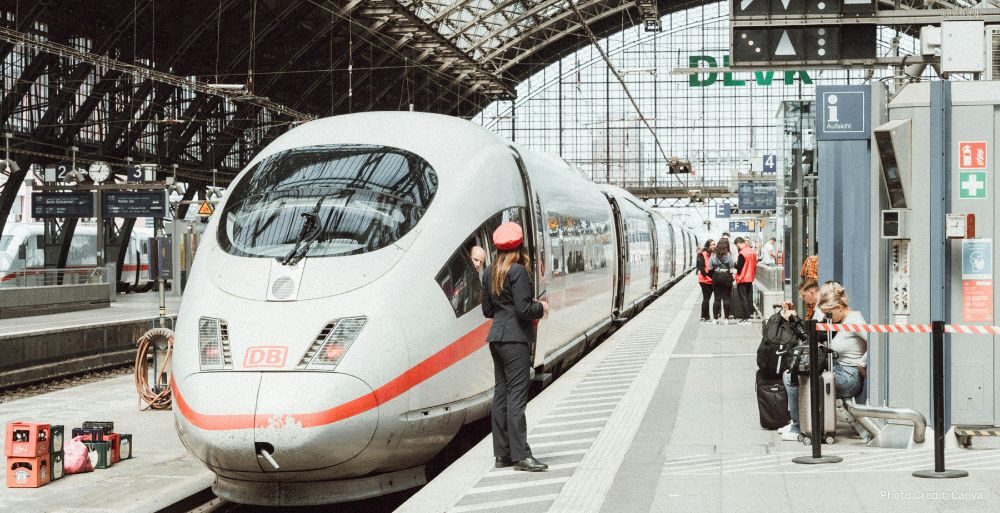
The Gateway project, valued at approximately $16.1 billion, includes the construction of a new railway tunnel under the Hudson River to connect New Jersey and New York. While the project received a $6.9 billion boost during the previous administration, the current executive branch halted funding at the onset of the federal government shutdown last fall. Despite the subsequent passage of full appropriations packages, the administration has yet to release the allocated money. White House budget director Russell Vought previously stated that infrastructure funding was being paused to ensure it was not utilized on what the administration characterized as unconstitutional diversity, equity, and inclusion principles.
The reported proposal to trade naming rights for the $16 billion in federal rail funding has met with sharp resistance from regional leaders. A source close to Senator Schumer indicated that there is no room for such a trade, noting that the president possesses the unilateral authority to restart the funding. Similarly, Senator Kirsten Gillibrand of New York described the proposal as an attempt to prioritize personal branding over the economic welfare of the region. Gillibrand emphasized that the Gateway tunnel is essential for supporting union jobs and the broader economic stability of the Northeast corridor, which she argued is currently under pressure from administration tariffs.
The legal stakes of the funding freeze have escalated, as the states of New York and New Jersey have filed litigation to force the administration to release the already appropriated funds. Project officials have warned that construction will be forced to a halt if the capital is not provided immediately, a move that could result in the layoffs of thousands of construction workers. Current projections indicate that existing money for the Gateway project is set to run out this Friday, placing immense pressure on the ongoing negotiations between the White House and Congressional leadership.
The focus on Dulles International Airport and Penn Station follows a broader pattern of the president seeking to attach his name to federal agencies and initiatives. In recent months, the administration launched “TrumpRX,” a website for lower-cost prescription drugs, and proposed the “Trump Gold Cards,” a pathway to residency and citizenship involving a $5 million fee. Furthermore, the president’s name was recently added to the U.S. Institute of Peace—an agency the administration had previously sought to dismantle—and the Kennedy Center, following a vote by a handpicked board. The latter move prompted significant backlash from the Kennedy family and led to performance cancellations and legal challenges.
+1The legislative effort to rename Dulles International Airport is not entirely new. A Republican member of the House previously introduced a bill to formally rename the facility after the president, though the legislation has remained stagnant in a subcommittee on aviation since February. Similar efforts are also occurring at the state level; in Florida, a state lawmaker has proposed renaming Palm Beach International Airport to honor the president. These concurrent efforts suggest a coordinated strategy to leverage both legislative and executive tools to expand the president’s brand across the nation’s transportation infrastructure.
+1Historically, the naming of major infrastructure is a collaborative process involving local stakeholders, historical commissions, and legislative bodies. Dulles International Airport, named for former Secretary of State John Foster Dulles, is managed by the Metropolitan Washington Airports Authority, while Penn Station involves complex jurisdictional agreements between Amtrak and state transit agencies. The administration’s attempt to use discretionary funding as leverage for naming rights represents a significant departure from standard federal procurement and naming conventions, which typically prioritize historical significance or regional heritage.
The delay of the Gateway project has long-term implications for the American economy. The Hudson River tunnels are a critical bottleneck for the entire Northeast Corridor, carrying hundreds of thousands of commuters daily. Engineers have warned for years that the existing century-old tunnels are deteriorating and remain vulnerable to failure. By linking the survival of this project to the naming of landmarks, the administration has introduced a unique set of political variables into a technical and economic crisis that has spanned several presidential terms.
+1The White House has declined to comment on the specific reporting regarding the naming proposals for Dulles and Penn Station, and Senator Schumer’s office has not provided an official response. However, the emergence of these reports via Punchbowl News and subsequent confirmation by other outlets has intensified the debate over the limits of executive power in relation to congressional appropriations. Critics argue that the impoundment of funds for the purpose of securing personal honors may conflict with existing federal law regarding the timely distribution of taxpayer money.
As the Friday deadline for project funding approaches, the standoff highlights the tension between the administration’s branding objectives and the functional requirements of national infrastructure. Whether the administration will eventually release the Gateway funds without the requested naming concessions remains unclear. For now, the future of the nation’s busiest rail corridor and the identities of its most iconic transit hubs remain at the center of a high-stakes political negotiation that transcends traditional policy debates.