








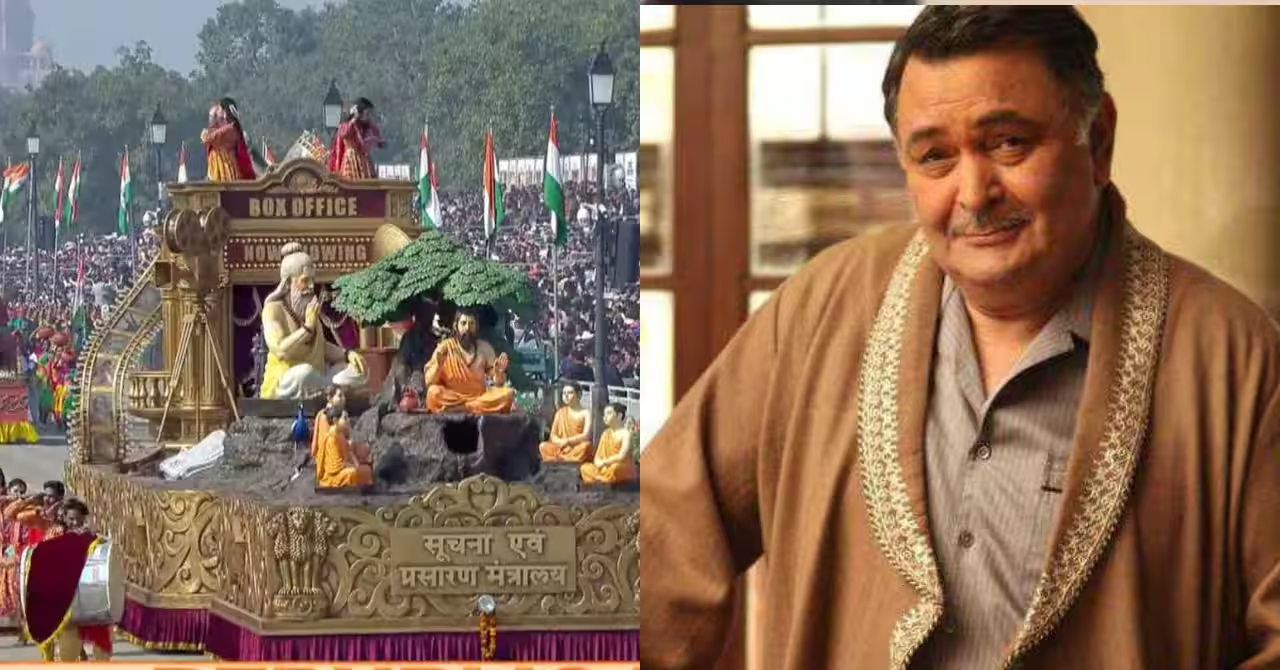
Indian cinema achieved a landmark moment in its cultural and national journey on January 26, 2026, when a dedicated tableau celebrating the film industry rolled down Kartavya Path during the 77th Republic Day parade — fulfilling a vision articulated by late actor Rishi Kapoor six years earlier.
The tableau, titled “Bharat Gatha”, marked the first time Indian cinema received a standalone tribute at the Republic Day celebrations, recognizing the film industry’s role in shaping India’s identity, storytelling legacy, and global cultural influence.
Curated by celebrated filmmaker Sanjay Leela Bhansali in collaboration with the Ministry of Information and Broadcasting, the tableau stood out as a powerful blend of art, history, patriotism, and cinematic grandeur — transforming Kapoor’s 2020 suggestion into a national reality.
A Vision Rishi Kapoor Voiced in 2020
The tribute traces its origin to a heartfelt social media post made by Rishi Kapoor in 2020, during the 71st Republic Day celebrations, when he urged the government to honor the Indian film industry with a dedicated presence in the national parade.
“I request the Indian government to dedicate a major float to the Indian Film Industry (which is now the largest in the world). All artistes would be part of the Parade and March Past. The world must see our participation too. We are all proud ‘Desis’. Next year. Jai Hind!” Kapoor had written.
At the time, Kapoor’s appeal sparked mixed reactions — drawing both praise for recognizing cinema’s cultural power and criticism from those who felt Republic Day should remain focused on military and civic achievements.
Six years later, the moment symbolized the fulfillment of his dream, transforming a personal wish into a national acknowledgment of Indian cinema’s impact.
“Bharat Gatha”: A Tribute to Storytelling and Cultural Identity
The “Bharat Gatha” tableau celebrated Indian cinema not merely as entertainment, but as a living archive of India’s social evolution, cultural values, and artistic expression.
Officials described the initiative as a statement that films serve as a bridge between India’s past, present, and global future.
“Indian cinema represents the soul of our nation — preserving heritage, amplifying voices, and connecting India to the world,” a senior official from the Ministry of Information and Broadcasting said.
The tableau showcased:
- India’s storytelling traditions
- The evolution of Indian films across decades
- The global reach of Bollywood and regional cinema
- Cinema’s role in shaping patriotism, social reform, and identity
Sanjay Leela Bhansali Makes History at Republic Day Parade
With this initiative, Sanjay Leela Bhansali became the first Indian filmmaker to curate a Republic Day tableau, marking a historic crossover between cinema and national ceremonial representation.
Known for visually rich epics such as Devdas, Bajirao Mastani, and Padmaavat, Bhansali brought aesthetic grandeur and emotional depth to the project, reinforcing the idea that cinema is both art and national heritage.
“This tableau is a tribute to every storyteller, filmmaker, and artist who has carried India’s voice to the world,” Bhansali reportedly said during the conceptual phase.
The creative direction reflected a blend of classical Indian aesthetics and modern cinematic storytelling, underscoring India’s evolution as a cultural superpower.
A Historic Moment for Indian Cinema
The inclusion of a cinema-focused tableau is widely being seen as a turning point in India’s cultural recognition, elevating the film industry to the level of national institutions such as the armed forces, scientific organizations, and traditional art forms.
Observers noted that the moment signifies:
- Official recognition of cinema as cultural diplomacy
- Acknowledgment of the film industry’s economic and artistic contributions
- Validation of cinema’s role in shaping India’s global image
“This is not just a tribute to movies. It is a tribute to India’s voice, imagination, and soft power,” said a veteran film historian.
Indian Cinema’s Global Influence Continues to Rise
India remains the world’s largest film-producing nation, creating over 1,500 films annually across multiple languages — surpassing output from the United States and China.
Indian films enjoy strong viewership in:
- Russia
- China
- Japan
- The United States
- The Middle East
- Africa
From mainstream Bollywood to Tamil, Telugu, Malayalam, Bengali, and independent cinema, Indian films continue to:
- Shape global pop culture
- Influence fashion and music
- Drive tourism and cultural interest
- Expand India’s soft power footprint
“Indian cinema has become one of the country’s most influential global ambassadors,” a cultural analyst said.
Social Media Reacts: A Moment of Pride and Nostalgia
News of the tableau prompted widespread reactions across social media, with fans remembering Rishi Kapoor’s original post and celebrating the realization of his vision.
Many described the moment as:
- A fitting tribute to Kapoor’s legacy
- A symbol of India honoring its creative icons
- A recognition long overdue
“Rishi Kapoor dreamt it, and India delivered,” one user wrote.
“Cinema is finally being recognized as a national treasure,” another commented.
Kapoor Family Legacy and Cinema’s National Standing
Rishi Kapoor, part of the legendary Kapoor film dynasty, had long championed the importance of Indian cinema as a cultural institution. His advocacy reflected a broader generational belief that films are not just entertainment but historical documentation and national pride.
His dream coming to life adds an emotional layer to the tableau’s significance, honoring not just the industry — but Kapoor’s enduring commitment to Indian storytelling.
Beyond Entertainment: Cinema as India’s Cultural Archive
Experts emphasize that Indian cinema:
- Preserves linguistic diversity
- Reflects social change
- Amplifies regional narratives
- Shapes collective memory
“Cinema is India’s modern folklore — a mirror of society and a bridge to future generations,” said a media studies professor.
The Republic Day tribute reinforces the idea that films deserve a place alongside India’s major national achievements.
A Cultural Milestone for Future Generations
The successful presentation of the “Bharat Gatha” tableau could pave the way for greater representation of creative industries in future national celebrations.
Cultural commentators believe this recognition could:
- Encourage stronger institutional support for arts and media
- Inspire younger filmmakers and storytellers
- Strengthen India’s global cultural diplomacy
“This marks the beginning of cinema being treated not just as business or entertainment — but as a pillar of India’s identity,” a film industry leader noted.
Conclusion: A Dream Realized, A Legacy Honored
The Republic Day 2026 tribute to Indian cinema stands as a historic acknowledgment of storytelling, creativity, and cultural power — fulfilling a dream envisioned by Rishi Kapoor and celebrating an industry that has carried India’s voice across borders for decades.
As the “Bharat Gatha” tableau rolled past the national flag, it symbolized more than cinematic pride — it represented India honoring its artists, narratives, and cultural soul.