






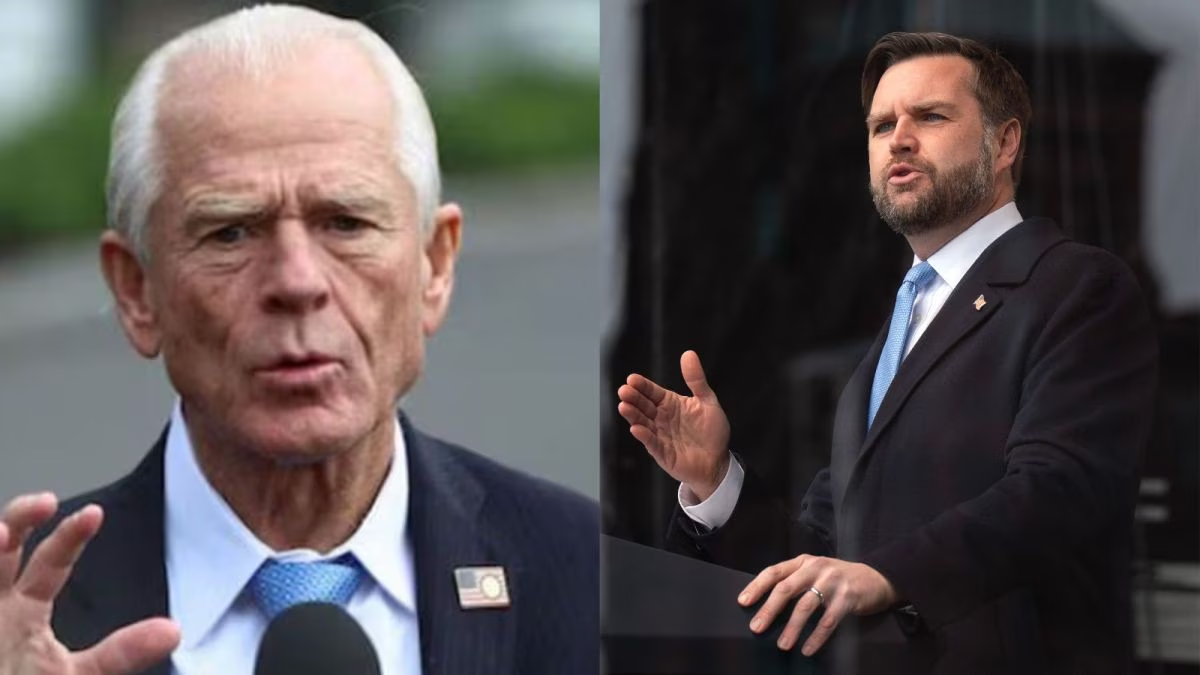
A newly surfaced report based on leaked audio recordings of US Republican Senator Ted Cruz has revealed internal divisions within the Trump administration over trade policy, including claims that Vice President JD Vance and White House economic adviser Peter Navarro played a decisive role in blocking a proposed US–India trade agreement.
According to a report by Axios, Cruz made the remarks during private donor meetings in early and mid-2025, offering a rare glimpse into behind-the-scenes disagreements within Republican leadership over tariffs, foreign trade, and economic strategy.
The recordings, totaling nearly 10 minutes, were obtained by Axios from a Republican source and reportedly capture Cruz criticising the administration’s protectionist trade stance, which he argued has destabilised global markets and undermined American economic interests.
Cruz Alleges Internal Pushback Against US–India Trade Pact
In the leaked conversations, Cruz asserted that JD Vance and Peter Navarro were instrumental in stalling progress on a trade deal with India, at a time when New Delhi and Washington were pursuing expanded economic cooperation.
He further claimed that President Donald Trump himself occasionally intervened to delay or halt the agreement.
“Sometimes the President stepped in to block it,” Cruz reportedly said, describing repeated roadblocks to finalising the deal.
The comments underscore a broader ideological rift within the Republican Party — between free-trade conservatives like Cruz and economic nationalists aligned with Vance and Navarro.
Tariff Strategy Under Fire
Cruz used the donor meeting to distance himself from the administration’s tariff-heavy trade policy, portraying it as economically risky and politically damaging.
He described the strategy as disruptive to global economies and warned that continued escalation could harm American consumers, investors, and workers.
“This tariff approach has rattled economies around the world,” Cruz reportedly said in the recordings.
His criticism reflects long-standing tensions between traditional pro-trade Republicans and the Trump-era protectionist faction, which views tariffs as a tool to counter foreign competition and geopolitical rivals.
Clash with Trump Over Tariffs
Cruz also recounted a heated late-night phone call with President Trump in April 2025, shortly after the White House announced new protectionist trade measures.
According to Cruz, multiple senators urged Trump to roll back the tariff policy, but the discussion turned tense.
“Trump was yelling, cursing… Trump was in a bad mood,” Cruz said, according to Axios.
“I’ve been in conversations where he was very happy. This was not one of them.”
The senator described the call as unproductive, suggesting significant friction between lawmakers and the White House over the economic fallout of tariffs.
Trade Tensions with India Continue to Rise
The revelations come amid prolonged and strained trade negotiations between India and the United States.
Tensions escalated after the Trump administration imposed an additional 25% tariff on Indian goods, citing India’s continued oil trade with Russia. The move brought total US duties on Indian imports to 50%, triggering backlash from Indian policymakers and business groups.
The tariffs have hit Indian exporters, particularly in sectors such as textiles, jewellery, pharmaceuticals, and manufacturing, while also raising concerns among US importers and retailers about higher costs and supply chain disruptions.
Trade analysts warn that continued tariff escalation could derail bilateral economic cooperation between the world’s two largest democracies.
Cruz Positions Himself as a Free-Trade Conservative
In the recordings, Cruz portrayed himself as a traditional free-trade Republican, arguing for open markets, international economic engagement, and strategic interventionism.
He reportedly distanced himself from JD Vance, whom he characterised as aligned with conservative media figure Tucker Carlson and the broader nationalist movement that favours economic isolationism.
“There’s a growing divide inside the party over America’s global economic role,” Cruz suggested, framing himself as part of the GOP’s older free-market wing.
This ideological split reflects a broader transformation within the Republican Party, where Trump-aligned populism increasingly challenges legacy conservative economic doctrine.
Warning of Political Fallout Ahead of 2026 Midterms
Cruz issued a stark warning about the political risks of continued tariff pressure, predicting severe electoral consequences if economic conditions deteriorate before the 2026 midterm elections.
“If we get to November of 2026 and people’s 401(k)s are down 30%, and grocery prices are up 10–20%, we’re going to face a bloodbath,” Cruz reportedly said.
He forecast potential Republican losses in both the House and Senate, along with renewed impeachment pressure on the White House, should economic dissatisfaction among voters intensify.
“This could trigger sustained political damage,” Cruz warned, citing inflation, market instability, and cost-of-living concerns.
Broader Implications for US–India Relations
The reported internal conflict raises questions about the future of US–India economic ties, especially as both nations seek to counter China’s global influence, secure supply chains, and expand bilateral trade.
Experts note that a stalled trade deal could:
- Slow Indian export growth
- Reduce US access to India’s expanding consumer market
- Undermine strategic alignment in technology, defence, and manufacturing
- Complicate diplomatic cooperation amid geopolitical uncertainty
“Trade policy has become a battleground between nationalism and global economic strategy,” said a Washington-based trade analyst.
“India sits at the centre of that conflict.”
Political Shockwaves from the Leak
The leaked audio is likely to intensify political debate in Washington, drawing attention to:
- Internal fractures within the Trump administration
- Conflicting Republican economic ideologies
- The future of tariffs as a policy weapon
- The direction of US–India trade negotiations
While neither the White House nor Cruz’s office has formally responded to the Axios report, the revelations have already sparked discussion among policy experts, lawmakers, and business leaders.
The Bigger Picture: Trade, Power, and Party Politics
At its core, the leak highlights a broader struggle over America’s role in global trade — whether to embrace free markets and alliances or double down on protectionism and economic nationalism.
Cruz’s comments suggest that trade policy is no longer just an economic issue, but a defining political fault line — with implications for global diplomacy, domestic elections, and the stability of international markets.
As US–India negotiations continue under pressure, the fallout from these revelations could reshape trade strategy on both sides of the Pacific.