





India and the European Union (EU) are moving closer to finalising what leaders on both sides have dubbed the “mother of all trade deals”, as shifting global geopolitics and renewed tariff threats from the United States reshape international trade priorities.
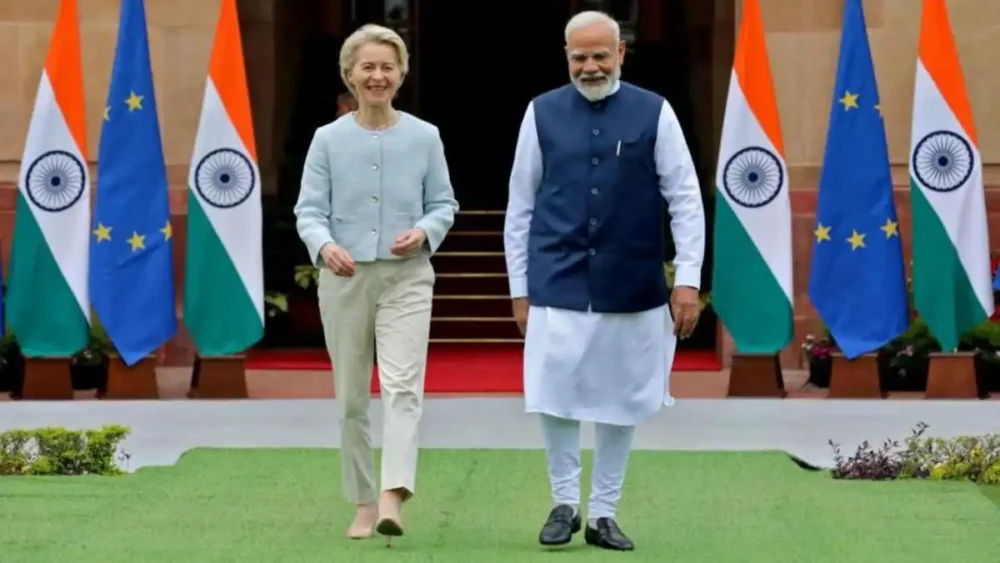
The momentum behind the long-pending India–EU Free Trade Agreement (FTA) has intensified ahead of India’s Republic Day celebrations next Monday, where European Council President Antonio Luís Santos da Costa and European Commission President Ursula von der Leyen will attend as chief guests. Beyond ceremonial diplomacy, their visit underscores a strategic push to deepen economic and political ties between Asia’s third-largest economy and the world’s largest trading bloc.
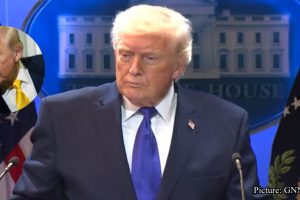
The timing of the renewed negotiations is significant. Europe is navigating heightened trade uncertainty following President Donald Trump’s renewed tariff rhetoric, including threats of escalating trade tensions with US allies. India, meanwhile, continues to face unresolved disputes over Washington’s 50% tariffs, prompting Delhi to diversify trade partnerships and reduce dependence on US markets.
A Strategic Diplomatic Signal from India
India’s invitation to top EU leaders carries a strong geopolitical message — signalling its commitment to a multi-aligned foreign policy and resistance to being shaped by US political shifts.
“It sends a signal that India maintains a diversified foreign policy and is not beholden to the whims of the Trump administration,” said Chietigj Bajpaee, associate fellow at Chatham House.
According to diplomatic sources, the trade pact could be announced as early as January 27, when leaders from both sides are expected to meet at a high-level summit. The agreement, once signed, would mark the culmination of nearly two decades of intermittent negotiations.
Both Ursula von der Leyen and India’s Commerce and Industry Minister Piyush Goyal have emphasized the scale of the proposed agreement, referring to it as transformative for both economies.
Trade Diversification in a Fragmented Global Economy
For India, the agreement would become its ninth FTA in four years, following recent deals with the UK, Oman, New Zealand, and other strategic partners. For the EU, it builds on recent trade accords with Mercosur, Japan, South Korea, and Vietnam, reinforcing Brussels’ push to diversify supply chains away from overreliance on China.
“Both sides now seek reliable trade partners as geopolitical threats have created a tumultuous environment for global commerce,” said Sumedha Dasgupta, senior analyst at the Economist Intelligence Unit.
“India wants to offset US tariff pressure, while the EU wants to reduce trade dependence on China.”
Dasgupta also noted that the agreement represents a significant shift in India’s traditionally protectionist trade stance, reflecting Delhi’s growing openness to global integration.
What Each Side Gains from the Deal
The EU sees India as an increasingly critical economic partner. India is currently the world’s fourth-largest economy and is projected to surpass $4 trillion in GDP, overtaking Japan this year. As von der Leyen highlighted at the World Economic Forum in Davos, an India–EU trade alliance could create a two-billion-person free market representing nearly a quarter of global GDP.
For India, the EU is already its largest trading partner, and the agreement would restore preferential trade benefits lost when the EU withdrew Generalised System of Preferences (GSP) benefits in 2023.
“India exported about $76 billion worth of goods to the EU while importing $61 billion, earning a trade surplus,” said Ajay Srivastava, founder of the Global Trade Research Initiative (GTRI).
“The withdrawal of GSP benefits reduced the competitiveness of many Indian exports. An FTA could restore market access and reduce tariffs on key sectors like garments, pharmaceuticals, steel, petroleum products and machinery.”
The agreement is also expected to help Indian firms absorb shocks from potential US tariff increases, providing alternative export pathways.
Sensitive Sectors and Phased Liberalisation
Despite optimism, India is likely to maintain protective measures in politically sensitive sectors, including agriculture and dairy, while adopting a phased tariff reduction for imports such as cars, wine and spirits — mirroring its approach in recent trade deals.
“India tends to postpone politically sensitive issues into later negotiation rounds,” Bajpaee explained.
“This means the geopolitical symbolism of the deal may be just as important as its immediate economic impact.”
Key Sticking Points: IP Rights and Carbon Taxes
Several contentious issues remain unresolved.
For the EU, intellectual property rights, data protection, and stronger patent enforcement are major priorities.
For India, the primary concern is Europe’s new Carbon Border Adjustment Mechanism (CBAM) — a carbon tax on imported goods that will come into force this year.
“CBAM effectively acts as a new border charge on Indian exports, even if tariffs are eliminated under the FTA,” warned Srivastava.
“It could be particularly damaging for MSMEs, which face high compliance costs and complex reporting requirements.”
The policy may disproportionately impact small and medium-sized Indian manufacturers, raising fears that environmental regulations could undermine the agreement’s economic benefits.
Geopolitics, Human Rights, and EU Political Approval
Beyond economics, political and ethical considerations could influence the agreement’s final approval in the European Parliament.
Concerns over India’s carbon emissions and human rights record have triggered debate among EU policymakers. However, analysts suggest that India’s planned reduction in Russian crude oil purchases from late 2025 could ease political resistance in Europe.
“Political friction with the US since early 2026 means EU leaders may now be more receptive to this trade deal than they otherwise would have been,” Dasgupta observed.
A Potential Turning Point in Global Trade Alignment
If concluded, the India–EU FTA could reshape global trade alignments by reducing dependency on volatile partners, including both the US and China.
“The deal could help decouple trade from unreliable partners,” said Alex Capri, senior lecturer at the National University of Singapore.
“It would reduce vulnerabilities to fluctuating tariffs, export controls and the weaponisation of supply chains.”
However, the ultimate success of the agreement will depend on whether it evolves into a balanced growth partnership or becomes a strategically asymmetric deal, analysts caution.
A Deal with Global Implications
As trade uncertainty looms under Trump’s renewed tariff threats, the proposed India–EU pact represents more than an economic agreement — it signals a strategic recalibration of global trade power.
If finalised, the deal could strengthen India’s global trade footprint, reinforce Europe’s economic resilience, and mark a new era of cooperation between two of the world’s most influential economic blocs.