









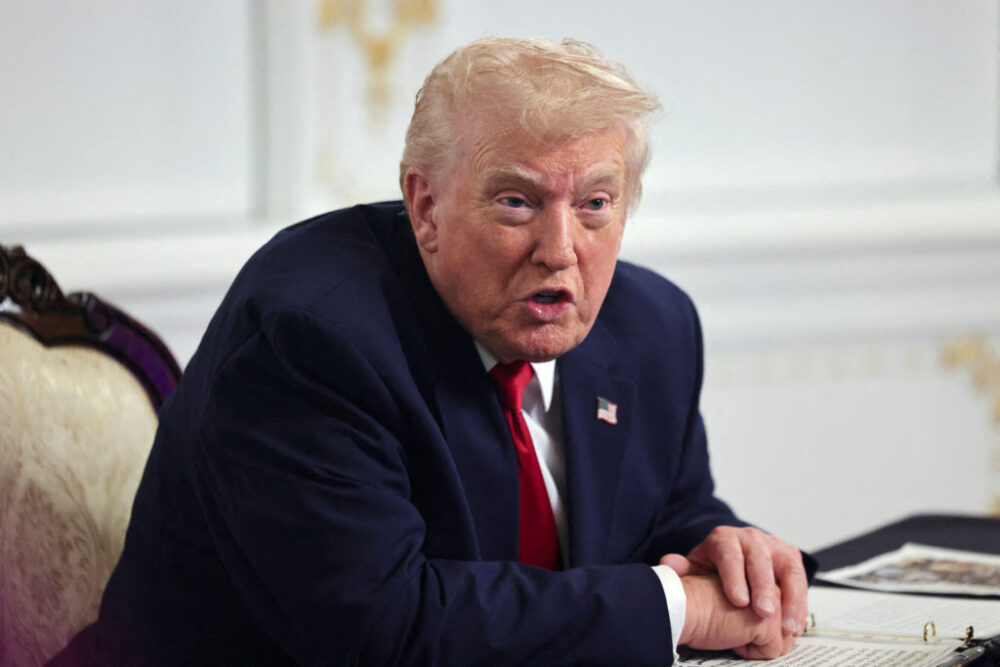
The Trump administration continues to dominate headlines as major domestic and international developments unfold, ranging from intensified immigration enforcement to high-stakes global diplomacy and growing political friction at home.
As President Donald Trump advances his second-term agenda, recent events reflect an administration focused on border enforcement, foreign policy reassertion, and reshaping U.S. global influence, while simultaneously facing backlash from political opponents, civil rights groups, and international allies.
Immigration Crackdown Sparks Protests and Public Backlash
Immigration enforcement remains a central focus, with expanded operations by federal authorities triggering protests in multiple U.S. cities, particularly in Minnesota and other Midwest regions.
Recent enforcement actions — including detentions involving families and minors — have drawn strong reactions from community leaders, educators, and civil rights advocates. Local officials have raised concerns over the humanitarian impact of aggressive enforcement strategies, while protest movements calling for economic boycotts and civic shutdowns have gained traction.
A school district official described the situation as “deeply distressing and disruptive to children and families,” urging federal agencies to consider more humane approaches. Meanwhile, immigration advocates warn that heightened enforcement risks creating fear in immigrant communities and undermining trust in public institutions.
The White House, however, has defended its policies, stating that enforcement efforts are necessary to uphold the rule of law and national security.
Trump’s Global Push: Diplomacy, Security, and a ‘Board of Peace’
On the international front, President Trump has unveiled ambitious foreign policy initiatives, including the expansion of a proposed “Board of Peace” — a global body intended to mediate international conflicts.
Trump has positioned the initiative as an alternative or complement to traditional multilateral institutions, arguing that it would allow faster and more decisive conflict resolution. While some allies have cautiously welcomed dialogue, others have expressed concern about power concentration and diplomatic credibility.
In parallel, the administration is engaged in diplomatic discussions involving Russia, Ukraine, and the United States, with trilateral talks underway in the Middle East. Officials describe the talks as exploratory, aimed at easing tensions in the ongoing conflict and evaluating potential peace pathways.
A senior European diplomat noted, “Any credible peace effort requires balance, transparency, and respect for international law.”
Tensions with Allies Over Greenland and NATO
Trump’s renewed interest in Greenland has also stirred diplomatic unease among European partners. While U.S. officials frame the discussion as related to strategic security and Arctic interests, Denmark and Greenland have reiterated that sovereignty is not negotiable.
European leaders have called for respectful transatlantic relations, emphasizing cooperation over confrontation. The situation has added to broader strains in U.S.–EU relations, particularly amid ongoing disagreements over trade, defense, and foreign policy coordination.
Domestic Political Fallout and Media Controversies
At home, political tensions continue to escalate as Democrats criticize the administration’s law enforcement priorities, accusing federal agencies of focusing heavily on immigration enforcement while easing pressure on white-collar crime investigations.
Several lawmakers have called for oversight into the allocation of federal enforcement resources, arguing that corporate fraud and financial crimes deserve stronger attention.
Meanwhile, media-related controversies involving journalists and federal legal actions have sparked debates over press freedom and political retaliation, with free-speech advocates warning against criminalizing investigative reporting.
A constitutional law expert commented, “Any perception of targeting journalists risks eroding democratic norms and public trust.”
Economic Messaging and Public Narrative
Despite controversy, the administration continues to highlight its economic agenda, promoting job growth, deregulation, domestic manufacturing, and national economic resilience.
President Trump has used recent global economic forums to tout what he describes as strong economic performance, emphasizing trade leverage, energy independence, and U.S. market dominance.
At the same time, analysts note growing public skepticism about cost-of-living pressures, healthcare affordability, and income inequality, which remain key political battlegrounds.
What Comes Next
With 2026 midterm elections approaching, political strategists predict escalating partisan conflict, increased activism, and intensified messaging from both major parties.
As immigration enforcement expands, global diplomacy evolves, and domestic political divisions deepen, the Trump administration’s actions are expected to remain a defining force shaping America’s political, economic, and international direction in the months ahead.
As one political observer summarized, “This administration is governing aggressively — and the response, both supportive and critical, will likely define the next phase of American politics.”