







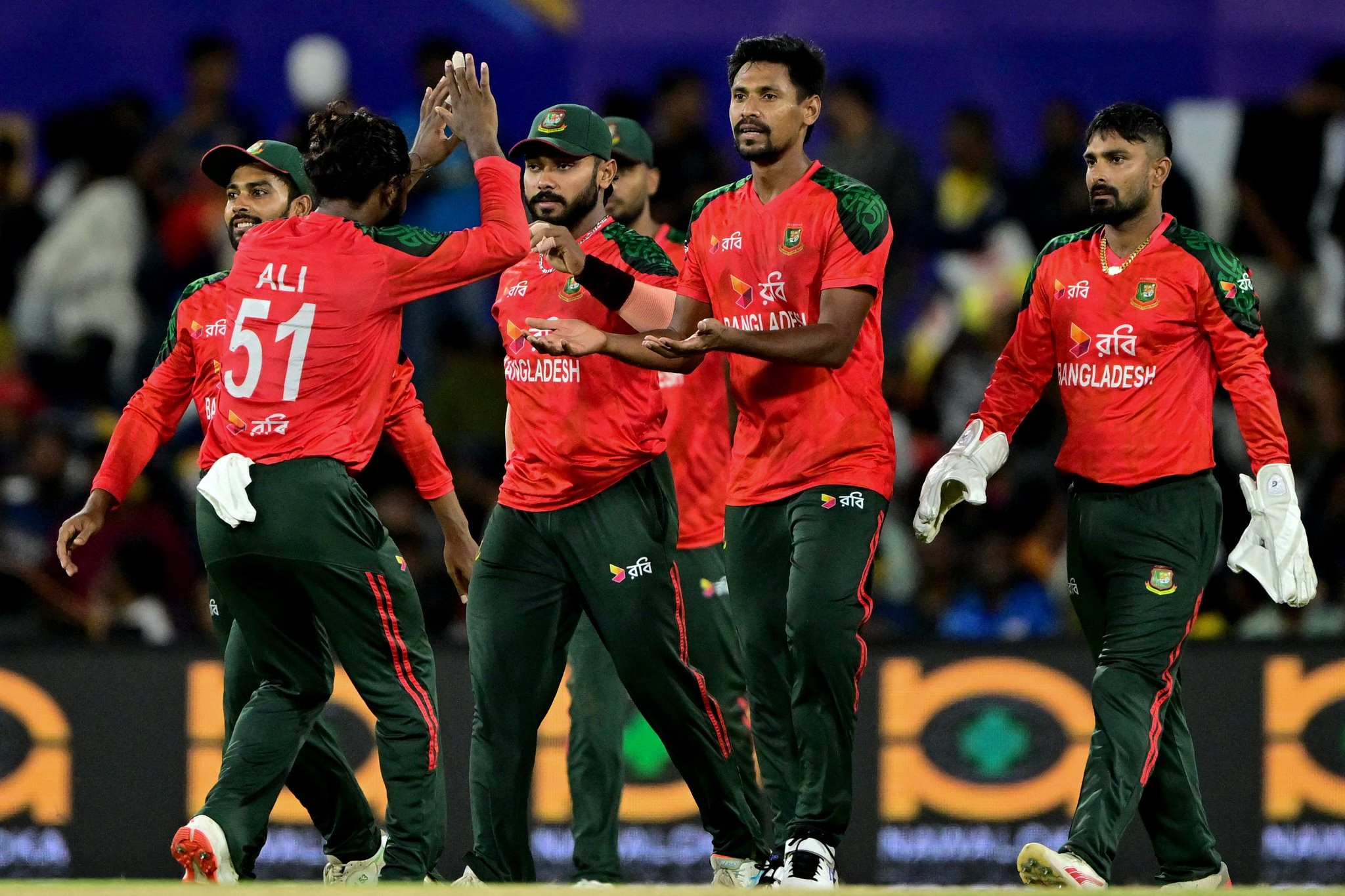
Bangladesh has officially announced that it will not participate in the T20 World Cup matches scheduled in India, escalating a growing dispute with the International Cricket Council (ICC) over security concerns.
Speaking on Thursday, January 22, 2026, Bangladesh’s Youth and Sports Adviser Asif Nazrul confirmed the decision at a press conference, stating that the ICC failed to fairly address the Bangladesh Cricket Board’s (BCB) request to relocate its fixtures to Sri Lanka.
“The ICC did not do justice by refusing to shift our matches to Sri Lanka,” Nazrul said. “Our cricketers worked hard to qualify for the World Cup, but the security risks of playing in India remain unchanged. This concern is not hypothetical.”
Nazrul emphasised that Bangladesh is not abandoning the tournament entirely, but is urging the ICC to reconsider venue arrangements.
“We are not giving up hope. Our team is ready. We expect the ICC to recognise our legitimate security concerns and allow us to play in Sri Lanka,” he added.
BCB Vows to Continue Fight for Venue Change
Echoing the government’s stance, Aminul Islam, President of the Bangladesh Cricket Board, reaffirmed that the board will continue pushing for a revised schedule.
“We still expect our matches to be moved to Sri Lanka, and we will continue fighting for a fair resolution,” Islam said.
The decision by Bangladesh opens the door for Scotland to potentially step in and compete in the tournament if Bangladesh formally withdraws from participation.
Matches in Kolkata and Mumbai at the Centre of Dispute
Bangladesh is scheduled to play four T20 World Cup matches in India — three in Kolkata and one in Mumbai. However, security concerns intensified after fast bowler Mustafizur Rahman was reportedly removed from the Indian Premier League (IPL) following instructions from the Board of Control for Cricket in India (BCCI), citing unspecified regional and political “developments.”
This incident has fueled fears among Bangladeshi officials that player safety could be at risk, especially amid rising geopolitical tensions.
ICC Rejects Relocation Request, Cites Neutrality and Security Clearance
On Wednesday, January 22, 2026, the ICC rejected the BCB’s formal request to shift Bangladesh’s fixtures to Sri Lanka, asserting that there is no credible security threat to players, officials, or fans at the Indian venues.
The decision was reached during an ICC Board meeting held via video conference, convened specifically to address Bangladesh’s concerns. The ICC had granted Bangladesh time until Thursday to confirm whether it would participate under the existing schedule.
In an official statement, the ICC stressed that changing venues could compromise the integrity and neutrality of international cricket tournaments.
“Relocating matches under the current circumstances could undermine the sanctity of ICC events and the organisation’s role as an impartial global governing body,” the ICC said.
According to the ICC, the Board reviewed multiple security assessments, including independent expert evaluations, all of which concluded that there is no credible threat to Bangladesh players or supporters.
Bangladesh Rejects ICC’s Assessment, Stands Firm on Safety Risks
Despite the ICC’s assurances, Bangladeshi officials maintain that the risks are real and ongoing, not theoretical.
Nazrul argued that the safety concerns stem from recent developments affecting Bangladeshi players in India, including the IPL-related controversy involving Mustafizur Rahman.
“Our position is based on concrete developments, not speculation,” he said.
Bangladesh’s stance reflects a broader tension between national cricket boards and the ICC over player security, political sensitivities, and tournament governance.
Potential Impact on Tournament and Global Cricket Politics
If Bangladesh’s withdrawal is finalised, Scotland is expected to replace the team, potentially altering the tournament’s competitive landscape.
The standoff also raises important questions about:
- How the ICC balances neutrality with national security concerns
- Whether host nations can guarantee player safety amid diplomatic tensions
- How geopolitics increasingly influences international sports events
Cricket analysts warn that the dispute could set a precedent for future international tournaments, where teams may seek venue changes based on political or security grounds.
Conclusion: A Growing Rift Between Bangladesh and ICC
As the countdown to the T20 World Cup continues, Bangladesh’s refusal to play in India marks one of the most high-profile tournament controversies in recent years. While the ICC maintains there is no credible security threat, Bangladeshi officials remain adamant that player safety must take priority over scheduling and politics.
Whether the ICC revisits its decision — or proceeds without Bangladesh — could have lasting implications for international cricket governance and tournament diplomacy.