







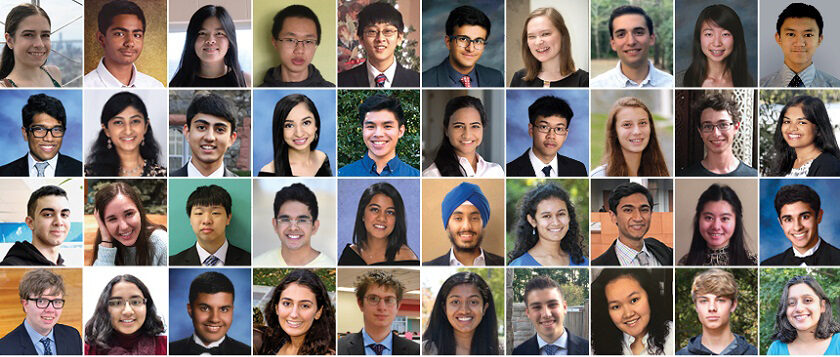
In a striking testament to the growing prominence of Indian-origin students in science and technology, 81 teenagers of Indian descent have been named among the top 300 scholars in the Regeneron Science Talent Search (STS) 2026, the United States’ oldest and most prestigious science and mathematics competition for high school seniors.
The announcement was made on January 7, 2026, by the Society for Science, marking the 85th anniversary of the competition. The share of Indian-origin scholars—more than one-quarter of the total—far exceeds the proportion of Indian Americans in the overall U.S. population, underscoring the community’s outsized impact on STEM excellence at the pre-university level.
Each of the 300 selected scholars will receive a $2,000 award, with an additional $2,000 granted to their respective schools, reinforcing the Society’s commitment to nurturing both individual talent and institutional support for scientific inquiry.
A Highly Competitive National and Global Pool
The 2026 competition drew applications from more than 2,600 students representing 826 high schools across 46 U.S. states, Washington, D.C., Puerto Rico, the Northern Mariana Islands, and 16 countries. From this diverse pool, the Society selected 300 scholars hailing from 203 American and international high schools across 34 states, Washington, D.C., and China.
Congratulating the scholars, Maya Ajmera, President and CEO of the Society for Science and Publisher of Science News, praised the depth and originality of the students’ work. “Their research highlights the creativity, rigor, and determination that’s pushing forward the future of scientific discovery,” she said. “We are honored to recognize their achievements and support their continued pursuit of STEM excellence.”
Excellence Across Disciplines
The Indian-origin scholars showcased a remarkable breadth of research topics, spanning artificial intelligence, medicine, climate science, physics, mathematics, environmental engineering, neuroscience, and public health. Their projects reflect not only technical sophistication but also a strong orientation toward solving real-world problems.
Several projects focused on AI-driven medical diagnostics, low-cost healthcare technologies, and cancer research, while others explored space weather forecasting, black hole physics, wildfire prediction, and water purification. Environmental sustainability emerged as a recurring theme, with multiple students proposing innovative approaches to carbon reduction, waste management, and clean water access.
Equally notable was the presence of advanced theoretical work in mathematics and physics—fields traditionally underrepresented at the high school level—alongside socially conscious research examining health disparities, voting data, and structural inequities.
Selection Beyond Academic Brilliance
The Society for Science emphasized that selection was based on far more than grades or test scores. Scholars were chosen through a rigorous evaluation of their original, independent research projects, along with essays, recommendations, and demonstrated leadership.
According to the Society, judges assessed candidates on scientific creativity, intellectual curiosity, academic commitment, community engagement, and exceptional promise as future STEM leaders. The process reflects the competition’s long-standing mission to identify students capable of shaping the future of science and policy.
Path Ahead: Finalists and Awards Ceremony
The 300 scholars announced on January 7 will be narrowed down to approximately 40 finalists on January 21, 2026. These finalists will compete for the top honors at the Regeneron Science Talent Search Awards Ceremony, scheduled to take place in Washington, D.C., on March 10, 2026.
Historically, alumni of the Science Talent Search have gone on to become Nobel laureates, MacArthur Fellows, founders of major technology companies, and leaders in academia, medicine, and public service. For many observers, the strong representation of Indian-origin students this year signals not just individual achievement, but the maturation of a STEM-focused immigrant legacy in the United States.
A Broader Reflection of Diaspora Impact
Educators and analysts note that the success of Indian-origin students reflects a combination of strong academic ecosystems, parental emphasis on education, access to research mentorship, and expanding opportunities in advanced high school programmes.
As the global competition for scientific talent intensifies, the Regeneron STS 2026 results highlight how early exposure to research and innovation can shape future leaders—many of whom are already addressing challenges that extend far beyond the classroom.