



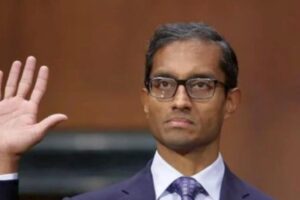


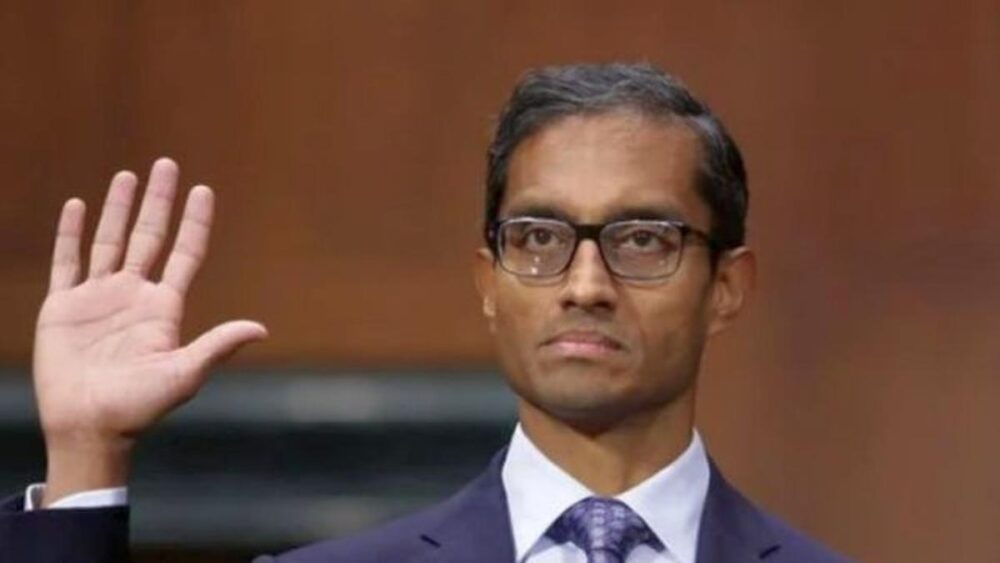
Indian-American federal judge Arun Subramanian has become the focal point of intense political and online backlash after issuing a court order that temporarily blocked a key move by the Trump administration to freeze billions of dollars in federal funding earmarked for child care and social services across several Democratic-led states.
Judge Subramanian, who serves on the U.S. District Court for the Southern District of New York, issued a temporary restraining order (TRO) on January 9, halting the administration’s decision to freeze nearly $10 billion in federal funds intended for child care assistance and social service programs, often referred to by critics as “Somalian daycare” funding.
The order followed a lawsuit filed by the attorneys general of California, Colorado, Illinois, Minnesota, and New York, who argued that the Department of Health and Human Services (HHS) lacked the legal authority to suspend congressionally approved funding. The states contended that the move violated the Constitution by encroaching on Congress’s exclusive power over federal spending.
In a brief but pointed ruling, Judge Subramanian stated that the states had met the legal threshold for emergency relief. He cited a “likelihood of success on the merits,” the “risk of irreparable harm to vulnerable families,” and the “public interest in maintaining the uninterrupted flow of essential aid” as the basis for granting the temporary halt.
The ruling imposed a 14-day pause, allowing both sides to present fuller legal arguments. Importantly, the judge did not rule on allegations of fraud or misuse of funds raised by the administration, focusing instead on the legality of the funding freeze itself.
Political Fallout and Online Attacks
The decision quickly drew sharp criticism from supporters of President Donald Trump, particularly within MAGA-aligned political circles. The administration has defended the funding freeze as part of its “America First” agenda, alleging that taxpayer money was being misused and insufficiently monitored.
Senior Trump adviser Stephen Miller condemned the ruling, arguing that it forces Americans to subsidize what he described as “refugee-related daycare scams.” His comments echoed broader criticism from conservative activists who framed the funding dispute as a question of fiscal accountability and immigration policy.
On social media, the backlash escalated beyond policy disagreement. Judge Subramanian was labelled a “Biden appointee” and a “DEI hire” in numerous posts, despite his appointment following standard judicial procedures. Some commentary descended into overt xenophobia, with calls for his deportation—despite the fact that Subramanian is a U.S. citizen by birth—alongside racially charged insults.
Tech entrepreneur Elon Musk also weighed in, calling the ruling “problematic” in a post on X, amplifying the controversy to a wider audience.
A Career Shaped by Public Service
Judge Subramanian, born in 1979 in Pittsburgh, Pennsylvania, is the son of Indian immigrant parents and has built a distinguished legal career over more than two decades. He began his professional journey clerking for senior judges in New York’s federal courts before serving as a clerk to U.S. Supreme Court Justice Ruth Bader Ginsburg, a role widely regarded as one of the most prestigious positions in the American legal system.
Legal observers note that his ruling aligns with long-standing judicial principles governing separation of powers, particularly the role of Congress in authorizing and appropriating federal funds.
A Broader Pattern of Targeting Judges
Subramanian’s experience is not isolated. In recent months, several Indian-American federal judges, including Amit Mehta, Vince Chhabria, and Indira Talwani, have faced similar political and online attacks following rulings that ran counter to Trump-aligned policies or priorities.
Civil rights advocates warn that such targeting risks undermining judicial independence and public trust in the courts. Legal scholars have also raised concerns about the racial undertones of attacks that focus on judges’ ethnicity or background rather than the substance of their legal reasoning.
Legal Process Continues
The temporary restraining order does not represent a final ruling on the case. Over the coming weeks, the court is expected to hear detailed arguments from both the states and the federal government regarding the legality of the funding freeze.
For now, the funds remain unblocked, ensuring continuity of child care and social services for thousands of families across the affected states. As the legal battle unfolds, Judge Subramanian’s decision—and the reaction to it—has reignited debate over the politicization of the judiciary in an increasingly polarized United States.