
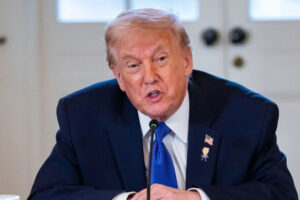





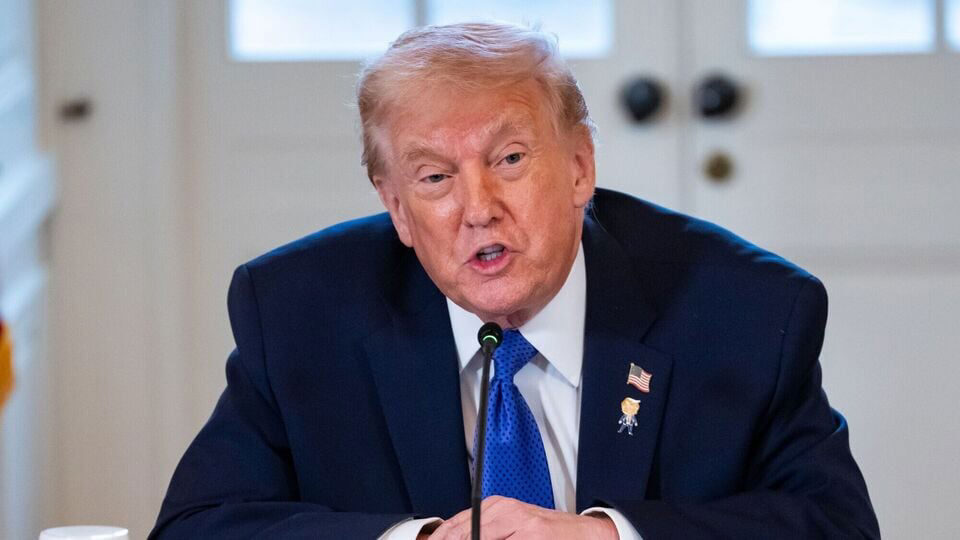
Former US President Donald Trump has reignited global controversy by issuing his strongest warning yet over Greenland, declaring that the United States will take control of the strategically vital Arctic territory either through negotiation or by force if necessary.
Speaking to reporters at the White House on Friday, Trump framed Greenland as a national security imperative, arguing that failure to act could leave the resource-rich island vulnerable to influence or occupation by rival powers such as Russia or China.
“We are going to do something in Greenland, whether they like it or not,” Trump said. “If we don’t do it, Russia or China will take over Greenland, and we’re not going to have Russia or China as a neighbor.”
Trump added that he would prefer a diplomatic solution but made clear that coercive options remain on the table.
“I would like to make a deal the easy way,” he said. “But if we don’t do it the easy way, we’re going to do it the hard way.”
Greenland and Denmark Push Back Firmly
The remarks triggered swift and united opposition from Greenland’s political leadership. In a rare show of consensus, all major Greenlandic parties — including opposition groups — issued a joint statement rejecting Trump’s claims and asserting the island’s right to self-determination.
“We do not want to be Americans. We do not want to be Danes. We want to be Greenlanders,” the statement said. “The future of Greenland must be decided by the Greenlandic people.”
Greenland is a semi-autonomous territory within the Kingdom of Denmark, exercising control over most domestic affairs while Denmark retains responsibility for defense and foreign policy. Both Greenlandic and Danish authorities have repeatedly insisted the territory is not for sale.
Denmark’s government has maintained that Greenland’s status is non-negotiable, emphasizing that any change must be determined democratically by its population of roughly 56,000 people.
NATO Allies Express Deep Concern
Trump’s comments have raised alarm across Europe, particularly among NATO allies who fear such a move would destabilize the transatlantic alliance.
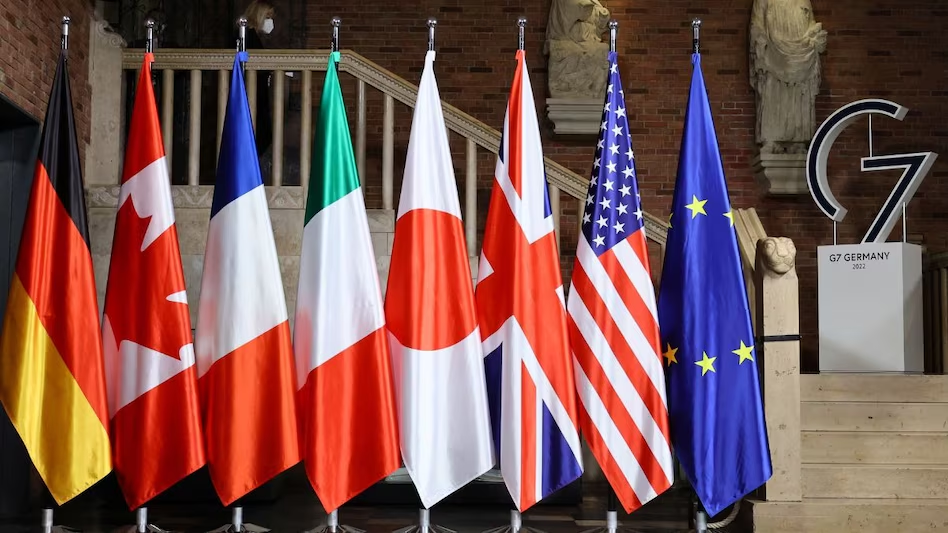
In a joint statement, leaders from France, Germany, the United Kingdom, Italy, Poland, and Spain reaffirmed that Greenland belongs to its people and warned that any attempt to seize the territory by force would carry serious consequences.
Diplomatic sources say uncertainty remains over how NATO would respond if the United States pursued military intervention against a fellow member’s territory. European officials privately acknowledge that such a scenario would place unprecedented strain on the alliance.
Strategic Importance of Greenland
Greenland has grown in geopolitical significance due to its location between North America and Europe, its proximity to Arctic shipping routes, and its vast reserves of rare earth minerals critical to modern technology and defense systems.
As climate change accelerates ice melt in the Arctic, the region has become an arena of intensifying competition among major powers. The US already maintains a military presence at Thule Air Base in northern Greenland, a key component of its missile-defense network.
Trump has repeatedly argued that expanding US control over Greenland is essential to counter Chinese investment and Russian military activity in the Arctic.
Local Resistance to Financial Incentives
Asked whether the US might offer financial incentives to Greenlanders to support a transfer of sovereignty, Trump declined to provide details, saying, “I’m not talking about money for Greenland yet.”
However, residents in Greenland have overwhelmingly rejected the idea of financial compensation in exchange for US control.
“No thank you. It’s absolutely certain that we don’t want that,” said Nuuk resident Simon Kjeldskov.
“Any number in the world and we will say no,” added Juno Michaelsen. “It belongs to us and only us.”
Diplomatic Talks Continue
Behind the scenes, high-level diplomatic discussions are ongoing. Washington-based representatives from Greenland and Denmark met with White House officials earlier this week, according to diplomats familiar with the talks.
Greenland’s Prime Minister Jens-Frederik Nielsen, along with four other party leaders, reiterated their rejection of Trump’s proposal in a statement issued late Friday. They also announced plans to convene an early session of Greenland’s parliament, the Inatsisartut, to determine a formal response to the escalating rhetoric.
The parliament was originally scheduled to meet in early February, but the timeline may now be accelerated in light of recent developments.
A Flashpoint in Arctic Politics
Trump’s renewed focus on Greenland has transformed the territory into a flashpoint in global geopolitics, highlighting tensions between national security ambitions and the principle of self-determination.
While the former president insists his intentions are defensive, critics argue that his rhetoric undermines international law and risks destabilizing both NATO and Arctic cooperation.
As Greenland’s leaders stand firm and European allies voice concern, the episode underscores how competition in the Arctic is reshaping global power dynamics — and how a remote, ice-covered island has become central to 21st-century geopolitics.