



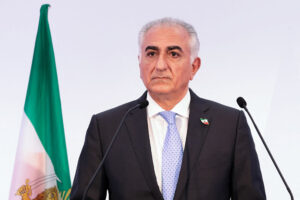

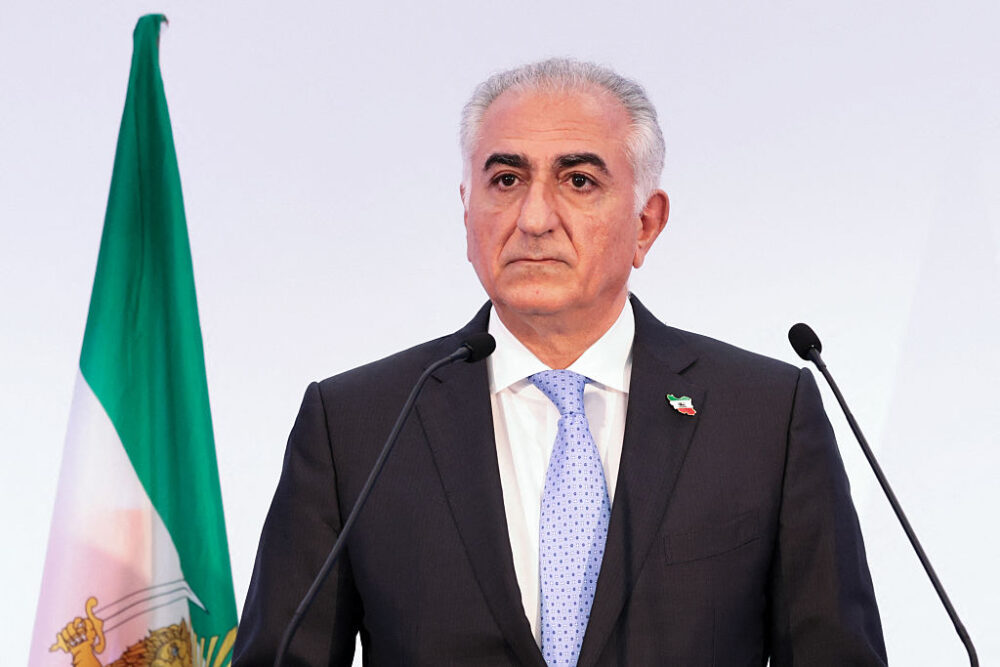
Nearly five decades after leaving his homeland, Iran’s exiled crown prince, Reza Pahlavi, is once again emerging as a visible figure in the country’s latest wave of unrest, as protests fueled by economic hardship evolve into a broader challenge to the Islamic Republic’s rule.
Pahlavi, the 65-year-old son of Iran’s last monarch, has spent most of his life in exile following the 1979 Islamic Revolution that overthrew his father, Shah Mohammad Reza Pahlavi. Yet recent demonstrations across Iran suggest that his name still resonates, particularly among segments of a population frustrated by years of repression, economic decline, and political stagnation.
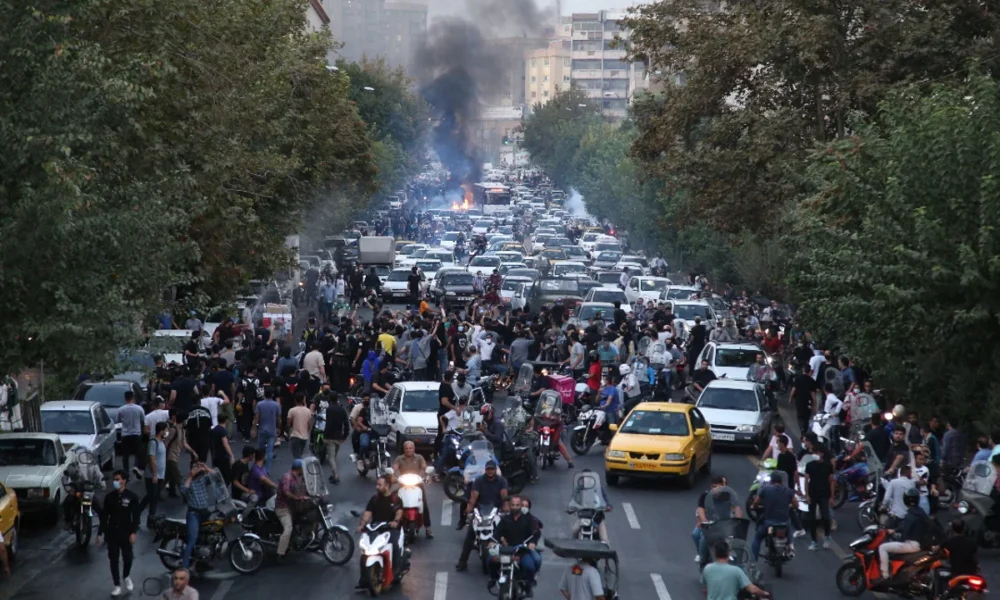
The latest protests, initially sparked by rising prices, unemployment, and currency depreciation, have intensified in both scale and tone. They come at a moment when Iran’s leadership is already under strain following a brief but damaging military confrontation with Israel earlier this year, during which U.S. forces also struck Iranian nuclear facilities. Against this backdrop, Pahlavi issued public calls urging Iranians to take to the streets — appeals that were rebroadcast by Persian-language satellite channels and widely circulated on social media.
Crowds responded. Demonstrations flared across multiple cities, with protesters chanting slogans that went beyond economic grievances to openly question the legitimacy of Iran’s clerical system.
A Symbol for a Disillusioned Generation
How much concrete support Pahlavi commands inside Iran remains uncertain. Analysts caution that while some demonstrators invoke monarchist slogans, many are likely motivated less by nostalgia for the monarchy and more by a desire for any alternative to the current system.
“Over the past decade, Iran’s protest movement has taken on an increasingly nationalist character,” said Behnam Ben Taleblu, an Iran specialist based in Washington. “As the Islamic Republic has failed to deliver economically and socially, its opposite — the memory or promise of something different — has gained emotional traction.”
Taleblu noted that Pahlavi’s appeal lies not necessarily in calls to restore the monarchy, but in his ability to frame the past as a period of relative normalcy compared to today’s instability. “The contrast between what Iranians experience now and what they are told could be possible has proven powerful,” he said.
From Palace Life to Permanent Exile
Born in 1960, Reza Pahlavi spent his early years surrounded by privilege, educated within the royal compound in Tehran and groomed for leadership. His father’s rule, however, grew increasingly authoritarian, marked by stark inequality and the brutal tactics of the SAVAK intelligence service.
As mass protests engulfed Iran in the late 1970s, Pahlavi left for flight training in the United States. Within a year, the monarchy collapsed, and the Shah fled the country, eventually dying in exile. On his 20th birthday in 1980, supporters declared Reza Pahlavi the new shah — a title he has never exercised in practice.
Since then, his life has unfolded largely outside Iran, primarily in the U.S. and Europe. While monarchist groups in the diaspora have consistently promoted his return, Pahlavi’s political influence remained limited for decades, constrained by memories of his father’s rule and the Iranian state’s tight control over dissent.
Renewed Visibility in a Changed Iran
Iran today is vastly different from the country his father ruled. More than half the population was born after the revolution. For many young Iranians, the monarchy is not a lived memory but a historical reference point, contrasted against their own experiences of strict social controls, economic isolation, and political repression.
Pahlavi has increasingly sought to connect with this audience through social media, interviews, and coordinated messaging during protest moments. He has promoted the idea of a future Iran built on democratic principles, sometimes suggesting a constitutional monarchy or even an entirely republican system — emphasizing that the choice should rest with the people.
“This regime is irreformable,” Pahlavi said in a recent statement. “The question is no longer whether change will come, but how.”
His outreach has not been without controversy. Critics inside and outside Iran question his proximity to foreign governments, particularly Israel, where he has held high-profile meetings. Supporters argue that international engagement is inevitable for any opposition figure seeking leverage against Tehran.
An Uncertain Role in Iran’s Future
Iranian state media has dismissed Pahlavi’s influence, branding protesters as “monarchist elements” and accusing foreign actors of fueling unrest. Security forces have responded with arrests and force, signaling that the government remains determined to suppress dissent.
Still, the reappearance of Pahlavi as a recognizable figure underscores the depth of Iran’s political crisis. Whether he becomes a central leader, a symbolic rallying point, or a fleeting presence depends on forces far beyond his control — including the durability of protests, elite fractures within Iran, and the response of the international community.
For now, his resurgence highlights a broader reality: as Iran’s system struggles to adapt, voices from its past are finding new relevance in the present.