









For decades, the dream of migrating to Israel has shaped the lives, beliefs, and decisions of thousands of people living in India’s remote northeastern hills. Now, for the Bnei Menashe, a small community that believes it descends from one of the biblical “lost tribes” of Israel, that long-awaited aspiration appears closer than ever — and many see it not just as migration, but as the fulfilment of prophecy.
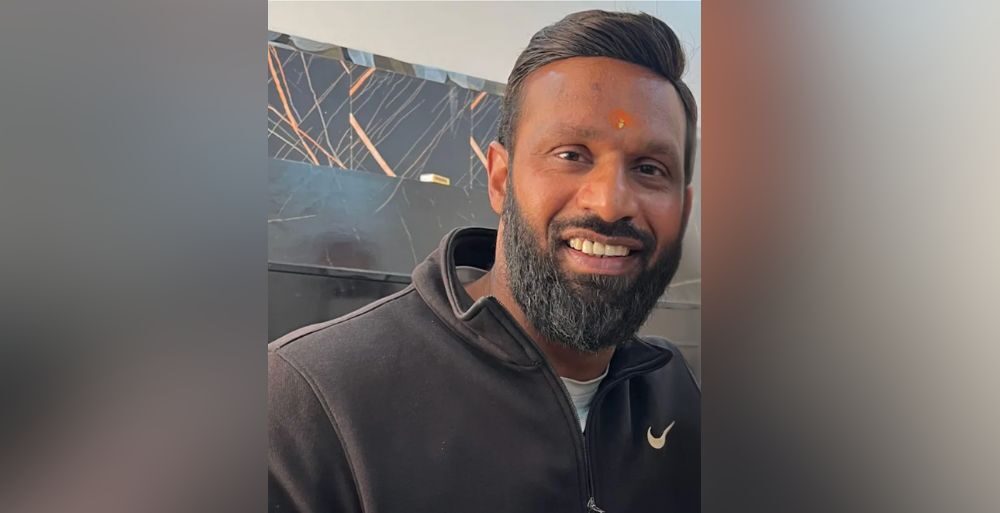
Last year, Jeremiah Hnamte shut down his family’s manufacturing business in Aizawl, the capital of Mizoram. The family sold land, possessions, and moved into a rented apartment, all in preparation for a life-changing journey. “We’ve stopped everything,” said his son Loz Hnamte, a 39-year-old moto vlogger. “I’ve paused brand partnerships and long-term plans because we’re ready to leave any day.”
The Hnamtes are among roughly 5,800 members of the Bnei Menashe community, concentrated mainly in Mizoram and neighboring Manipur, near the Myanmar border. They believe they are descendants of the tribe of Manasseh, exiled more than 2,700 years ago after the Assyrian conquest of the ancient Kingdom of Israel.
A Dream Decades in the Making
Under Israel’s Law of Return, citizenship is generally reserved for people with at least one Jewish grandparent — a requirement the Bnei Menashe do not meet. Despite this, since 1989, around 4,000 members have migrated to Israel through special government permissions. Many others, sometimes across multiple generations, have waited patiently.
That wait may soon end. In November, the Israeli government announced that the entire Bnei Menashe community would be permitted to immigrate by 2030, with around 1,200 people expected to arrive next year. The new immigrants will be settled mainly in Nof HaGalil and other northern towns, where earlier arrivals have already built lives.
Israeli Prime Minister Benjamin Netanyahu described the decision as “an important and Zionist step that will strengthen the North and the Galilee.” Finance Minister Bezalel Smotrich echoed the sentiment, saying it would reinforce “our hold of the north and the future of the state of Israel.”
Faith, Identity, and a Sense of Destiny
The roots of the Bnei Menashe belief trace back to 1951, when a Pentecostal Mizo minister claimed to have a vision revealing that the Mizo people were of Israeli origin and destined to return to their homeland. Over time, some families began studying biblical texts and identifying similarities with ancient Israelite traditions.
“My grandfather tried to walk to Israel,” Jeremiah Hnamte recalled. “They didn’t know where it was — they just felt called to go.”
The movement gained structure in the 1980s after the arrival of Eliyahu Avichail, an Israeli rabbi dedicated to locating the biblical lost tribes. Drawing on religious traditions that link their return to messianic prophecy, Avichail helped facilitate the first migration in 1989.
Today, Bnei Menashe migrants undergo Orthodox reconversion after arriving in Israel, since proselytizing is illegal in India and formal conversions cannot take place there.
Controversy at Home
The claim of Jewish ancestry has long been contentious within India, especially among Christian Mizo and Kuki communities, most of whom converted under British missionaries in the late 19th century.
“Christianity is so deeply woven into Mizo identity that separating faith from nationalism is impossible,” said P.C. Biaksiama, a Mizo scholar. While he now believes the community may have ancient links to Israel, he strongly opposes migration. “Judaizing is anti-Christian,” he said. “I pity them because they are of the same blood as we are.”
The debate has intensified amid ethnic violence in Manipur, where Kuki communities — including many Bnei Menashe — have faced displacement and insecurity. Since 2023, clashes with the Meitei community have killed more than 200 people and displaced over 50,000. Many Bnei Menashe families now live in camps for the internally displaced, giving emigration a renewed urgency.
Israel’s Demographic Paradox
The decision to welcome the Bnei Menashe comes at a moment of demographic strain in Israel. While new immigrants prepare to arrive, record numbers of Israelis are leaving the country. Government data shows emigration doubled in recent years, with tens of thousands departing annually amid political polarization, economic uncertainty, and social unrest.
The migration plan will require an estimated 90 million shekels to fund flights, housing, Hebrew lessons, and conversion programs — a substantial investment at a time when many Israelis question the country’s direction.
Waiting for the Call
In Churachandpur, the heart of the Bnei Menashe community in Manipur, anticipation mixes with anxiety. “No one has sold anything yet,” said Hatnem Haokip, a local schoolteacher. “Once names are confirmed, everything will change.”
For the Hnamtes, the waiting is almost over. “We’re still doing normal work,” Loz said quietly. “But in our hearts, we’re already on the journey.”
To the Bnei Menashe, aliyah is not simply migration. It is the closing of an ancient circle — a return they believe was written long before any borders were drawn.