




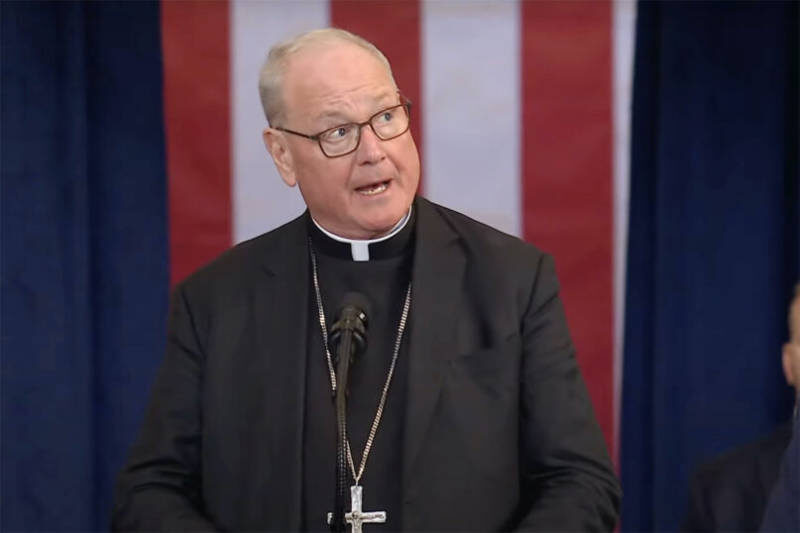
A broad interfaith coalition led by New York Cardinal Timothy Dolan is pressing President Donald Trump to formally include a religion-focused engagement group in the 2026 Group of 20 (G20) summit, which the United States is set to host next December at Trump National Doral in the Miami area.
More than 80 religious leaders from across faith traditions sent a letter to the president in November, urging his administration to officially recognize the Religion 20 Summit (R20) as part of America’s presidency of the G20. The signatories framed the proposal as an opportunity for the United States to elevate religious freedom, counter extremism, and strengthen global diplomacy through faith-based engagement.
In their letter, the leaders described Trump as “a stalwart defender of peace and international religious freedom,” calling on him to build on that legacy by integrating religion into the global economic forum’s official architecture.
Religion and the G20
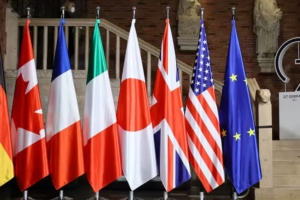
Founded in 1999, the G20 is an intergovernmental forum comprising major global economies, including the United States, the European Union, China, Russia, India, and others. While its focus has traditionally been economic stability and development, recent years have seen growing engagement from civil society groups on issues such as climate, development, and gender equality.
Religion was formally incorporated into the G20 structure only once — in 2022, when Indonesia hosted the summit and included the R20 as part of its official program. Subsequent summits did not retain a religion engagement group, leaving faith leaders concerned that a key global influence had been sidelined.
“Given that nearly four-fifths of the world’s population identifies with a religion, it is only logical that the G20 consider religious perspectives as it pursues its social and economic goals,” said Mary Ann Glendon, a former U.S. ambassador to the Vatican and one of the letter’s lead signatories.
The Vision Behind R20
The R20 was founded by Kyai Haji Yahya Cholil Staquf, general secretary of Indonesia’s Nahdlatul Ulama, one of the world’s largest Muslim organizations. Glendon noted that Nahdlatul Ulama played a central role in shaping the R20 as a platform for interfaith cooperation.
“There is a struggle underway for the soul of Islam,” Glendon said, pointing to the contrast between extremist ideologies and the pluralistic, humanitarian Islam practiced widely in Southeast Asia. She argued that showcasing such models on a global stage could help counter violent extremism and religious polarization.
Glendon, an emeritus Harvard Law professor, said she believes the R20 aligns with both American values and Trump’s political base. “This offers the administration an opportunity to highlight religious pluralism and freedom of conscience while advancing U.S. strategic interests,” she said.
Dolan’s Push and Political Context
Cardinal Dolan, whose retirement process began last month following the appointment of his successor by Pope Leo XIV, sent separate letters to President Trump, Vice President JD Vance, and Secretary of State Marco Rubio reinforcing the call for official recognition of the R20.
In his correspondence, Dolan described religion as “the greatest source of soft power in much of the world” and argued that a religion forum could contribute to Trump’s stated goal of fostering interfaith dialogue as part of broader peace initiatives, including efforts to address the Gaza conflict.
“Official recognition of the R20 offers a once-in-a-generation opportunity to revitalize America’s founding vision on the global stage,” Dolan wrote, invoking the principles of life, liberty, and the pursuit of happiness.
Dolan has had a long-standing relationship with Trump, who previously appointed him to the Religious Liberty Commission and publicly suggested he would have supported Dolan’s elevation to the papacy.
Support and Skepticism
The coalition backing the R20 includes prominent conservative and interfaith figures such as former U.S. Ambassador-at-Large for International Religious Freedom Sam Brownback, leaders from the National Association of Evangelicals, Focus on the Family, Alliance Defending Freedom, and representatives of Jewish and Muslim organizations.
At the same time, internal memos supporting the initiative acknowledge resistance within “America First” circles that are skeptical of multilateral institutions like the G20 and what they see as the influence of globalist non-governmental organizations.
Proponents argue, however, that framing the R20 around America’s founding principles and traditional religious values could help counter agendas they believe undermine U.S. interests. One memo suggested that faith-based engagement could promote pragmatic approaches to environmental policy, combat modern slavery, and defend food and energy security.
Broader Faith Engagement
Beyond the proposed R20, an informal G20 Interfaith Forum has convened alongside G20 summits since 2014, offering religious leaders a space to contribute recommendations on global issues. However, organizers say the lack of formal recognition limits its influence.
Advocates of the R20 contend that official inclusion would elevate religious voices from the margins to the center of global policymaking.
“Religious leaders often carry moral authority and grassroots influence unmatched by political institutions,” the coalition wrote. “They can be powerful allies in advancing peace, stability, and human dignity.”
Awaiting a Decision
As of now, the Trump administration has not publicly responded to the request. With the 2026 G20 approaching, supporters of the R20 say the coming months will be critical in determining whether religion will once again have a formal seat at the table of global economic governance.
In their closing appeal, the coalition urged Trump to seize the moment.
“The eyes of the world will be on America next year,” the letter stated. “We pray you will seize this opportunity to further cement your legacy as a defender of religious liberty when both America’s security and spiritual well-being are at stake.”