




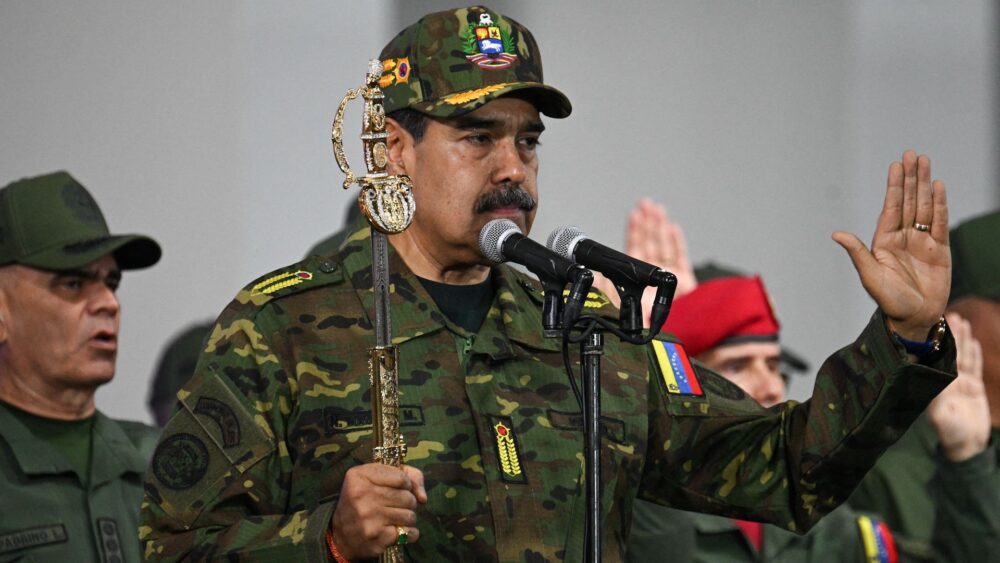
The Trump administration’s decision to launch what President Donald Trump described as a “large-scale strike against Venezuela” — culminating in the capture of Venezuelan President Nicolás Maduro — has triggered intense scrutiny over the legality of US military action conducted without congressional authorization.
The operation stands in stark contrast to the administration’s own statements just weeks earlier, when senior officials publicly acknowledged that land-based military strikes inside Venezuela would require approval from Congress.
On November 2, White House Chief of Staff Susie Wiles told Vanity Fair that any such action would cross a legal threshold.
“If the president were to authorize some activity on land, then it’s war,” Wiles said. “Then we’d need Congress.”
That position was reinforced privately days later, when Trump administration officials briefed lawmakers that they lacked sufficient legal justification to support attacks on Venezuelan land targets.
Yet barely two months later, the administration did exactly that — launching strikes inside Venezuelan territory, capturing Maduro, and initiating what amounts to a regime-change operation without seeking or receiving congressional authorization.
A Rapid Shift in Legal Rationale
The apparent reversal has raised alarm among lawmakers in both parties and among constitutional scholars, particularly given the lack of a clearly articulated legal framework for the action.
While Trump had previously suggested he might not need congressional approval for land operations, officials at the time acknowledged that this was not a consensus view inside the administration. CNN reported in early November that the White House was actively seeking a fresh legal opinion from the Justice Department to justify such strikes.
A full legal explanation has yet to be released.
In the immediate aftermath of the operation, Republican Senator Mike Lee said Secretary of State Marco Rubio told him the strikes were necessary to protect US personnel executing an arrest warrant against Maduro.
“This action likely falls within the president’s inherent authority under Article II of the Constitution to protect U.S. personnel from an actual or imminent attack,” Lee said — even as he acknowledged he has frequently opposed unauthorized military actions.
That explanation was echoed by Vice President JD Vance, Defense Secretary Pete Hegseth, and Rubio himself.
Rubio described the operation as a narrowly defined law-enforcement mission.
“This was not an attack on Venezuela,” he said on NBC’s Meet the Press. “This was a law enforcement function to capture an indicted drug trafficker.”
However, critics note that the administration had never previously suggested that military force could be used on foreign soil under a law-enforcement rationale — particularly against a sitting head of state.
Mixed Signals and Expanding Ambitions
Complicating matters further were Trump’s own remarks following the operation. At a news conference on Saturday, he spoke not only about arresting Maduro but also about US involvement in running Venezuela and controlling its oil infrastructure.
“We’re going to rebuild the oil infrastructure,” Trump said at one point, adding later, “We’re going to run the country right.”
Such comments appeared to contradict the administration’s claim that the mission was limited and narrowly tailored.
Earlier, the administration had floated multiple and often conflicting justifications for possible action against Venezuela — ranging from drug trafficking to allegations that Venezuela had sent criminals into the United States. Trump also suggested that the US was entitled to reclaim “the oil, land, and other assets that they previously stole from us.”
Even hawkish Republicans expressed concern about the lack of clarity.
“I want clarity right here,” said Senator Lindsey Graham in mid-December. “If it’s the goal of taking him out because he’s a threat to our country, then say it. And what happens next? Don’t you think most people want to know that?”
Oil, Power, and Global Stakes
Venezuela’s vast energy resources add another layer of complexity. The country holds the world’s largest proven crude oil reserves — roughly 303 billion barrels, or nearly 20% of global reserves — surpassing Saudi Arabia.
Analysts warn that any attempt by the US to assert control over Venezuela’s political or economic future could draw global attention and resistance. China, which has extensive financial and energy ties to Venezuela, condemned the operation as a “blatant use of force against a sovereign state.”
A Controversial Legal Precedent
The Trump administration appears to be leaning on a controversial legal precedent dating back to 1989, when the US removed Panamanian leader Manuel Noriega, who was also under US indictment.
At the time, the Justice Department’s Office of Legal Counsel reversed an earlier position and argued that the president had “inherent constitutional authority” to order US forces to apprehend foreign nationals abroad — even if doing so violated international law.
That memo was written by William P. Barr, who later served as attorney general under both George H.W. Bush and Trump. The memo remains controversial, with critics warning it grants presidents sweeping powers to deploy military force globally without oversight.
Legal experts caution that Venezuela differs significantly from Panama — it is larger, geopolitically more complex, and rich in resources that could attract competing international interests.
Testing the Limits of Presidential Power
Trump’s statements have left open the possibility of further military action, suggesting the operation may not end with Maduro’s arrest. That prospect raises fresh questions about whether Congress will assert its constitutional authority — or whether the president’s actions will once again stretch executive power beyond traditional limits.
“What’s clear,” said one constitutional scholar, “is that this administration is testing how far it can go — legally, politically, and militarily.”
As the dust settles, one thing appears certain: the Venezuela operation has reopened a long-simmering debate about war powers, executive authority, and the role of Congress — and the outcome of that debate may shape US foreign policy well beyond this crisis.