







For decades, marrying a US citizen was widely seen as one of the most straightforward pathways to securing a US Green Card. But according to leading American immigration attorney Brad Bernstein, that long-held assumption is no longer true. Under heightened scrutiny by US immigration authorities, marriage alone is no longer sufficient—what now matters most is whether the relationship can withstand close examination as genuine, ongoing, and rooted in shared daily life.
The warning comes amid a broader tightening of immigration policies under the administration of Donald Trump, with officials placing renewed emphasis on detecting fraud and curbing perceived abuse of family-based immigration pathways.
Marriage Still Opens the Door—But Doesn’t Secure Approval
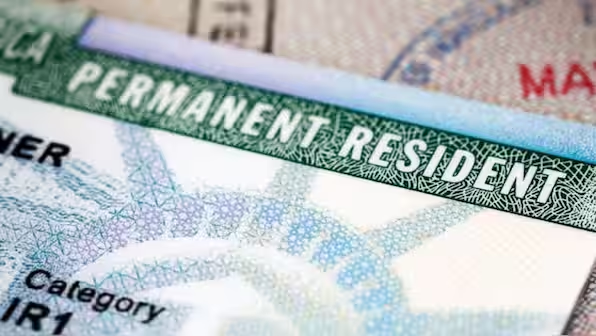
The Permanent Resident Card, commonly known as the Green Card, remains one of the most sought-after immigration benefits in the United States. It places immigrants on a pathway toward US citizenship and grants them many of the same rights as American citizens, including the ability to work freely and reside permanently in the country.
Under US law, spouses of American citizens fall under the category of “immediate relatives,” making them eligible to apply for permanent residency. This classification, administered by U.S. Citizenship and Immigration Services, removes numerical caps that apply to other family-sponsored visas.
However, Bernstein cautions that eligibility does not equal approval.
“Being in a relationship does not get you a Green Card. Living together gets you a Green Card,” Bernstein said, bluntly summarising the current reality facing applicants.
Cohabitation Becomes the Central Test
According to Bernstein, one of the fastest ways to trigger rejection is for married couples to live separately. Immigration officers, he explains, now view shared residence as a core indicator of whether a marriage is bona fide.
“If spouses do not share a home, then their Green Card case is already going down,” he said. “Immigration officers do not care why you live apart—whether it’s work, school, money, or convenience.”
Bernstein stressed that US immigration rules define a genuine marriage as one in which spouses live together on a daily basis. Separate addresses, even if legally justified, raise immediate red flags.
“So, if you’re not living in the same house every day, immigration is going to start questioning the marriage,” he warned. “Once they question it, they investigate. And once they investigate, they’re looking for reasons to deny you.”
Heightened Scrutiny Under Trump-Era Policies
The increased focus on marriage-based Green Card applications is part of a wider clampdown on immigration pathways. The Trump administration previously suspended the Diversity Visa Lottery, which had granted up to 50,000 visas annually to immigrants from countries with low levels of US migration.
Officials have also reduced the validity of work permits for Green Card applicants to 18 months, increasing uncertainty for those awaiting permanent residency decisions.
In recent months, President Trump ordered a comprehensive review of Green Cards held by permanent residents from 19 countries previously designated as “countries of concern.” The move followed violent incidents in Washington, DC, and at Brown University involving Green Card holders, further intensifying political pressure on immigration authorities to tighten oversight.
How USCIS Determines ‘Good Faith’ Marriage
Bernstein emphasised that U.S. Citizenship and Immigration Services does not rely solely on marriage certificates or addresses when assessing applications. Instead, officers evaluate the “totality of the relationship” to determine whether a marriage was entered into in good faith.
Under USCIS policy, a marriage may satisfy all legal formalities and still be denied if officers believe the couple lacked a genuine intent to build a shared life together.
“The law is very clear,” Bernstein explained. “A marriage can be legally valid and still be rejected if immigration believes it was entered into solely to circumvent immigration laws.”
This scrutiny can include in-depth interviews, document requests, home visits, and even fraud investigations. Living apart, Bernstein noted, is often the trigger that sets these processes in motion.
Legal Advice Before Filing Is Now Critical
For couples who are married but not living together full-time, Bernstein offered a stark warning: proceed with caution.
“If you’re married and not living together, you need legal guidance before you file anything,” he said. “Living apart is one of the quickest ways to invite denial, fraud allegations, and long-term immigration consequences.”
He added that once an application is denied on fraud grounds, it can permanently damage future immigration prospects—not just for the applicant, but sometimes for the US citizen spouse as well.
A Message for Aspiring Immigrants
The evolving approach to marriage-based Green Cards reflects a fundamental shift in how US immigration authorities evaluate family ties. While marriage to a US citizen still provides a legal pathway to permanent residency, it is no longer a safeguard.
For aspiring immigrants, the message is clear: authenticity, shared life, and demonstrable commitment matter more than paperwork alone. As Bernstein put it, “If you want a marriage Green Card, you live together. Period.”