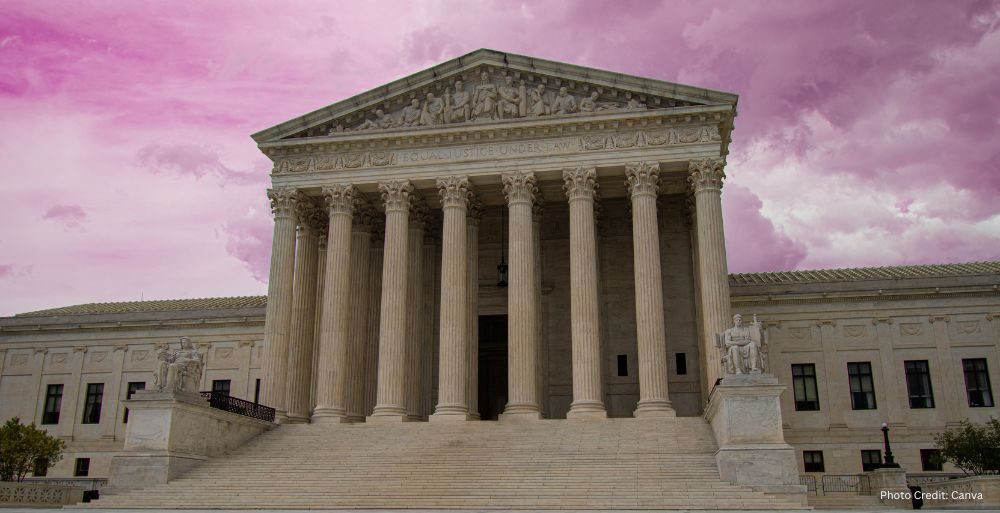








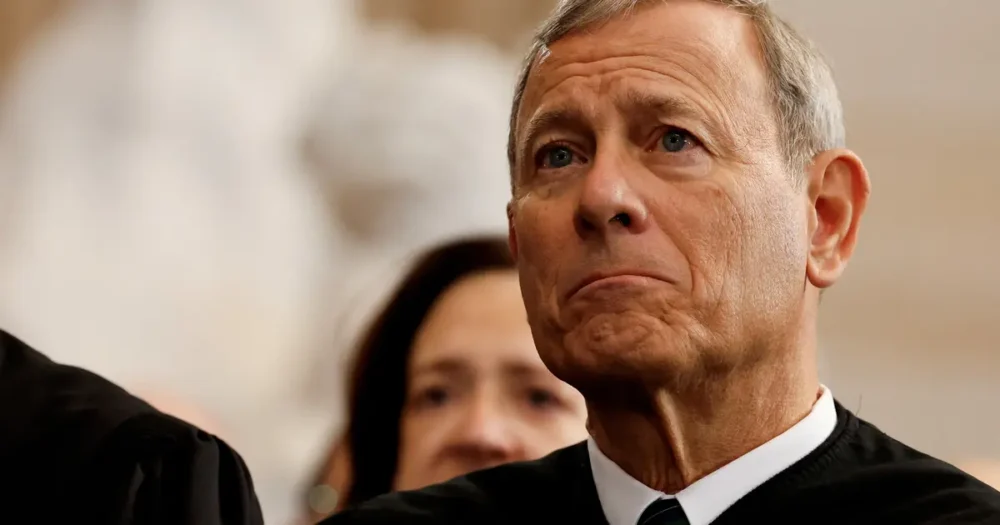
At a moment of intense political polarization and mounting scrutiny of the judiciary, John Roberts has offered a message of institutional reassurance, declaring that the US Constitution remains a stable and enduring foundation for the nation—even as the Supreme Court prepares to confront some of the most consequential legal questions of the coming year.
In his annual year-end letter to the federal judiciary, released Wednesday, Roberts invoked history to underscore the resilience of America’s founding framework. Quoting former US President Calvin Coolidge, Roberts wrote that the nation’s founding documents remain “firm and unshaken.”
“True then; true now,” Roberts added, signaling continuity amid what many observers have described as one of the most turbulent periods for the American legal system in decades.
The chief justice’s remarks arrive after a year in which legal scholars, civil rights groups, and Democratic leaders repeatedly warned of a potential constitutional crisis. Those concerns intensified as supporters of Republican President Donald Trump criticized court rulings that slowed or blocked parts of his aggressive conservative agenda, particularly on immigration, executive authority, and federal spending.
A Judiciary Under Pressure
Roberts’ letter reflects an effort to place the current moment within a broader historical arc, rather than directly engage with day-to-day political battles. Still, the context is unmistakable. Earlier this year, the chief justice issued a rare public rebuke after Trump called for the impeachment of a federal judge who ruled against the administration in a case involving the deportation of Venezuelan migrants accused of gang affiliations.
Although Roberts did not name Trump in his latest letter, the message to judges was clear. He urged them to remain steadfast in their constitutional responsibilities, writing that judges must “continue to decide the cases before us according to our oath, doing equal right to the poor and to the rich, and performing all of our duties faithfully and impartially under the Constitution and laws of the United States.”
The emphasis on impartiality reflects growing concerns about public trust in the courts. Recent polling has shown declining confidence in judicial institutions, fueled by perceptions that the courts—particularly the Supreme Court—have become increasingly politicized.
Wins, Losses, and the Power of the Emergency Docket
Despite facing resistance in lower federal courts, the Trump administration has secured significant victories at the Supreme Court, particularly through its emergency or “shadow docket.” Over the past year, the court’s conservative majority has granted roughly two dozen emergency requests that allowed the administration to proceed with major policy initiatives while litigation continues.
Among those actions, the Supreme Court has permitted Trump to move forward—at least temporarily—with banning transgender individuals from military service, reclaiming billions of dollars in congressionally approved federal spending, accelerating immigration enforcement, and removing Senate-confirmed leaders of independent federal agencies.
At the same time, the administration has not been undefeated. The court has delivered setbacks, including blocking Trump’s effort to deploy the National Guard into US cities without state consent—an issue that raised alarms about executive overreach and federalism.
High-Stakes Questions Loom in 2026
Looking ahead, the Supreme Court is poised to hear and decide cases that could fundamentally reshape the country’s legal and political landscape. Among the most closely watched are challenges to Trump’s effort to end birthright citizenship—a principle rooted in the 14th Amendment—and a case examining whether a president can unilaterally impose sweeping tariffs on hundreds of countries without congressional approval.
While Roberts’ letter made few direct references to these upcoming disputes, its timing underscores the gravity of the court’s role in the year ahead. Analysts say the chief justice appears intent on reinforcing the legitimacy of the institution before it enters another cycle of politically charged rulings.
Turning to History for Guidance
Rather than focusing on modern controversies, Roberts framed his letter around American history. He opened with a reflection on Common Sense, the influential 1776 pamphlet by Thomas Paine, noting that Paine was himself a recent immigrant to Britain’s North American colonies when he helped shape revolutionary thought.
The letter closed with Coolidge’s call for Americans to “turn for solace” to the Constitution and the Declaration of Independence “amid all the welter of partisan politics.” The choice of words appeared deliberate—an appeal to shared civic foundations at a time when partisan divisions seem especially entrenched.
A Signal of Stability—or a Warning?
Roberts’ message can be read as both reassurance and quiet admonition. By emphasizing historical continuity and judicial restraint, the chief justice appears to be reminding Americans that constitutional governance has endured through crises far greater than those of the present moment.
Yet the letter also implicitly acknowledges the pressure facing the courts. As landmark rulings approach in 2026, the Supreme Court will once again be at the center of national debate—testing not only the limits of presidential power, but also public faith in the judiciary itself.
In that context, Roberts’ declaration that the Constitution remains “firm and unshaken” may be less a statement of fact than a call to action—for judges, lawmakers, and citizens alike.