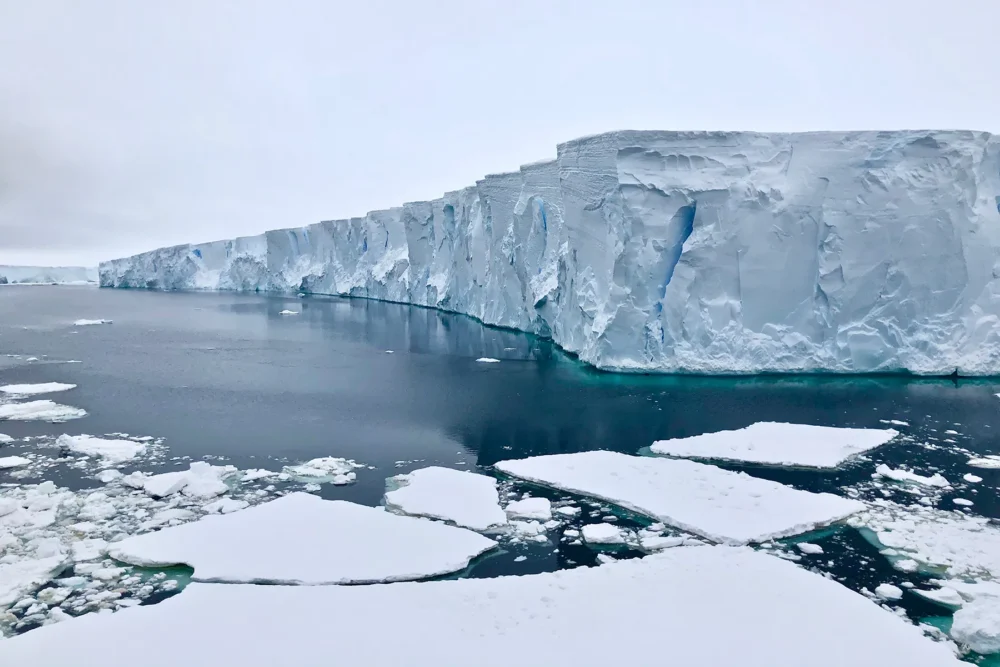









Climate scientists have confirmed that 2025 ranks among the three hottest years ever recorded, underscoring the accelerating pace of global warming driven largely by human activity. The findings, released by World Weather Attribution (WWA), also mark a troubling milestone: for the first time, the three-year global temperature average has crossed the 1.5°C threshold set by the 2015 Paris Agreement, a limit designed to prevent the most catastrophic impacts of climate change.
Scientists warn that breaching this benchmark dramatically increases the risks to human lives, ecosystems, and global economies. The analysis, published Tuesday in Europe, follows a year in which communities worldwide were battered by deadly heat waves, floods, storms, and wildfires — events researchers say have become more intense and frequent due to continued greenhouse gas emissions.
Fossil fuels and record heat
Despite the presence of La Niña, a natural climate pattern that typically cools global temperatures by lowering Pacific Ocean surface heat, 2025 still recorded exceptionally high temperatures. Researchers attribute this anomaly to the relentless burning of fossil fuels such as coal, oil, and gas, which continue to pump heat-trapping greenhouse gases into the atmosphere.
“If we don’t stop burning fossil fuels very, very quickly, very soon, it will be very hard to keep that goal,” said Friederike Otto, co-founder of World Weather Attribution and a climate scientist at Imperial College London. “The science is increasingly clear,” she told Associated Press.
According to the report, even short-term temperature overshoots above 1.5°C can have long-lasting consequences, including irreversible damage to coral reefs, rising sea levels, and increased mortality from extreme heat.
Extremes that defined 2025
The year was marked by an alarming number of extreme weather events. WWA scientists identified 157 extreme events in 2025 as the most severe, based on criteria such as causing more than 100 deaths, affecting over half of a region’s population, or triggering states of emergency. Of these, researchers conducted in-depth analyses of 22 events.
Heat waves emerged as the deadliest climate hazard of the year. According to WWA, some heat waves observed in 2025 were ten times more likely to occur than they would have been a decade ago, directly due to human-induced climate change.
“The heat waves we have observed this year are quite common events in our climate today, but they would have been almost impossible without human-induced climate change,” Otto said. “It makes a huge difference.”
Beyond extreme heat, prolonged droughts fueled devastating wildfires in Greece and Turkey, while torrential rains and flooding in Mexico killed dozens and left many missing. In Asia, Super Typhoon Fung-wong battered the Philippines, forcing more than a million people to evacuate, and intense monsoon rains triggered floods and landslides across parts of India.
The report also highlighted Hurricane Melissa as a stark example of the growing “limits of adaptation.” The storm intensified so rapidly that forecasting and emergency planning became extremely difficult, leaving countries like Jamaica, Cuba, and Haiti overwhelmed by damage and losses.
Adaptation under strain
WWA warned that increasingly frequent and severe climate extremes are pushing many regions beyond their capacity to cope. Scientists describe this as reaching the “limits of adaptation,” where communities lack the time, resources, or infrastructure needed to respond effectively.
“Extreme events are intensifying faster and becoming more complex,” said Andrew Kruczkiewicz, a senior researcher at the Columbia University Climate School, who was not involved in the WWA study. “That requires earlier warnings and new approaches to response and recovery.”
Global climate politics falter
The scientific warnings come against a backdrop of stalled international climate action. The United Nations climate talks, held in Brazil in November, ended without a clear plan to phase out fossil fuels. While wealthy nations pledged additional funds to help vulnerable countries adapt, scientists caution that implementation will take years — time the planet may not have.
Although many experts now concede that Earth’s warming is likely to overshoot 1.5°C, some argue that reversing the trend remains possible if emissions are rapidly reduced. Progress, however, remains uneven. China continues to expand solar and wind energy even as it invests in coal, while parts of Europe face political resistance over concerns that climate policies may hinder economic growth. In the United States, the administration of Donald Trump has shifted away from clean energy initiatives in favour of policies supporting oil, gas, and coal.
“The geopolitical weather is very cloudy this year,” Otto said. “Many policymakers are clearly making decisions in the interest of the fossil fuel industry rather than their populations. And we are facing a huge amount of mis- and disinformation.”
Despite these challenges, experts insist that accelerated action can still reduce future harm. “On a global scale, progress is being made,” Kruczkiewicz noted, “but we must do more.”