





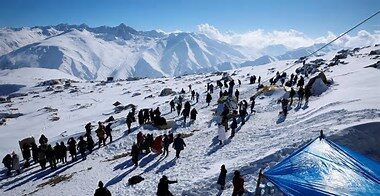
As winter tightens its grip on the Kashmir Valley, a cautious yet visible revival of tourism is underway, buoyed by cultural festivals, fresh snowfall, and renewed confidence among visitors ahead of the New Year. After months of subdued footfall following security-related setbacks earlier in the year, the Valley is once again witnessing signs of optimism, particularly in iconic destinations such as Dal Lake, Gulmarg, Pahalgam, and Sonamarg.
In a bid to promote the region as a vibrant winter destination, the Department of Tourism, Jammu and Kashmir recently organised a winter festival on the banks of Dal Lake titled “Jashne-E-Wandeh”, literally translating to “celebration of winters.” The event transformed the snow-fringed lakefront into a cultural spectacle, featuring shikara rides, a floating exhibition, and live performances of traditional Kashmiri music.
Tourists and locals alike gathered along the iconic waterfront, many seen clapping to folk rhythms and dancing despite freezing temperatures. The festival aimed not only to entertain visitors but also to showcase Kashmir’s rich cultural heritage during a season often considered off-peak for tourism.
Speaking on the sidelines of the festival, Syed Qamar Sajad underlined the broader vision behind the initiative. “The tourists who have turned here should become our ambassadors to send across a message of peace and love. There is a lot of hospitality which is inbuilt in the Kashmiris. Our mission is to welcome tourists,” he said. He added that similar programmes are being organised across the Valley, including in Gulmarg, Pahalgam and Sonamarg, to maintain momentum through the winter months.
Local residents also welcomed the initiative, noting that winters can often feel dull and isolating due to harsh weather and limited activity. Several urged the government to replicate such events across all districts. “These celebrations bring life to the Valley during winters. We would like to see something like this in every district, even during severe cold wave conditions,” a Srinagar resident said.
Tourists visiting Kashmir during this period echoed sentiments of safety and warmth. Amandeep Kaur, a tourist visiting from Punjab, said the experience exceeded expectations. “I cannot tell you how happy I am. We are enjoying it to the fullest. We are going to Gulmarg and Sonamarg, and we will enjoy Srinagar again. Kashmir is very safe. Mishaps can happen anywhere, but we can’t tag this place and avoid visiting it. I want to tell everyone that they should come and enjoy themselves in Kashmir,” she said.
The Valley is currently observing Chillai Kalan, the harshest 40-day phase of winter, which began on December 21. Despite sub-zero temperatures, the Meteorological Department has forecast light to moderate snowfall across the region during the New Year period — a development that tourism stakeholders believe could further boost arrivals. According to MeT Srinagar, “Generally cloudy weather with the possibility of light rain or snow at many places is expected. Some middle and higher reaches of North and Central Kashmir may receive moderate snowfall.”
Another tourist, Hardeep Singh, visiting with his family, highlighted the visible security presence. “We are enjoying it a lot. This place is super safe, and we can see how security forces are guarding the whole Valley. People should come and visit the Kashmir Valley,” he said.
The anticipated snowfall is particularly significant for destinations like Gulmarg and Pahalgam, which rely heavily on winter sports and snow tourism. The Valley had witnessed a sharp dip in visitor numbers following the Pahalgam terror attack and Operation Sindoor earlier this year. However, officials and industry stakeholders now believe the combination of winter festivals, improved security perception, and favourable weather could mark a turning point.
According to official data from the Tourism Department, nearly 55,000 tourists have visited the Kashmir Valley as of December 2025, with numbers expected to rise sharply during the New Year period. While challenges remain, the renewed footfall and festive atmosphere suggest that Kashmir’s tourism sector is slowly, but steadily, finding its footing again.