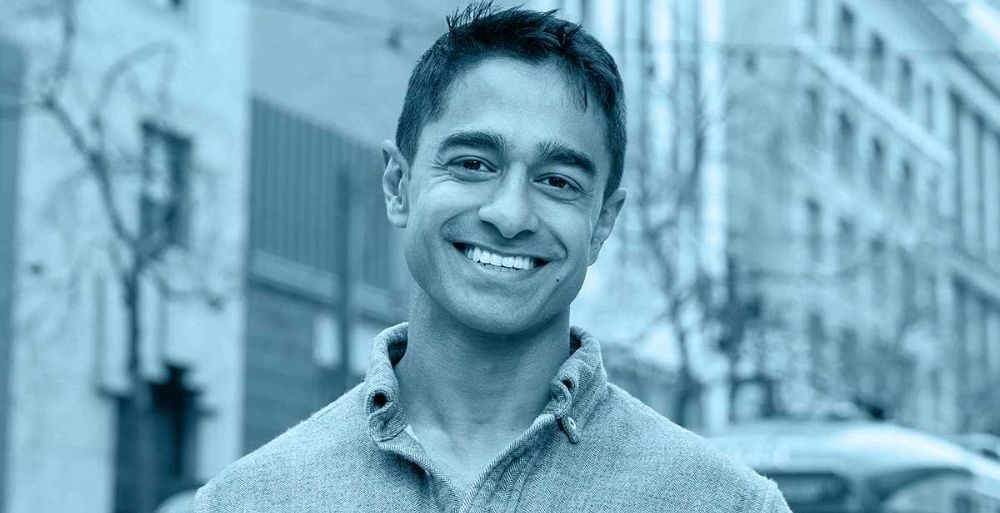






New Delhi: Ricky Gill, an Indian-origin senior official serving in the administration of former U.S. President Donald Trump, has been awarded the National Security Council’s Distinguished Action Award for his role in what the United States has described as “India–Pakistan ceasefire negotiations.” The recognition, however, comes amid persistent and public disagreement between New Delhi and Washington over the nature of the de-escalation that followed India’s military operation earlier this year.
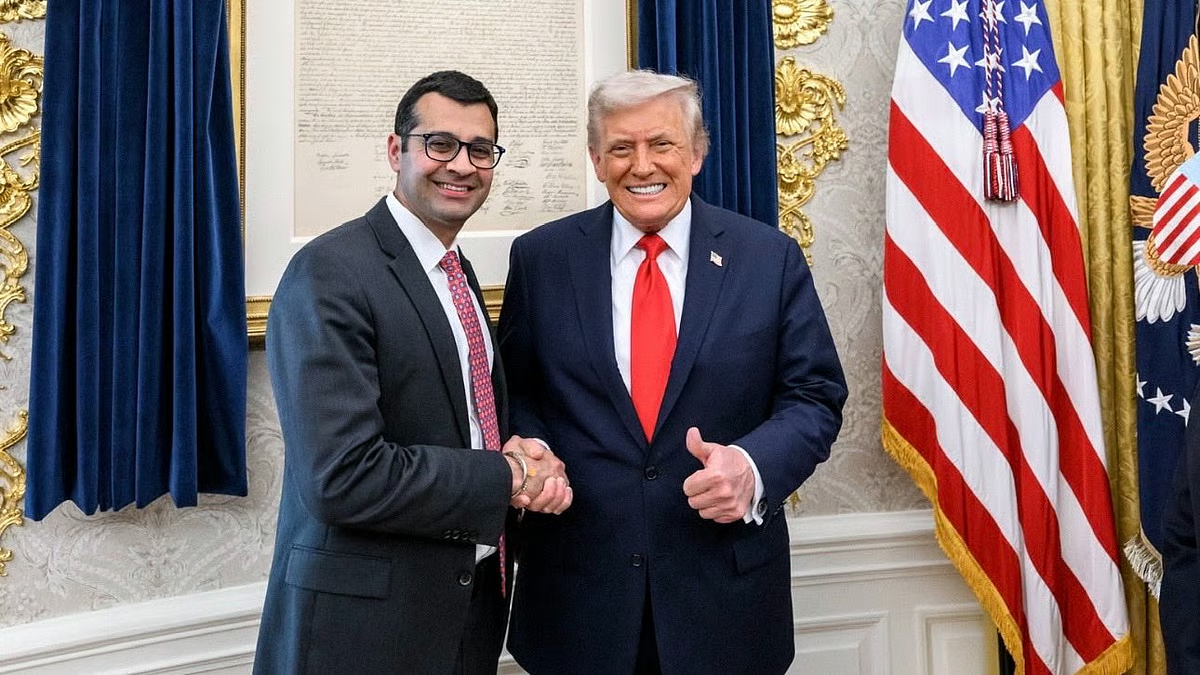
Gill, who serves as Senior Director for South and Central Asia at the National Security Council (NSC) and as Special Assistant to the U.S. President, received the internal NSC commendation earlier this week from U.S. Secretary of State Marco Rubio. The award cites Gill’s contribution to diplomatic engagement during the intense four-day India–Pakistan military standoff in May.
An American citizen of Indian origin, Gill holds a law degree from the University of California, Berkeley and previously served on Trump’s NSC during the president’s first term. He is also known for his foray into electoral politics, having unsuccessfully contested the 2012 U.S. House of Representatives election from California as a Republican candidate, losing narrowly to Democrat Jerry McNerney.
India Pushes Back on US Mediation Narrative
While Washington has portrayed its diplomatic outreach as instrumental in defusing tensions between the two nuclear-armed neighbours, India has firmly rejected any suggestion of third-party mediation. In a phone call with Trump in June, Prime Minister Narendra Modi reiterated New Delhi’s long-standing position that the decision to pause hostilities was reached bilaterally between India and Pakistan, without external intervention.
“The understanding to cease hostilities was achieved directly between the two sides through established military channels,” Indian officials have repeatedly stressed. New Delhi has also underlined that all issues with Pakistan are to be addressed bilaterally, ruling out any role for outside powers in negotiations.
This divergence in narratives has become a notable irritant in India–U.S. relations. Despite regular communication between senior leaders during the conflict, Modi and Trump did not speak for nearly three months following their June conversation, in which the Indian leader made India’s position unequivocally clear.
Operation Sindoor and the 87-Hour Conflict
India launched Operation Sindoor on 7 May, targeting nine terrorist infrastructure sites across Pakistan and Pakistan-occupied Kashmir (PoK). The operation was carried out in response to the Pahalgam terror attack on 22 April, which killed 26 civilians and sparked widespread outrage across India.
The ensuing confrontation lasted 87 hours, during which Indian and Pakistani forces exchanged heavy fire across the Line of Control (LoC), with escalatory action spanning land, air, and sea domains. On 10 May, India’s Foreign Secretary Vikram Misri announced that both sides had arrived at an understanding to pause hostilities following talks between the respective Directors General of Military Operations (DGMOs).
Indian officials have emphasized that these DGMO-level engagements, backed by established diplomatic channels, were solely responsible for de-escalation—not pressure or mediation by external actors.
US Claims and Trade Pressure Allegations
During and after the conflict, senior U.S. officials, including Rubio and Vice President J. D. Vance, were in touch with Indian leadership. Washington later claimed that its intervention helped avert further escalation, with Trump at times suggesting that the threat of imposing high tariffs on both India and Pakistan played a role in calming tensions.
New Delhi has categorically denied this account. Indian officials have stated that trade was never discussed during conversations with U.S. counterparts amid the conflict, and that Vance was explicitly told any discussion on ending hostilities could only take place through appropriate bilateral mechanisms.
Ricky Gill’s Role and Broader Implications
Gill’s award places him at the center of a sensitive diplomatic moment, highlighting the growing prominence of Indian-origin professionals within U.S. foreign policy circles. He visited India in August, engaging with officials and analysts during a period when bilateral ties were already navigating strategic complexity.
However, analysts note that while Gill’s recognition reflects Washington’s internal assessment of its diplomatic efforts, it does little to bridge the perception gap with New Delhi. “The issue is not individual officials, but the broader narrative being pushed,” said a former Indian diplomat. “India sees mediation claims as undermining its strategic autonomy.”
As India and the U.S. continue to deepen cooperation across defence, technology, and Indo-Pacific strategy, the episode underscores a recurring tension: Washington’s desire to project global diplomatic leadership versus New Delhi’s insistence on sovereign decision-making, especially in matters involving Pakistan.
A Delicate Diplomatic Balance
The honour bestowed on Ricky Gill illustrates how the same set of events can be interpreted very differently on opposite sides of the globe. For Washington, it is evidence of proactive crisis management. For New Delhi, it is a reminder of the need to constantly defend its principled stance on bilateralism.
As geopolitical stakes rise in South Asia, the challenge for both capitals will be to manage such differences without allowing them to overshadow a relationship that remains strategically vital—despite periodic friction over narratives, credit, and control.