




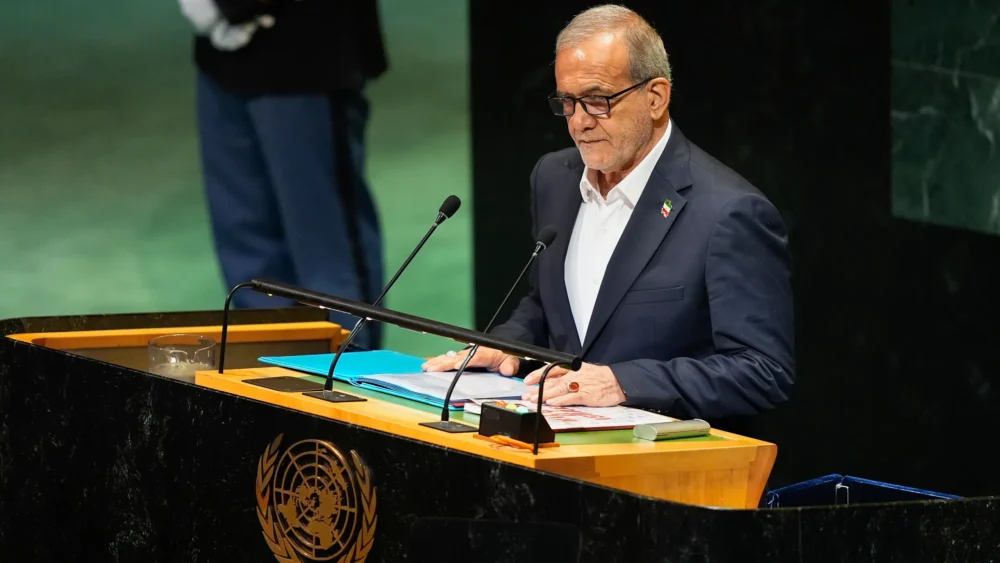
Iranian President Masoud Pezeshkian has issued one of the strongest warnings yet about Tehran’s standoff with the West, declaring that Iran is engaged in a “full-scale war” with the United States, Israel and Europe—one he described as even more complex and dangerous than the devastating Iran-Iraq war of the 1980s.
Speaking in an interview published Saturday on the official website of Iran’s Supreme Leader Ayatollah Ali Khamenei, Pezeshkian said Western powers are deliberately working to destabilize Iran through military, economic and political pressure.
“We are in a full-scale war with the U.S., Israel and Europe; they don’t want our country to remain stable,” Pezeshkian said.
“This war is more complicated and more difficult than the eight-year war with Iraq.”
A Conflict Beyond the Battlefield
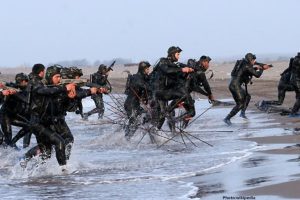
The Iranian president framed the current confrontation as a multi-dimensional struggle that goes far beyond traditional warfare. Unlike the 1980–1988 Iran-Iraq war—which left more than one million casualties across both sides—Pezeshkian argued that today’s conflict involves sanctions, cyber pressure, intelligence operations, diplomatic isolation and targeted military strikes.
According to Iranian officials, this blend of pressure makes the current situation harder to confront than conventional war. “This is not just bombs and bullets,” a senior Iranian political analyst said in Tehran. “It is an economic siege, a psychological war and a security confrontation all at once.”
Pezeshkian’s remarks come at a sensitive diplomatic moment, just days before Israeli Prime Minister Benjamin Netanyahu is scheduled to meet U.S. President Donald Trump in Washington. Iran is expected to feature prominently on the agenda, particularly following recent escalations in the region.
Aftermath of a Deadly June Escalation
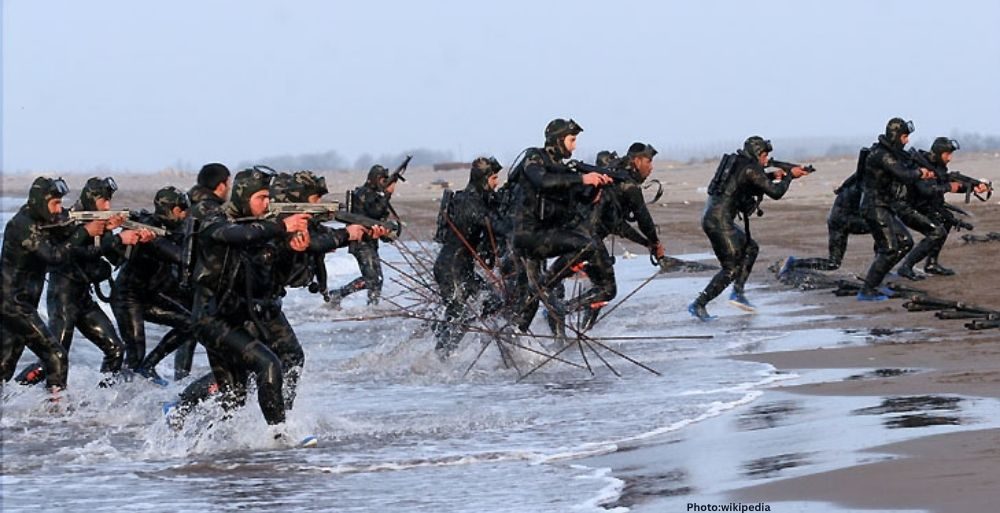
Tensions surged sharply in June during a 12-day air war that saw Israeli and U.S. forces carry out coordinated strikes inside Iran. Iranian authorities say nearly 1,100 people were killed, including senior military commanders and nuclear scientists. Tehran responded with retaliatory missile barrages toward Israel, killing 28 people, according to Israeli officials.
While the fighting stopped short of a broader regional war, analysts warn that the underlying conflict remains unresolved. “The ceasefire was tactical, not strategic,” said a Middle East security expert based in Europe. “Both sides are repositioning, not retreating.”
Pezeshkian used the interview to emphasize that Iran views the strikes as part of a broader Western campaign to weaken the country internally. He accused Western governments of exploiting economic pressure and regional instability to provoke unrest and undermine Iran’s sovereignty.
Europe in the Crosshairs
Notably, Pezeshkian grouped Europe alongside the U.S. and Israel—an indication of Tehran’s growing frustration with European powers it once viewed as potential mediators. Iranian officials argue that Europe’s support for sanctions and alignment with Washington on security matters has erased any meaningful distinction between the Western bloc.
“This is a coordinated front,” Pezeshkian said, according to the interview. “The methods differ, but the objective is the same.”
European diplomats, however, reject the characterization, insisting that they continue to support diplomacy and de-escalation. Yet efforts to revive negotiations over Iran’s nuclear program remain stalled, with mutual distrust deepening on all sides.
A Message Ahead of Washington Talks
Pezeshkian’s language appears aimed not only at a domestic audience but also at Washington and Tel Aviv, just ahead of the Trump–Netanyahu meeting. By framing the conflict as an existential struggle, Tehran is signaling that it will not back down under pressure—and that further escalation could carry serious consequences.
Political observers in Iran say the statement also serves to rally public opinion at home, reinforcing a narrative of resistance amid ongoing economic hardship caused by sanctions.
“This is about resilience,” said a Tehran-based political commentator. “The leadership wants to show that Iran has survived worse—and will survive this too.”
Uncertain Road Ahead
With diplomacy frozen and military tensions simmering, the coming weeks may prove decisive. Any new Israeli or U.S. action against Iran—or a miscalculation by Tehran—could quickly ignite another round of violence, with repercussions felt far beyond the Middle East.
For now, Pezeshkian’s declaration underscores a grim reality: Iran sees itself not in a cold war or proxy struggle, but in an active, high-stakes confrontation with the West—one that it believes will define the country’s future.