




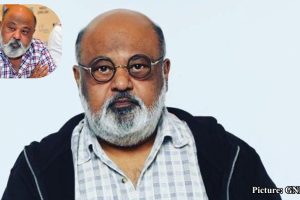

The second richest Indian in America, Vinod Khosla, has witnessed a remarkable surge in his wealth in 2025, reinforcing his status as one of the most influential technology investors in the world. According to real-time estimates, Khosla has added nearly $3.7 billion to his fortune this year alone, taking his net worth to approximately $12.7 billion as of December 23, 2025—a jump of nearly 41% in a single year.
The milestone caps off a classic Silicon Valley success story that began decades ago with a curious teenager in India, reading about a young semiconductor company called Intel and wondering why world-changing innovation seemed to happen so far from home. That curiosity turned into ambition, ambition into risk-taking, and risk-taking into a venture capital legacy that has reshaped entire industries.
Today, as the founder of Khosla Ventures, Vinod Khosla stands second only to Jay Chaudhry—the richest Indian American—in the rankings of Indian-origin billionaires in the United States.
A Standout Year for Indian American Billionaires
Khosla’s wealth surge mirrors a broader trend among top Indian American entrepreneurs and executives. Earlier this year, Jay Chaudhry saw his net worth jump nearly 70% to around $17 billion. Khosla’s rise has been nearly as dramatic. From an estimated $9.01 billion in 2024, his fortune climbed by $3.7 billion in just one year. Even in recent months, his wealth has continued to grow steadily, adding over $220 million, or nearly 2%, in a short span.
According to Forbes, Khosla is currently ranked 234th among global billionaires and 92nd in the United States. He also features on elite lists such as the Forbes 400 and the Midas List, which tracks the world’s top technology investors. Analysts attribute much of his recent wealth increase to the rising valuations and successful exits of companies he backed early—often when others considered them too risky or unconventional.
From Pune to Silicon Valley
Born into a middle-class family in Pune, Khosla grew up in a household shaped by discipline and service. His father served in the Indian Army, and it was widely expected that Vinod would follow a similar path. Instead, a fascination with technology and entrepreneurship redirected his life.
Khosla studied electrical engineering at IIT Delhi, where he founded the institute’s first computer club and wrote a paper on parallel processing long before the concept entered the mainstream. He also helped initiate India’s first biomedical engineering program—an early indicator of his instinct to operate ahead of the curve.
In 1975, he attempted to launch a soy milk business aimed at helping Indians without access to refrigeration. The idea failed, largely due to funding challenges and bureaucratic hurdles. “I was told it would take seven years just to get a phone line,” Khosla later recalled. At just 21 years old, with little money but plenty of resolve, he left for the United States.
He earned a master’s degree in biomedical engineering from Carnegie Mellon University on a full scholarship. His entry into Stanford Graduate School of Business was anything but straightforward. Rejected twice for lack of work experience, Khosla worked two full-time jobs while studying elsewhere before persuading Stanford to admit him. He graduated in 1980—just as Silicon Valley was entering a transformative era.
Building Icons and Betting on the Future
In 1982, Khosla co-founded Sun Microsystems alongside Andy Bechtolsheim, Bill Joy, and Scott McNealy. Sun went on to become a powerhouse in computer hardware, servers, and software, cementing Khosla’s reputation as a visionary builder.
After leaving Sun, he spent nearly two decades at Kleiner Perkins before launching Khosla Ventures in 2004. The firm quickly developed a reputation for bold, contrarian bets—investing in areas ranging from biomedicine and robotics to fintech, clean energy, and artificial intelligence.
Notably, Khosla Ventures was among the first venture firms to invest in OpenAI, a decision that has since proven transformative. Over the years, the firm has scored major exits through IPOs and public listings of companies such as DoorDash, Affirm, QuantumScape, and Opendoor. As of 2025, Khosla Ventures has backed more than 1,400 companies, according to data tracked by CB Insights.
Beyond Wealth: Philanthropy and Purpose
Now 70, Khosla lives with his wife Neeru, his partner since he was 16, and their four children. Beyond venture capital, he remains deeply involved in philanthropy. He co-founded the CK-12 Foundation, supports education reform and climate initiatives, and serves on multiple advisory boards focused on long-term societal impact.
Reflecting on his journey, Khosla has often emphasized resilience and independent thinking. “You only need to be right a few times,” he once said, a philosophy that continues to define his investment strategy—and his extraordinary success.
As 2025 draws to a close, Vinod Khosla’s story stands as a testament to immigrant ambition, calculated risk, and the enduring power of backing ideas before the world fully understands them.