

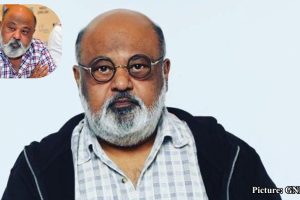





For nearly five decades, Sreenivasan stood as one of Malayalam cinema’s most authentic voices — a storyteller who never spoke at the audience, but always for them. Actor, screenwriter, director, satirist, and social observer, Sreenivasan carved a legacy that mirrored the lives, anxieties, contradictions, and humor of ordinary people in Kerala.
Born on April 6, 1956, Sreenivasan dedicated close to 50 years to Malayalam cinema, redefining what it meant to be a leading creative force without conventional stardom. He passed away on December 20, 2025, at the age of 69, leaving behind a body of work that remains deeply woven into Kerala’s cultural consciousness.
“Sreenivasan was never about spectacle,” a senior film critic once observed. “He was about truth — spoken with humor, irony, and unflinching honesty.”
More Than 225 Films, One Clear Voice
Across a career spanning more than 225 films, Sreenivasan appeared in roles that felt uncannily familiar — the insecure husband, the struggling migrant, the arrogant intellectual, the flawed reformist. He was never the loud hero or the invincible savior. Instead, he brought to screen men riddled with contradictions, moral confusion, and emotional vulnerability.
Audiences laughed at his timing, cringed at his arrogance, and often recognized themselves in his characters. His performances did not rely on exaggeration but on lived realism, rooted in everyday speech and behavior.
“He played people we meet every day — or people we see in the mirror,” a fellow actor once remarked.
The Writer Who Held a Mirror to Society
If Sreenivasan the actor connected emotionally, Sreenivasan the writer challenged intellectually. As a screenwriter, he gifted Malayalam cinema some of its most enduring classics, films that combined humor with biting social commentary.
Among his most celebrated works are Nadodikkattu, Sandesam, Gandhinagar 2nd Street, Varavelpu, Thalayana Manthram, and Njan Prakashan.
His writing was marked by sharp satire, grounded dialogue, and an unfiltered portrayal of middle-class aspirations. Political hypocrisy, family pressures, unemployment, migration, and moral pretensions were recurring themes — handled not with preachiness, but with wit.
“Sreenivasan didn’t mock people,” a longtime collaborator once said. “He mocked systems — and our willingness to live within them.”
A Director With Emotional and Social Depth
Sreenivasan’s creative brilliance extended behind the camera as well. As a director, he proved that socially rooted stories could also be cinematically powerful.
His directorial debut, Vadakkunokkiyanthram, explored male insecurity and patriarchal ego with rare psychological depth, earning the Kerala State Film Award for Best Film. Years later, Chinthavishtayaya Shyamala tackled mental health, masculinity, and marital responsibility, winning the National Film Award for Best Film on Other Social Issues.
“These were not easy subjects,” a film historian noted. “But Sreenivasan treated them with compassion rather than judgment.”
Awards That Followed Integrity
Over the years, Sreenivasan received numerous accolades, though awards were never the measure of his impact. He won two Kerala State Film Awards for Best Screenplay — for Sandesam and Mazhayethum Munpe — and a National Film Award, along with several other honors recognizing his contribution to Indian cinema.
Yet his greatest recognition came from audiences who saw his films not as escapism, but as reflection.
A Family That Carries His Light Forward
Sreenivasan is survived by his wife and two sons — Vineeth Sreenivasan and Dhyan Sreenivasan — both of whom have carried forward his artistic legacy in their own distinct ways.
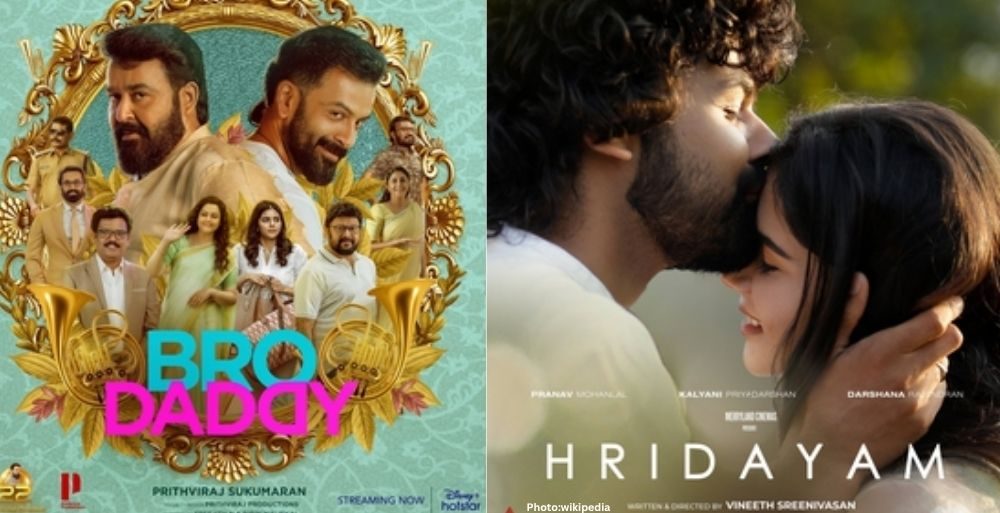
Vineeth has emerged as one of Malayalam cinema’s most respected multi-talents, excelling as an actor, director, singer, and lyricist. His films often echo the warmth, emotional honesty, and social grounding that defined his father’s work.
Dhyan, known for his acting skills and charismatic off-screen presence, has built a strong audience following of his own. He also made his directorial debut with Love Action Drama, showcasing his versatility beyond acting.
“The greatest inheritance my father gave us was honesty,” Vineeth once said in an interview. “Honesty in art, and honesty in life.”
An Enduring Cultural Presence
Sreenivasan’s death marks the end of an era, but not the end of his influence. His dialogues remain quoted, his scenes circulate endlessly on social media, and his satire continues to feel relevant in changing political and social climates.
In a cinema increasingly driven by spectacle and scale, Sreenivasan stood firmly on the side of substance. He reminded audiences that humor can question power, that simplicity can be profound, and that ordinary lives deserve extraordinary storytelling.
Sreenivasan did not chase immortality — yet through his work, he achieved it.