







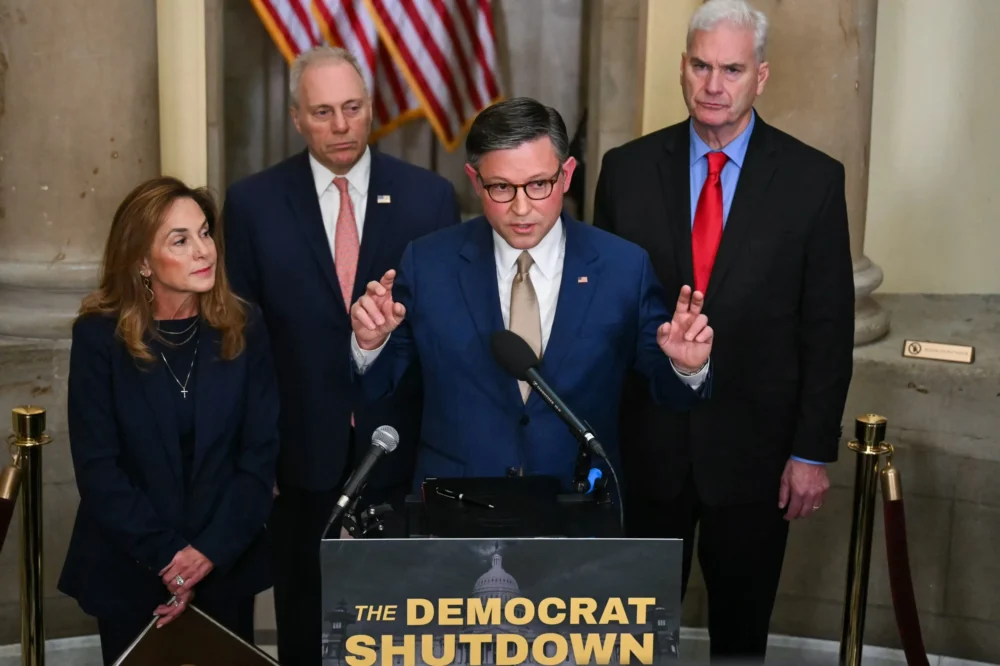
Tensions between Senate Democrats and the White House are once again pushing Washington toward the brink of a government shutdown, as lawmakers return from the Christmas recess without a deal to fund large parts of the federal government. With a January 30 funding deadline looming, Democrats are signaling they may be willing to risk another shutdown to extract concessions from President Donald Trump and his administration.
The immediate flashpoint is the collapse of negotiations over a five-bill appropriations package that would have funded major federal departments, including Defense, Labor, Education, and Health and Human Services. Together, these agencies account for roughly two-thirds of discretionary federal spending. Had the package advanced before Congress adjourned, lawmakers estimate it could have secured funding for nearly 90 percent of the federal government through September next year, significantly reducing the risk of another shutdown.
Instead, Senate Democrats walked away from the deal, citing what they described as a provocative move by the White House: a threat to dismantle the National Center for Atmospheric Research in Boulder, Colorado, a federally funded institution that plays a central role in climate and atmospheric research. The announcement, made publicly by White House budget director Russell Vought, landed just days before lawmakers hoped to finalize the spending package.
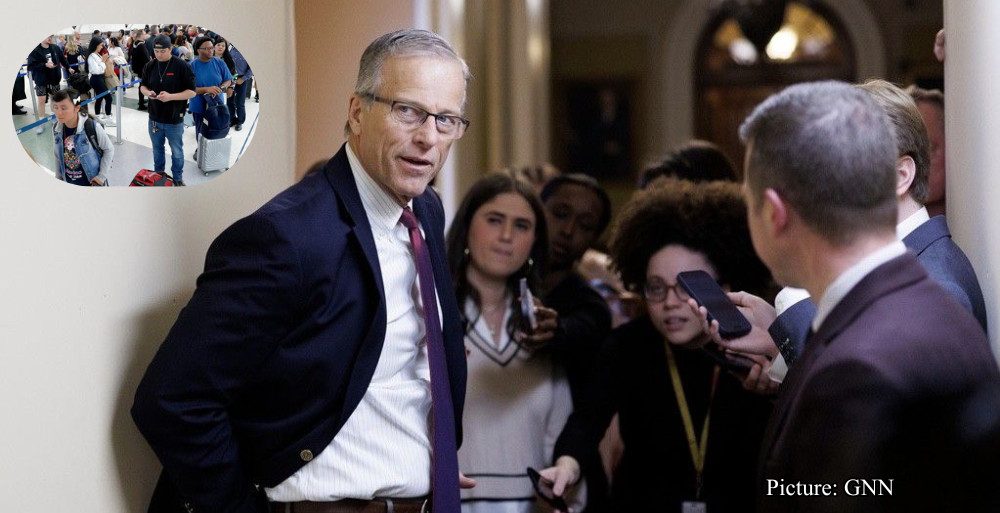
Sen. John Hoeven, a Republican involved in the negotiations, said Democrats were intentionally keeping the threat of a shutdown alive. “They want some leverage for the end of January,” Hoeven told The Hill, adding that he sensed Democrats were not prepared to pass the funding deal even if the research center issue had not erupted into controversy.
Behind the scenes, Democratic strategists are openly debating whether to use the next funding deadline as a pressure point. Sen. Richard Blumenthal of Connecticut declined to speculate on specific tactics but acknowledged that Democrats are reassessing their approach. “We want to pass regular appropriations bills,” he said, “but we’ll see what happens over the next several weeks.”
Lawmakers from both parties warn that the failure to advance the five-bill package is a troubling signal. Senators left Washington without even agreeing on a framework for voting on amendments when they return in January, raising the prospect that Senate consideration could be delayed until well into the month — dangerously close to the Jan. 30 deadline.
One Democratic senator, speaking on condition of anonymity, accused the White House of deliberately provoking confrontation. The decision to announce plans to dismantle the climate research center, the senator said, “destroyed any chance of passing the funding package before Christmas.” Using unusually sharp language, the lawmaker added, “If you’re trying to get something done, you don’t throw a stick of dynamite into the process.”
Even some Republicans acknowledge the move may have backfired. Sen. Lisa Murkowski of Alaska said the episode undermined trust between the administration and lawmakers. “If they’re going to do this right on the eve of advancing appropriations,” she said, “what else should we be worried about?”
Within Republican ranks, concern is growing that the Senate is drifting toward another shutdown. A GOP senator, also speaking anonymously, warned that if the appropriations package does not pass in early January, a partisan standoff is all but inevitable. “If we don’t pass it, then we’re going to walk into a potential government shutdown,” the senator said, noting that passage would fund roughly 87 percent of the government.
Democrats, however, appear less fearful of a shutdown than in past years. Many on Capitol Hill view the prolonged shutdown last fall as a political success, arguing it elevated Democratic priorities — particularly health care costs — and shifted public blame toward Republicans. During that standoff, President Trump’s approval ratings dipped, and Democrats widened their advantage on the generic congressional ballot.
Beyond climate research funding, Democrats are pressing the administration on a range of issues before agreeing to extend government funding beyond January. These include demands for assurances that Trump will not escalate military action in Venezuela and calls for the release of all unclassified documents related to convicted sex offender Jeffrey Epstein. Senate Democratic Leader Chuck Schumer has accused the Justice Department of violating the Epstein Files Transparency Act, which Congress passed overwhelmingly last month.
Health care remains another major sticking point. Enhanced Affordable Care Act premium subsidies are set to expire at the end of the year, a move Democrats say would drive up costs for more than 20 million Americans. Sen. Elizabeth Warren vowed to keep fighting for an extension, placing blame squarely on Republican leadership. “The hard part,” Warren said, “is whether the Republican leadership is willing to move the bill along.”
Senate Majority Leader John Thune has floated the idea of a yearlong continuing resolution to avoid a shutdown, but Democrats fear such a move would once again allow the House to force through a partisan stopgap — a scenario that has already played out twice this year.
With little trust, unresolved policy disputes, and memories of past shutdowns still fresh, Washington now faces a familiar question: whether brinkmanship will once again triumph over compromise as the funding deadline approaches.