


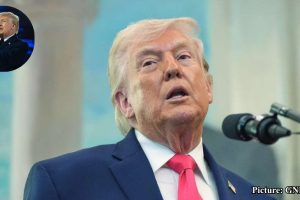



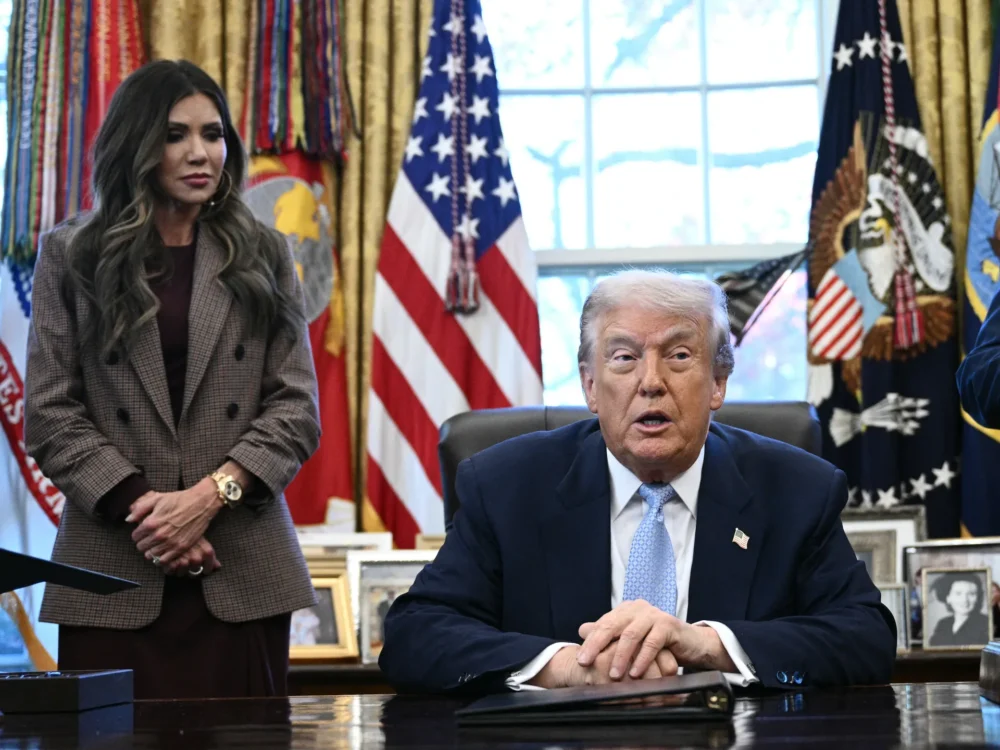
In a move that is already triggering legal and political backlash, President Donald Trump has ordered the suspension of the United States’ Diversity Visa Lottery Program, commonly known as the green card lottery, following a deadly shooting spree linked to a former visa holder.
The decision was confirmed on Thursday by Kristi Noem, who said she had directed United States Citizenship and Immigration Services (USCIS) to immediately pause the program at the president’s instruction.
“This heinous individual should never have been allowed in our country,” Noem wrote on social media, referring to the suspected gunman, Claudio Neves Valente, a Portuguese citizen who entered the U.S. legally and later became a permanent resident.
Tragedy Sparks Policy Action
Neves Valente, 48, is suspected of carrying out shootings at Brown University, where two students were killed and nine others wounded, as well as the fatal shooting of a professor at the Massachusetts Institute of Technology. Authorities said he was later found dead from a self-inflicted gunshot wound.
According to court filings and an affidavit from a Providence police detective, Neves Valente first entered the U.S. in 2000 on a student visa to attend Brown University. After taking a leave of absence in 2001, his whereabouts for the next several years remain unclear. In 2017, he was issued a diversity immigrant visa and later obtained lawful permanent resident status.
The administration has pointed to this immigration pathway as justification for halting the lottery altogether—despite the fact that the suspect underwent the same vetting procedures required of all green card applicants.
What Is the Diversity Visa Lottery?
The diversity visa lottery was created by Congress to promote immigration from countries that are historically underrepresented in the United States. Each year, up to 50,000 green cards are awarded through a randomized lottery system to applicants from eligible countries, many of them in Africa and parts of Eastern Europe.
For the 2025 lottery, nearly 20 million people applied worldwide, with approximately 131,000 individuals selected, including spouses and dependents. Winners must still pass extensive background checks, medical exams, and in-person interviews at U.S. consulates before receiving a green card.
Portuguese citizens—like Neves Valente—accounted for just 38 lottery slots in the most recent cycle, underscoring how rare his selection was.
“Lottery winners are not simply handed green cards,” said one former immigration official. “They go through the same scrutiny as any other permanent resident applicant.”
Legal Challenges Almost Certain
Because the diversity visa program was established by Congress, Trump’s unilateral move to suspend it is expected to face immediate legal challenges. Immigration advocates and constitutional scholars argue that the executive branch does not have the authority to dismantle or indefinitely pause a congressionally mandated immigration program without legislative approval.
“This is almost certainly headed to the courts,” said an immigration law professor. “The president can influence enforcement priorities, but eliminating a statutory program is a different matter altogether.”
The suspension adds to a growing list of legal disputes surrounding the administration’s immigration agenda, including efforts to curtail asylum access, impose sweeping travel restrictions, and reinterpret long-standing citizenship laws.
A Longstanding Target of Trump’s Immigration Agenda
President Trump has been a vocal critic of the diversity visa lottery for years, frequently arguing—without evidence—that it undermines national security. Thursday’s announcement marks the most decisive action yet against the program and follows a familiar pattern of using high-profile crimes to justify broader immigration restrictions.
After a fatal attack on National Guard members in November involving an Afghan national, the administration imposed sweeping immigration limits on Afghanistan and several other countries. Critics say such responses unfairly stigmatize entire populations based on the actions of individuals.
“This is tragedy-driven policymaking,” said one civil rights advocate. “It exploits grief to advance long-standing ideological goals.”
Broader Implications for Legal Immigration
The suspension comes as Trump continues to pursue mass deportations while simultaneously narrowing legal pathways into the U.S. The administration has also challenged birthright citizenship, a right enshrined in the Constitution, with the Supreme Court of the United States recently agreeing to hear the case.
Taken together, immigration experts warn these moves signal a deeper effort to fundamentally reshape the U.S. immigration system—often without congressional consensus.
“The diversity visa lottery has been one of the few remaining legal doors for immigrants from underrepresented regions,” said an immigration attorney. “Closing it doesn’t just affect policy—it affects real families and futures.”
As investigations into the shootings continue, the suspension of the green card lottery ensures the tragedy will reverberate far beyond university campuses, setting up a consequential legal and political battle over the limits of presidential power and the future of legal immigration in the United States.