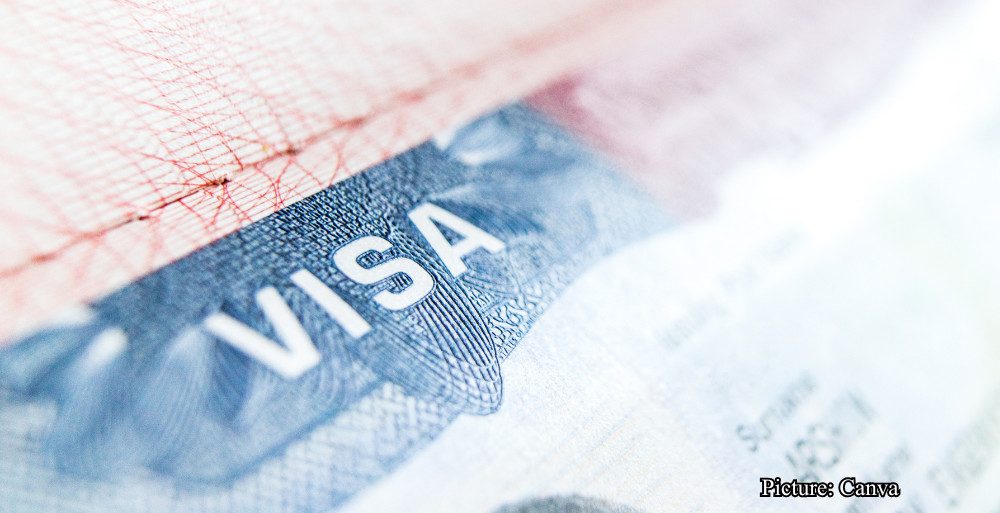






A federal courtroom in the nation’s capital became the first battleground this week for a legal challenge that could redefine the limits of presidential authority over employment-based immigration. A U.S. District Court judge sharply questioned whether the White House’s sweeping powers under immigration law extend far enough to justify a $100,000 fee on H-1B visa workers, a move that has rattled businesses, universities, and healthcare providers across the country.
At the center of the dispute is a presidential proclamation issued on September 19 by Donald Trump, which imposes a previously unseen fee on employers seeking to hire highly skilled foreign workers under the H-1B visa program. The measure, described by critics as the most disruptive employment-based immigration restriction of the administration so far, is now facing multiple legal challenges nationwide.
Presiding over the first hearing on the issue, Beryl A. Howell, an Obama-era appointee to the US District Court for the District of Columbia, acknowledged the difficulty challengers face in overcoming statutory language that grants presidents broad discretion over U.S. entry restrictions.
“Those provisions offer a bit of a hurdle,” Howell said, referring to sections of the Immigration and Nationality Act (INA) that allow presidents to limit entry into the United States. She then posed a pointed question: “Is that a problem where Congress needs to take another look?”
A Test of Executive Authority
The lawsuit before the court was brought by the US Chamber of Commerce and the Association of American Universities (AAU), a coalition representing many of the nation’s top research institutions. It is one of three separate legal challenges filed against the fee, which plaintiffs argue exceeds presidential authority and intrudes into powers reserved for Congress.
The challengers contend that while the INA allows the president to restrict entry into the U.S., it has never been used to impose a massive fee—nor to regulate the financial operations of domestic employers. “This is a case about fees,” said Zach Schauf, a partner at Jenner & Block representing the AAU. “That is a core power of Congress.”
Their argument hinges on INA sections 212(f) and 215(a), which the administration has cited as justification for the new charge. According to the plaintiffs, those provisions were designed to control who enters the country, not to levy costs that reshape how U.S. businesses hire workers.
Business and Education Sectors Alarmed
The proclamation has sent shockwaves through industries that rely heavily on H-1B workers, including technology, healthcare, and higher education. Universities and hospitals, many of which operate on tight budgets, say they cannot absorb a six-figure fee without cutting back on hiring or research.
For private-sector employers—particularly large technology firms that are among the biggest users of the H-1B program—the fee is expected to take effect next spring following the annual visa lottery. Even if courts intervene quickly, analysts say the uncertainty alone could permanently alter how companies use the specialty occupation visa.
“Congress has already set specific fees for this program,” argued Paul Hughes, a partner at McDermott Will & Schulte and counsel for the Chamber. “But the president has unilaterally imposed charges 25 times that amount without seeking new authority. This is a lobbying question for Congress, not the president.”
Government Pushback
Attorneys for the federal government defended the administration’s position, insisting that Congress never explicitly barred the executive branch from imposing additional costs. Tiberius Davis, representing the government, told the court that existing statutory fees do not preclude the president from adding others.
“Those fees are not being displaced,” Davis said. “And they don’t exclude others.”
Multiple Lawsuits, National Stakes
Beyond Washington, the legal fight is expanding. A separate lawsuit was filed earlier this month in Boston by a coalition of states, including California and Massachusetts, while a third challenge in San Francisco seeks a preliminary injunction to block the fee before it takes effect.
The D.C. case—Chamber of Commerce of the United States v. U.S. Department of Homeland Security—is widely seen as a critical test of how far presidential power can stretch into areas traditionally controlled by Congress.
As Judge Howell weighs whether the proclamation crosses a constitutional line, employers, foreign workers, and lawmakers alike are watching closely. The outcome could shape not only the future of the H-1B program, but also the broader balance of power between the executive branch and Congress in U.S. immigration policy.