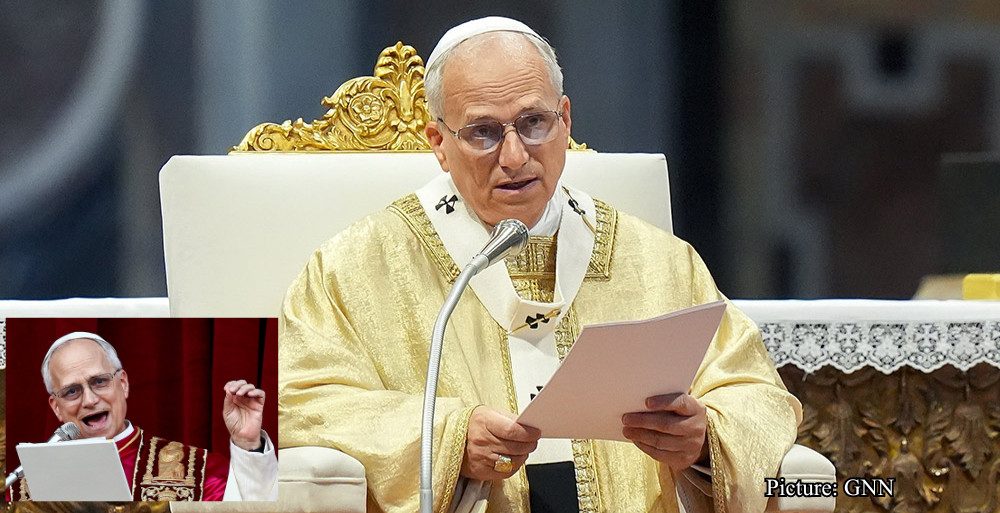







In one of the most closely watched decisions of his young papacy, Pope Leo XIV on Thursday appointed Bishop Ronald A. Hicks of Joliet, Illinois, as the next Archbishop of New York, replacing the influential conservative cleric Cardinal Timothy Dolan. The move is widely seen as a signal of the pope’s preference for a quieter, more pastoral, and unifying leadership style—while continuing the reform-oriented spirit associated with the late Pope Francis.
Bishop Hicks, 58, will be formally installed on February 6 at St. Patrick’s Cathedral, assuming leadership of one of the most powerful dioceses in the global Catholic Church. The Archdiocese of New York, which serves roughly 2.5 million Catholics across Manhattan, the Bronx, Staten Island, and surrounding counties, has long played an outsized role in American Catholic life, politics, and public discourse.
The appointment mirrors Pope Leo’s own unexpected rise earlier this year—from a relatively low-profile bishop with a strong pastoral background to the papacy—suggesting a deliberate effort to recalibrate leadership tone in the United States Church.
A Departure From Dolan’s Political Style
Cardinal Dolan, who has led the archdiocese since 2009, became one of the most visible Catholic figures in American public life. Known for his outspoken conservatism, Dolan frequently weighed in on national debates over abortion, same-sex marriage, and religious liberty. He was a regular presence on conservative media, prayed at both of President Donald Trump’s inaugurations, and most recently described slain conservative activist Charlie Kirk as “a modern-day Saint Paul.”
By contrast, Bishop Hicks has cultivated a reputation as soft-spoken, steady, and institutionally minded. Since Pope Francis appointed him to lead the Diocese of Joliet in 2020, Hicks has largely avoided partisan politics, focusing instead on governance, pastoral outreach, and internal church unity.
“The contrast is unmistakable,” said a senior Catholic analyst based in Washington. “Dolan was a culture warrior. Hicks is a bridge builder.”
Rooted in Francis-Era Priorities
Bishop Hicks rose through the hierarchy under more progressive church leadership, particularly Cardinal Blase Cupich of Chicago, a close ally of Pope Francis known for emphasizing care for immigrants, outreach to marginalized communities, and a welcoming posture toward L.G.B.T.Q. Catholics. Before becoming bishop of Joliet, Hicks served as an auxiliary bishop in Chicago, gaining experience in one of the country’s most complex urban dioceses.
At the same time, Hicks has shown an ability to navigate internal church tensions. In Joliet, he maintained working relationships with priests and parishioners attached to the traditional Latin Mass, even as Pope Francis moved to restrict its use—earning him respect from more conservative Catholics as well.
A Rare and Rapid Elevation
Hicks’ promotion is notable not only for its symbolism but also for its speed. Joliet, with about 520,000 Catholics, is roughly a quarter the size of New York’s archdiocese. Elevating a bishop after just five years in a smaller diocese to such a prominent seat is relatively rare. Traditionally, the Archbishop of New York is later elevated to the rank of cardinal, placing Hicks on a potential path to the Church’s highest clerical tier below the pope.
Before Pope Leo’s election, Hicks already held influence within the U.S. Church. He currently chairs the U.S. Conference of Catholic Bishops’ committee on clergy and vocations, helping guide policy on priestly formation and pastoral leadership nationwide. In June, he also helped organize a governance seminar at the University of Notre Dame for newly appointed bishops, focusing on decision-making, oversight, and communications.
Immigration and Human Dignity in Focus
The leadership change comes at a politically sensitive moment, particularly on immigration. New York City has seen heightened immigration enforcement activity, and Catholic institutions have faced pressure to protect congregants amid deportation threats.
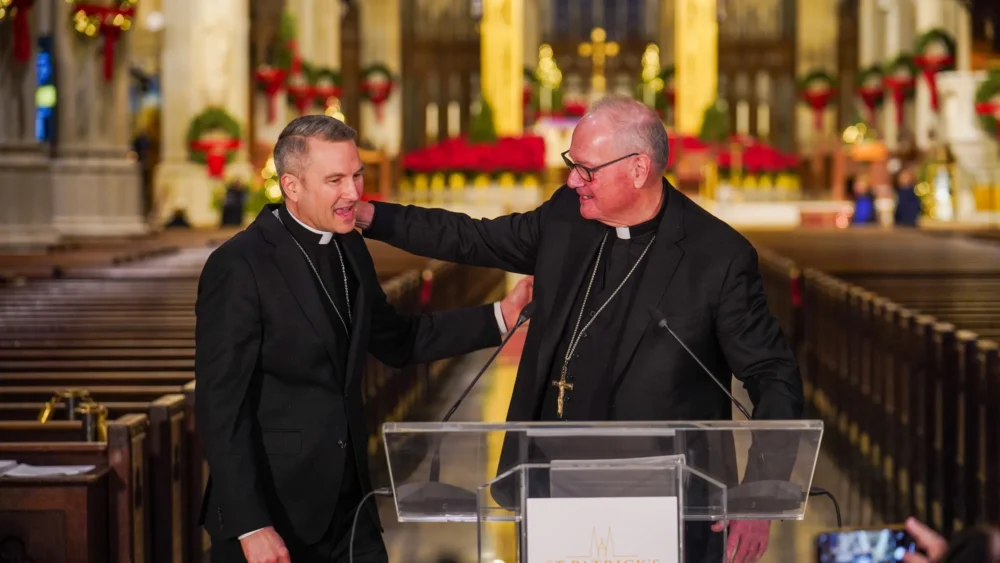
At a news conference at St. Patrick’s Cathedral on Thursday, Bishop Hicks voiced strong support for the U.S. bishops’ recent statement criticizing the Trump administration’s deportation campaign.
“The United States should be a country that upholds human dignity, respect, and due process,” Hicks said, adding that Catholic leaders have a moral responsibility to speak out when policies endanger vulnerable communities.
His comments place him firmly within the pastoral and human-rights-oriented tradition associated with Pope Francis—and now Pope Leo—rather than the confrontational politics that often defined Dolan’s tenure.
A Life Shaped by Mission and Service
Bishop Hicks’ biography further underscores the pope’s apparent priorities. Like Pope Leo, Hicks grew up in Chicago’s south suburbs and spent years in Latin America as a missionary. As a priest in El Salvador, he led Nuestros Pequeños Hermanos, an organization caring for orphaned children across nine Latin American countries.
His favorite saint, he has said, is Archbishop Óscar Arnulfo Romero, the Salvadoran cleric assassinated in 1980 for defending the poor and criticizing state violence.
Hicks’ pastoral instincts have often been visible in small but symbolic gestures. On Christmas Day three years ago, he visited inmates at the Joliet Treatment Center; last month, he returned to baptize four prisoners.
“I’ve been told that I have a gentle spirit,” Hicks once said in an interview, “but that I’m also able to be strong, set vision, and move things forward.”
A New Chapter for New York
Cardinal Dolan, who turned 75 in February, had formally submitted his resignation, as required under Church law. His departure was delayed by Pope Francis’ death and the papal transition. Dolan leaves behind a complex legacy, including major real estate decisions and efforts to address more than 1,300 sexual abuse claims, for which the archdiocese has pledged to raise at least $300 million.
As New York prepares for its next archbishop—and as the city prepares to inaugurate its first Muslim mayor—many see Bishop Hicks’ appointment as a conscious attempt by Pope Leo to lower the temperature, restore trust, and re-center the Church on pastoral care rather than political combat.
“I really have to take many voices and perspectives into account,” Hicks said in a video message last year. “The best decisions come from collaboration, not from acting alone.”
For Pope Leo XIV, the choice of Ronald A. Hicks appears to be a statement of intent: a quieter Church presence, rooted in dialogue, dignity, and governance—at a moment when both the city and the Catholic Church are searching for stability.