








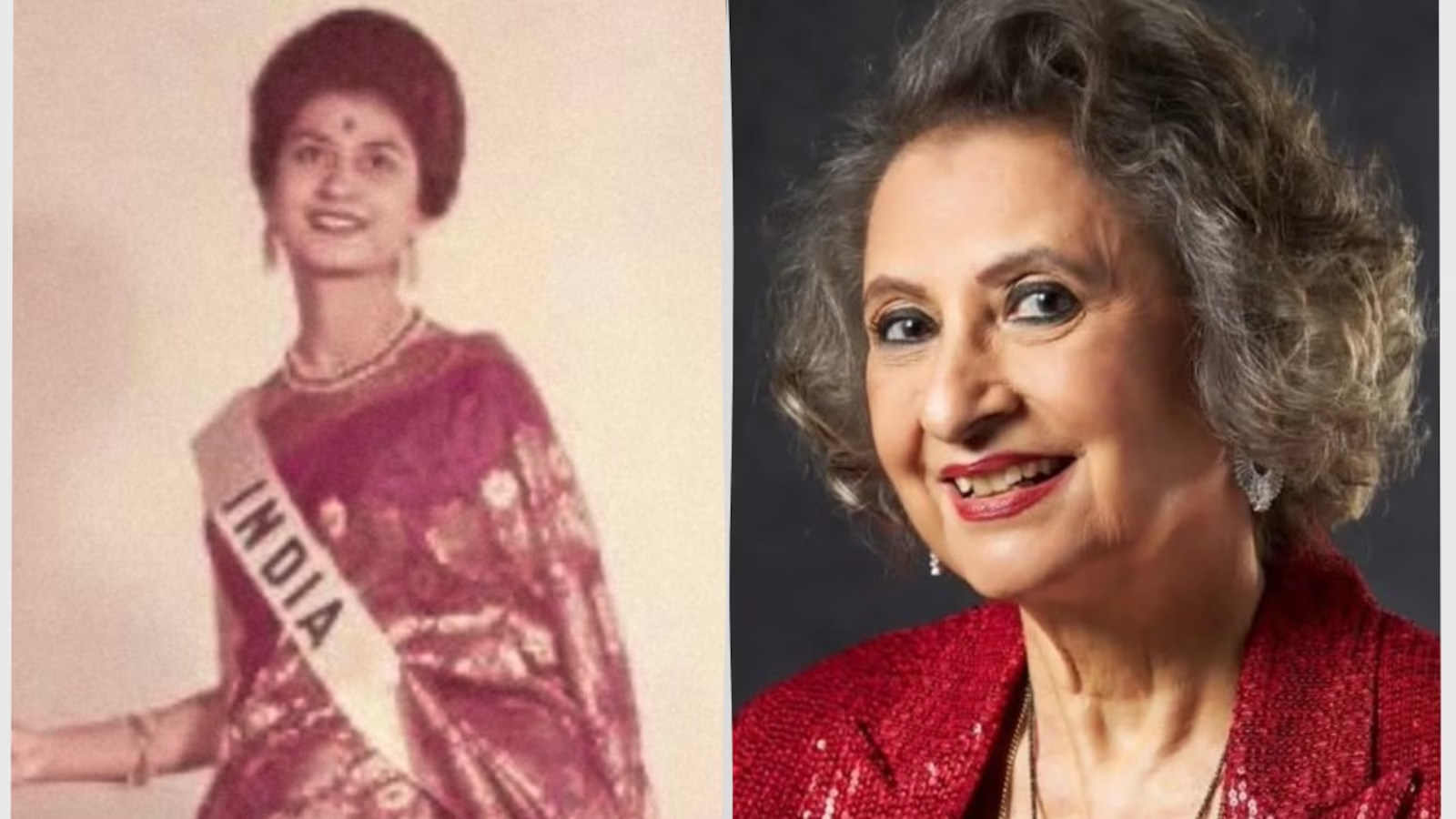
Meher Castelino, India’s first-ever Miss India and one of the most influential voices in the country’s fashion journalism, passed away on Wednesday at the age of 81, marking the end of an era that bridged beauty, intellect, and industry insight.
Castelino is survived by her son Karl, daughter-in-law Nisha, and daughter Christina. Her passing has prompted an outpouring of tributes from designers, editors, students, and industry leaders who credit her with shaping how fashion has been understood, documented, and respected in India.
Born and raised in Mumbai, Meher Castelino first entered the national spotlight in 1964, when she won the Femina Miss India title, becoming the first woman to wear the crown. At a time when beauty pageants were still a novelty in the country, Castelino went on to represent India at international competitions including Miss Universe and Miss United Nations, placing Indian womanhood on a global stage.
Yet, those close to her say she never allowed the glamour of the crown to define her.
“Winning Miss India opened doors, but Meher chose to walk through them with purpose,” recalled a senior fashion editor who worked alongside her for decades. “She wanted to build something lasting, not just be remembered for a title.”
From Pageantry to the Pen
In 1973, Castelino made a decisive turn toward writing, publishing her first article in Eve’s Weekly. What began as a single byline soon evolved into a formidable career that would span more than five decades. She went on to become a full-time fashion journalist and syndicated columnist, with her work appearing in nearly 130 national and international newspapers and magazines.
At a time when fashion writing in India was largely confined to trends and celebrity wardrobes, Castelino approached it as a serious industry. She wrote about textiles, craftsmanship, branding, consumer psychology, and the economics of style—long before these conversations became mainstream.
“She was talking about fashion as business when most people were still dismissing it as frivolous,” said a leading Indian designer. “Meher gave the industry intellectual legitimacy.”
A Pioneer Who Documented an Industry’s Evolution
Widely regarded as a pioneer of Indian fashion journalism, Castelino brought analytical rigor and historical depth to her writing. Her columns became a living archive of India’s transition—from small boutiques and export houses to global fashion weeks and international runways.
She authored several influential books, including Manstyle, Fashion Kaleidoscope, and Fashion Musings, which examined changing trends, evolving gender norms in fashion, and the cultural forces shaping style in India. These works remain reference points for students and professionals alike.
Castelino also served as the official fashion writer for Lakme Fashion Week and other major fashion weeks in India, documenting not just collections but the broader ecosystem around them. Her reviews were known for their clarity, fairness, and deep contextual understanding.
“She never sensationalized fashion,” said a former Lakme Fashion Week organizer. “Her writing respected designers, readers, and the craft itself.”
Mentor, Judge, and Industry Conscience
Beyond journalism, Castelino played a significant role in nurturing the next generation. She was a regular judge at fashion awards, a sought-after speaker at fashion institutes, and a mentor to young designers and aspiring journalists.
Students remember her for her uncompromising standards and encyclopedic knowledge.
“If you exaggerated a fact or misunderstood a reference, she would gently but firmly correct you,” said a former fashion student. “She believed fashion deserved the same integrity as any other field of journalism.”
Her ability to recall decades of collections, designers, and industry milestones earned her a reputation as one of Indian fashion’s most reliable chroniclers.
A Legacy Beyond the Crown
While history will always remember Meher Castelino as India’s first Miss India, those who knew her insist that her true legacy lies elsewhere.
“She proved that beauty and intellect are not opposites,” said a fellow journalist. “She redefined what it meant to move beyond a pageant crown.”
With her passing, Indian fashion media has lost not just a pioneer, but a conscience—someone who insisted on depth in an industry often tempted by surface appeal. Her career stands as a reminder that fashion, when thoughtfully examined, is a mirror of society itself.
As India’s fashion industry continues to gain global recognition, Meher Castelino’s voice will endure in the words she wrote, the minds she shaped, and the standards she set.