









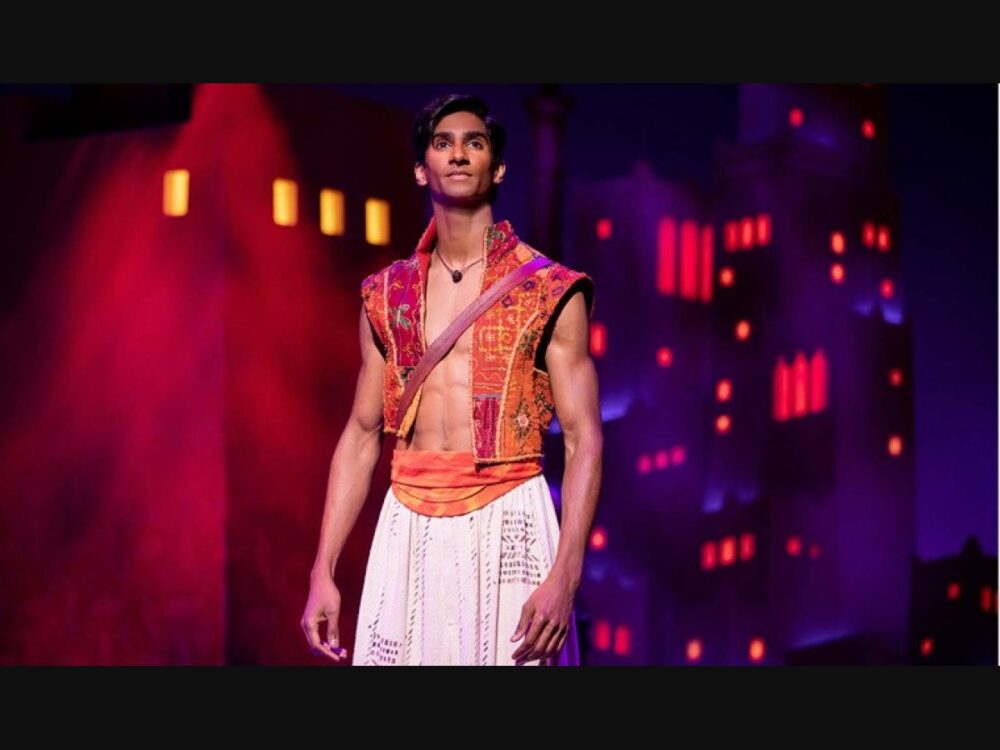
When Michael Maliakel steps onto the Broadway stage as Aladdin, it is more than a moment of theatrical spectacle—it is a quiet but powerful cultural shift. For audiences packed into New York’s famed theatre district, Maliakel’s performance represents not only musical excellence, but also a broader reimagining of who gets to occupy center stage in mainstream American theatre.
The 37-year-old Indian American performer, whose family traces its roots to Kerala, brings a resonant baritone voice and commanding presence to a role that has long been shaped by convention and narrow casting norms. His portrayal of the street-smart dreamer in Disney’s Aladdin signals a turning point for South Asian representation on Broadway, challenging historical stereotypes and expanding the visual and cultural language of one of the world’s most influential stages.
A Journey Rooted in Discipline and Tradition
Maliakel’s path to Broadway was forged through years of disciplined training and artistic immersion. He studied at the Peabody Conservatory of the Johns Hopkins University, where he focused on classical voice and performance. There, he developed the technical mastery required to navigate demanding musical scores—an essential skill in a role as vocally and physically challenging as Aladdin.
Before the bright lights of Broadway, Maliakel honed his craft through choir singing and concert performances, experiences that shaped both his musical precision and emotional expressiveness. Those early years, he has said, instilled in him a balance of discipline and versatility—qualities that now define his stage presence.
That foundation allows him to move seamlessly between powerful musical passages and moments of vulnerability, a balance that Broadway audiences have warmly embraced.
Breaking Barriers in Mainstream Theatre
Maliakel’s casting as the titular hero is widely seen as a milestone moment—not just for his career, but for South Asian visibility in American theatre. Broadway, long criticized for its lack of diversity in leading roles, has slowly begun to reflect the changing demographics and stories of its audiences.
Reflecting on his journey, Maliakel told IndiaWest that his connection to Aladdin runs deeper than performance alone.
“Like Aladdin, Indian Americans feel the need to prove themselves,” he said. “Growing up, my family had the bed sheets, the lunch boxes, the pajama sets—there was nothing casual about our household’s obsession with the film.”
The comment resonated with many Indian American theatergoers who grew up seeing the character as a symbol of aspiration, but rarely saw themselves represented onstage in leading roles.
Representation Beyond Symbolism
For Maliakel, representation is not a buzzword—it is a lived responsibility. In interviews, he has consistently emphasized the broader implications of his casting.
“It’s so important to tell more diverse stories,” he said in another conversation. “The support I’ve received from the South Asian community has been overwhelming, and it reminds me that this is bigger than just me.”
He believes Broadway’s enduring appeal lies in its ability to mirror the complexity of the world beyond the footlights. “Seeing diverse faces in leading roles matters,” Maliakel explained. “Broadway’s magic lies in its ability to reflect the richness of the world we live in.”
The response from audiences and critics alike suggests that this shift is long overdue. Many theatergoers have praised his performance not only for its vocal strength, but for the authenticity and relatability he brings to the character.
A Cultural Moment, Not Just a Casting Choice
Industry observers note that Maliakel’s success is emblematic of a broader change underway in American performing arts, where talent is increasingly recognized beyond traditional racial and ethnic boundaries. While progress has been incremental, moments like this serve as visible markers of transformation.
“Casting choices like Maliakel’s challenge audiences to rethink what is ‘traditional,’” said a Broadway casting professional familiar with the production. “They expand the emotional vocabulary of the show without altering its essence.”
For young performers of South Asian descent, Maliakel’s presence on Broadway offers something even more profound: possibility. His journey underscores that classical training, persistence, and authenticity can open doors once considered out of reach.
From Kerala Roots to Broadway Lights
Maliakel’s story is deeply personal, yet broadly symbolic. It bridges cultures—from the traditions of an Indian American household to the global stage of Broadway. It also reflects a generation of artists who are reshaping American cultural institutions simply by being present and excellent in their craft.
As the curtain rises night after night, his Aladdin does more than entertain. It challenges assumptions, expands representation, and reaffirms theatre’s enduring power to evolve.
From Kerala roots to Broadway lights, Michael Maliakel’s ascent is both celebratory and provocative—a reminder that the greatest strength of the stage lies in its ability to challenge tradition, widen horizons, and finally give voice to those who have long waited in the wings.