








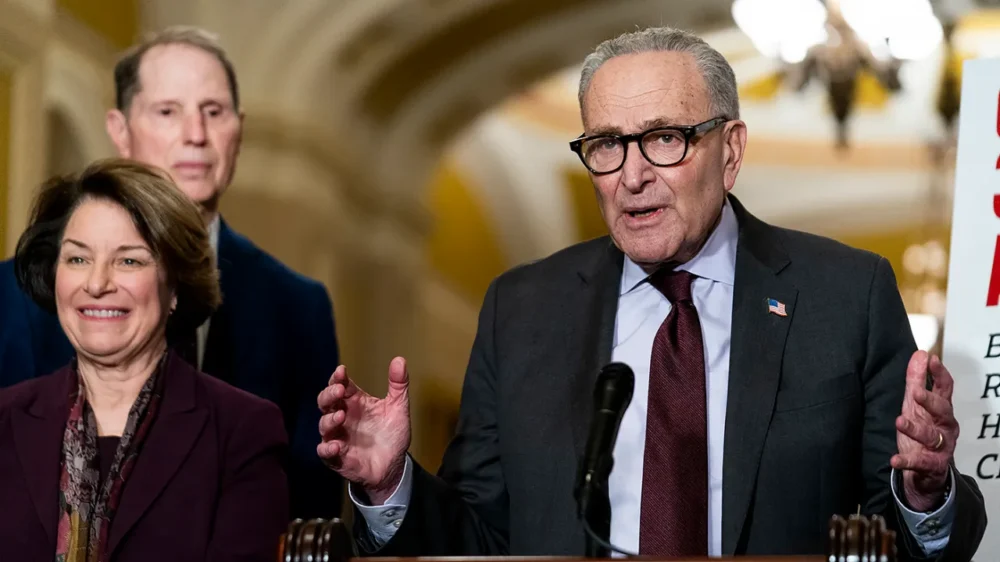
WASHINGTON — Senate Minority Leader Chuck Schumer announced Thursday that Democrats will push a Senate vote next week on legislation to extend key Affordable Care Act (ACA) subsidies for another three years — a move aimed at preventing a sharp rise in health insurance premiums for millions of Americans.
Schumer said the proposal is a “clean extension” of the enhanced ACA tax credits first enacted in 2021, which cap premiums for average marketplace plans at 8.5% of household income. He also confirmed that all Senate Democrats intend to support the measure.
However, the bill is almost certain to fail. Many Republicans argue that the expanded subsidies were pandemic-related and were never meant to be permanent.
“Republicans have one week to decide where they stand,” Schumer warned on the Senate floor. “They can vote to keep health care costs down — or block this bill and allow premiums to soar. This is one of the most consequential votes we’ll take.”
The upcoming vote stems from a commitment made by Senate Majority Leader John Thune, R-S.D., during negotiations to end last month’s historic government shutdown. Thune confirmed once again that he will allow Democrats to bring their bill to the floor, though it will require 60 votes, meaning at least 13 Republican senators must cross party lines.
So far, bipartisan consensus remains elusive. Some Republicans say they’re open to extending ACA subsidies but want stricter income limits or policy changes. Others are demanding that any extension include stronger abortion restrictions — conditions Democrats have flatly rejected.
Political Stakes Skyrocket as ACA Costs Are Set to Rise
With the subsidies scheduled to expire at the end of the year, millions could face steep price increases on the ACA marketplace. Democrats see the looming crisis as a potent campaign issue heading into the 2026 midterms, especially if Republicans block action.
Schumer said the Democratic bill is the “only path” to prevent January premium hikes, adding that voters will be watching closely to see who steps in to protect their health care.
“Time is running out,” he said. “Next week is Republicans’ last opportunity to stop premiums from skyrocketing.”
Thune did not address health care directly in his Thursday remarks but admitted earlier in the week that finding a bipartisan solution is proving difficult. Republicans have floated a range of ideas — from extending subsidies with limits to eliminating them altogether — but haven’t united behind a single plan.
Senate Republican Whip John Barrasso dismissed the Democratic bill as merely extending “Biden’s Covid bonus payments,” arguing that Democrats refuse to make needed changes to the ACA.
Sen. Jon Husted of Ohio said he supports an extension but wants funds redirected to benefit consumers more directly, adding that both parties remain stuck.
“Obamacare hasn’t delivered on its promise to lower costs and expand choices,” Husted said. “Democrats won’t admit it, and Republicans don’t want to prop it up.”
House Bipartisan Group Offers Alternative — But Faces Long Odds
In the House, a bipartisan coalition led by Reps. Jen Kiggans, R-Va., and Josh Gottheimer, D-N.J., proposed a two-year ACA subsidy extension paired with tighter eligibility requirements and oversight.
But the plan has little traction. Most House Republicans oppose extending ACA funding at all, and Speaker Mike Johnson has shown no interest in holding a vote. The only way forward would be a discharge petition, requiring 218 signatures — an unlikely scenario given GOP reluctance.
Negotiators See Little Hope for a Deal
Sen. Angus King, who brokered the agreement that allowed eight Democrats to support reopening the government, now says he no longer believes a compromise is attainable.
“The Republicans have made Hyde a red line,” King told NBC News, referring to the longstanding abortion restrictions many GOP lawmakers want tied to the ACA funds. “And that’s not going to work. If that’s their requirement, the deal is dead.”
With both parties entrenched and the deadline approaching, next week’s Senate vote appears poised to be more symbolic than decisive — but its political impact could reverberate well into the 2026 elections.