







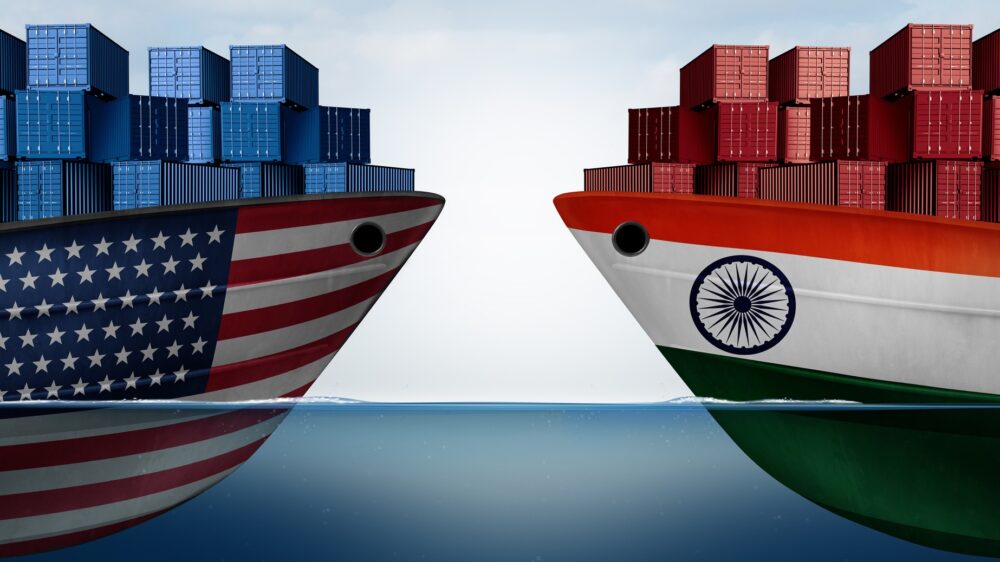
It began with a late-night call between negotiators in New Delhi and Washington — a conversation that would quietly freeze what was once pitched as a transformational India–US trade and defence package. American officials came with a clear proposal: if India wanted sweeping concessions on tariffs, energy supplies, and market access, it would need to accept the F-35 fighter jet as part of the strategic deal.
But the offer came with red lines. The United States was willing to discuss the aircraft, yet unwilling to provide source code access, deep technology transfer, or the autonomy to integrate Indian-made weapons and sensors. For New Delhi, now the world’s second-largest arms importer, such limitations were non-negotiable.
The moment US negotiators made their pitch, enthusiasm in India cooled — and the trade deal drifted into political hibernation. Meanwhile, Vladimir Putin was preparing to land in Delhi with a radically different offer.
Operation Sindoor: A Turning Point in India’s Military Confidence
Operation Sindoor changed how India viewed its high-end defence assets. During the conflict, Rafale fighters, operating with deep-strike precision under layered electronic warfare cover, devastated key enemy positions, while S-400 air defence systems created impenetrable air corridors.
The real-time synergies between Rafale strikes and S-400 shielding astonished foreign military observers. Suddenly, systems that India had spent years defending domestically were being hailed worldwide as war-winning platforms.
This success reinforced a new strategic posture in Delhi: India will no longer buy platforms that restrict sovereignty or operational freedom.
The F-35 “Poison Pill”
From the American perspective, inserting the F‑35 Lightning II into the broader trade deal made strategic sense. The jet comes with a long-term ecosystem of software updates, maintenance chains, and logistics pipelines — a system designed to keep partner nations tied to US defence architecture.
To India, however, this looked less like cooperation and more like control.
New Delhi’s stance was firm:
- No fifth-generation fighter without major technology transfer
- No opaque, black-box systems
- Full freedom to equip the jet with Indian weapons, radars, and EW systems
US export laws, alliance commitments, and F-35 governance rules made these requests impossible. As a result, what was meant to sweeten the deal became a “poison pill”, threatening to derail not just defence talks but also progress on LNG, agriculture, and tariff concessions.
India’s Buying Power Is Now a Strategic Asset
India today accounts for 8.3% of global arms imports, second only to Ukraine in the 2020–24 period, according to SIPRI. Russia remains India’s top supplier, while France — buoyed by massive Rafale contracts — has overtaken the US.
This leverage means:
- Major defence manufacturers build strategies around Indian orders
- Offset rules and technology transfer terms are negotiated on India’s terms
- A single Indian deal can revive or redefine entire defence production lines
India is no longer a buyer seeking approval — it is a market that shapes global supply chains.
How Rafale Became a Global Export Star
A decade ago, Dassault Rafale was struggling to find buyers. After India signed its multi-billion-dollar Rafale deal, the aircraft’s global reputation transformed.
Today, countries such as UAE, Indonesia, Greece, Qatar, and Croatia have lined up orders. India’s customized enhancements and its MRO ecosystem have turned Rafale into one of the most sought-after fighters worldwide.
S-400: Russia’s Shield and India’s Autonomy
India’s purchase of the S‑400 Triumf — even under threat of US sanctions — became a global signal that India prioritizes strategic autonomy over political pressure.
Despite the Ukraine war, demand for Russian air defence has not collapsed; it has shifted to countries willing to absorb geopolitical friction.
Putin Arrives With a Counter-Offer: Su-57E and a Trade Reset
As the India–US deal stalls, Moscow is offering something Washington cannot:
- Su‑57E with deep technology transfer
- Local assembly at HAL Nashik
- Potential integration of Indian missiles like Astra, Rudram, and future AESA radars
- Up to 60% localization
At the same time, Russia is proposing:
- Long-term discounted crude
- LNG agreements
- Purchases of Indian agricultural and pharmaceutical products
Where the US offered a rules-heavy “grand bargain,” Russia is proposing a transactional, sovereignty-friendly partnership.
The US Model vs. India’s New Definition of Sovereignty
Washington has unveiled long-term defence frameworks, co-production plans, and the possibility of reviewing F-35 export restrictions. But the core problem remains:
**The US wants managed ecosystems.
India wants sovereign control.**
India refuses any system where:
- A foreign nation controls software updates
- Supply chain choke points can be weaponized
- Combat operations depend on external approval
Given past US sanctions (Pokhran), Pakistan-related grievances, and India’s two-front threat environment, such constraints are politically unacceptable.
Thus, the F-35 became symbolic — not just a procurement issue, but a question of national identity.
Where the India–US Trade Deal Stands Now
The trade agreement is not dead, but it is on ice:
- Quiet talks continue on tariffs, digital trade, agriculture, services, and LNG
- Defence cooperation will shift toward platforms where the US can offer flexibility
- A future window may reopen if Washington adjusts its export posture
But an F-35 breakthrough is unlikely in the short term.
India the Trendsetter: Why the Stakes Are Global
When India buys a platform, it often becomes a global success story:
- Rafale turned into an export superstar
- S-400 became the benchmark for nations asserting autonomous defence policies
The F-35 vs. Su-57 competition is not just about aircraft — it is about who defines the next decade of air strategy in Asia:
- The US model of tightly governed ecosystems, or
- India’s model of multi-source, sovereign-coded platforms
For now, the answer is symbolized in Delhi’s skies:
An American plane that never arrived, and a Russian president arriving with blueprints and energy deals.
Until Washington adapts to India’s new strategic identity, the trade deal will remain on the back burner.