









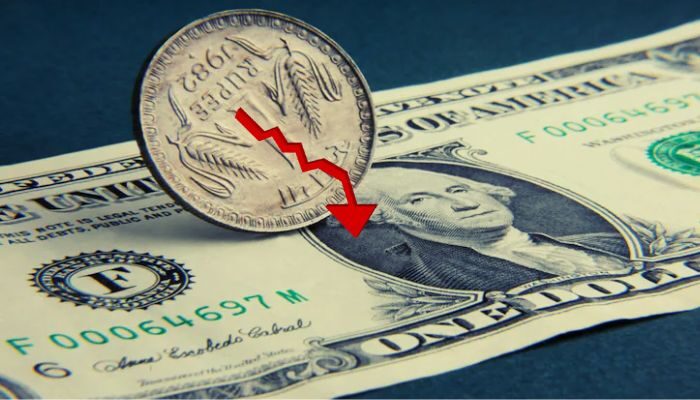
Over the past forty years, the Indian Rupee has undergone a dramatic transformation — slipping from roughly ₹10 per US dollar to now breaching the ₹90 mark. This steep depreciation does not reflect just a single economic shock, but a long, uneven journey shaped by shifting global conditions, domestic vulnerabilities, trade imbalances, and changing investment flows. Recent developments suggest the currency might be at one of its most fragile points ever.
The current slide past ₹90 to the dollar marks the latest milestone in a gradual decline. Back in the early 1980s, when the rupee first crossed ₹10, the country’s economy was far more closed and foreign investment minimal. Over time, external shocks and internal policy shifts began to erode the currency’s strength — culminating in several major devaluation phases. The most dramatic drop came during the crisis of 1991, when India faced a severe balance of payments crisis. The rupee rocketed past ₹20, eventually reaching the low ₹30s in just a couple of years.
In the late 1990s, amid the Asian financial turmoil and international sanctions following geopolitical tensions, the rupee slid to the ₹40-plus range. The global downturn in 2008 again pushed the currency below ₹50 as foreign investors pulled out and emerging markets reeled. A further slide to the ₹60 mark came around 2013, triggered by shifting global liquidity conditions and rising oil prices. By 2018, oil-driven pressures and a stronger dollar nudged the rupee close to ₹70. Then in 2022 — amid global commodity shocks and monetary tightening in advanced economies — the rupee crossed ₹80. Now, after years of added pressure, it has crossed ₹90.
What’s fueling the current fall? In recent months, weak foreign capital inflows have played a central role. Foreign institutional investors have pulled out billions from domestic equities, while foreign direct investment has also weakened. For many investors, global uncertainty and a more attractive dollar have made Indian assets less appealing.
At the same time, India’s trade deficit has hit record levels. Imports — especially of crude oil and gold — remain high, while exports struggle under weak global demand and protectionist headwinds. With importers needing more dollars and exporters holding back on converting their foreign earnings, demand for the greenback has surged, adding downward pressure on the rupee.
Compounding these trends is rising hedging activity. Companies vulnerable to currency swings — especially importers and firms with foreign-currency debt — are hedging aggressively to protect against further rupee weakening. This increased demand for dollars further depletes foreign exchange flows, intensifying depreciation.
Global factors have added fuel to the slide. The dollar remains strong as major economies raise interest rates to combat inflation. That has attracted capital away from emerging markets like India, where returns look comparatively weaker. As such, emerging-market currencies including the rupee remain under pressure.
Despite these headwinds, some domestic observers believe the slide may offer long-term benefits for export-oriented sectors. A weaker rupee can make Indian goods more competitive abroad, helping exporters gain market share. Industries like information technology, pharmaceuticals, and labor-intensive manufacturing may see a boost, potentially countering some of the negative impacts.
But for everyday consumers and import-dependent businesses, the depreciation is painful. It pushes up the cost of fuel, imported commodities, foreign-denominated debt servicing, and foreign education. Inflationary pressures may rise if import costs — especially of crude oil and essential goods — continue to climb. Price increases in materials, energy, and consumer goods could ripple through the economy, squeezing household budgets and corporate margins alike.
The currency’s plunge has also rattled financial markets. Frequent currency swings, combined with weak foreign flows, have made Indian equities less attractive for global investors. This volatility has stoked uncertainty, especially among those investing in debt markets or companies with large dollar-denominated borrowings.
Addressing this depreciation, policymakers face a delicate balancing act. On one hand, aggressive interventions — such as foreign-exchange market intervention or hiking interest rates — could temporarily stabilize the rupee. On the other, such measures risk slowing domestic economic growth or depleting foreign-exchange reserves. The challenge lies in restoring foreign investor confidence, narrowing the trade deficit, and encouraging export growth — without undermining growth momentum.
If long-term reforms are implemented — including boosting export competitiveness, diversifying trade partners, encouraging domestic manufacturing and import substitution, and maintaining disciplined fiscal and monetary policy — the rupee may stabilize. But until structural vulnerabilities ease, volatility is likely to remain the norm.
In short, the rupee’s slide from ₹10 to ₹90 is a reflection of decades of changing economic realities — global and domestic — and accumulated structural weaknesses. Its recent fall underscores the urgent need for policies that strengthen external balances, restore investor confidence, and support economic resilience.