



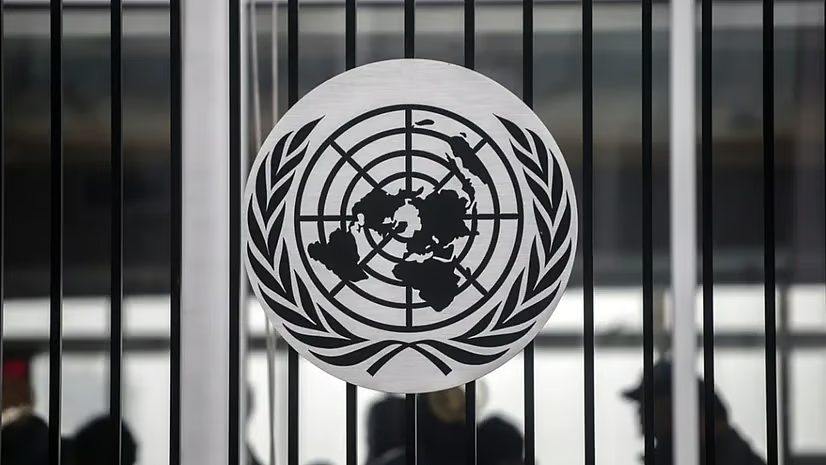
Eight decades after its creation, the United Nations—once the world’s primary platform for peace, justice, and cooperation—stands at a historic crossroads. Designed to rise above narrow nationalism and serve humanity as a whole, the institution today struggles under the weight of geopolitical rivalry, stalled diplomacy, and eroding global trust.
From Gaza to Ukraine, from spiraling climate emergencies to widening inequality and rampant militarisation, the UN now confronts the very crises it was meant to prevent. As current UN chief António Guterres has warned, the multilateral system is “gridlocked in dysfunction.” Its credibility has weakened, its moral authority diluted, and even its relevance is increasingly questioned.
At this moment of global uncertainty, the book Peacemaker: U Thant and the Forgotten Quest for a Just World arrives as both a history lesson and a wake-up call. It revisits a time when the UN still commanded respect and moral confidence, through the life of one of its most principled leaders—U Thant, the first Asian Secretary-General.
Drawing on newly released archives and personal records, the book retells how a quiet Burmese educator turned global statesman led the UN through some of the Cold War’s most dangerous moments. From mediating the Cuban Missile Crisis to navigating conflicts in Congo, Vietnam, Biafra and Bangladesh, his leadership showed what principled multilateralism once looked like.
Between 1961 and 1971, U Thant demonstrated how moral clarity could coexist with diplomatic finesse. He challenged apartheid, questioned the Vietnam War, and strengthened the UN’s development framework through institutions that reshaped global cooperation. Long before sustainability became fashionable, he recognised that peace, development, and environmental security were inseparable.
Yet even during his tenure, signs of systemic decay emerged. Power politics began to dominate the Security Council. Chronic underfunding weakened UN agencies. By the time of the Bangladesh crisis, U Thant was already expressing anguish over the organisation’s fading ability to act decisively—an echo of today’s paralysis over Gaza.
The core problem today lies in what may be called a Trinity of Multilateral Responsibility:
- The Secretariat
- Member States
- We the People
When these three pillars function in harmony, the UN works as it was intended. When one fails, the entire system falters.
The Secretariat once stood for independence, discretion, and moral authority. Today, it often finds itself constrained by political pressure and bureaucratic inertia. Member States—especially the powerful permanent members of the Security Council—were meant to act as custodians of global public goods. Instead, narrow strategic interests, veto politics, selective interventions, and resistance to democratic reform have hollowed out the institution.
The UN Charter famously begins with “We the People,” underscoring that global governance was never meant to be a club for governments alone. Yet civic participation has faded. Civil society, youth movements, academia, and the media—once powerful engines of international accountability—now struggle to mobilise meaningful global solidarity in the age of digital tribalism and profit-driven politics.
For India, U Thant’s legacy carries special significance. His respect for sovereignty, belief in non-alignment, and advocacy for the developing world aligned closely with India’s own diplomatic ethos. His understanding of India’s regional challenges during the 1965 war and the 1971 Bangladesh crisis cemented this bond.
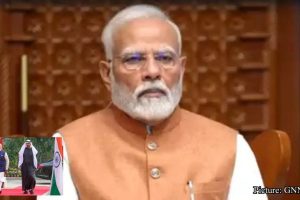
Under Prime Minister Narendra Modi, India’s role as a bridge between the Global North and Global South has gained fresh momentum. Through platforms such as the G20 presidency and the Voice of the Global South, India has renewed calls for inclusive global governance and democratic reform of multilateral institutions—echoing U Thant’s long-standing belief that legitimacy must rest on justice and inclusion.
Ultimately, Peacemaker is not just a biography. It is a diagnosis of the UN’s moral drift and a call to reclaim its founding purpose. The Secretariat must regain independence, Member States must recommit to collective security and development, and citizens across the world must once again believe in shared global responsibility.
As global challenges grow ever more interconnected, the UN’s roots in universalism matter more than ever. The compass that once guided U Thant still offers direction—if the world chooses to follow it.